Lecture 1 – The Effect of Globalisation on Graphic Design
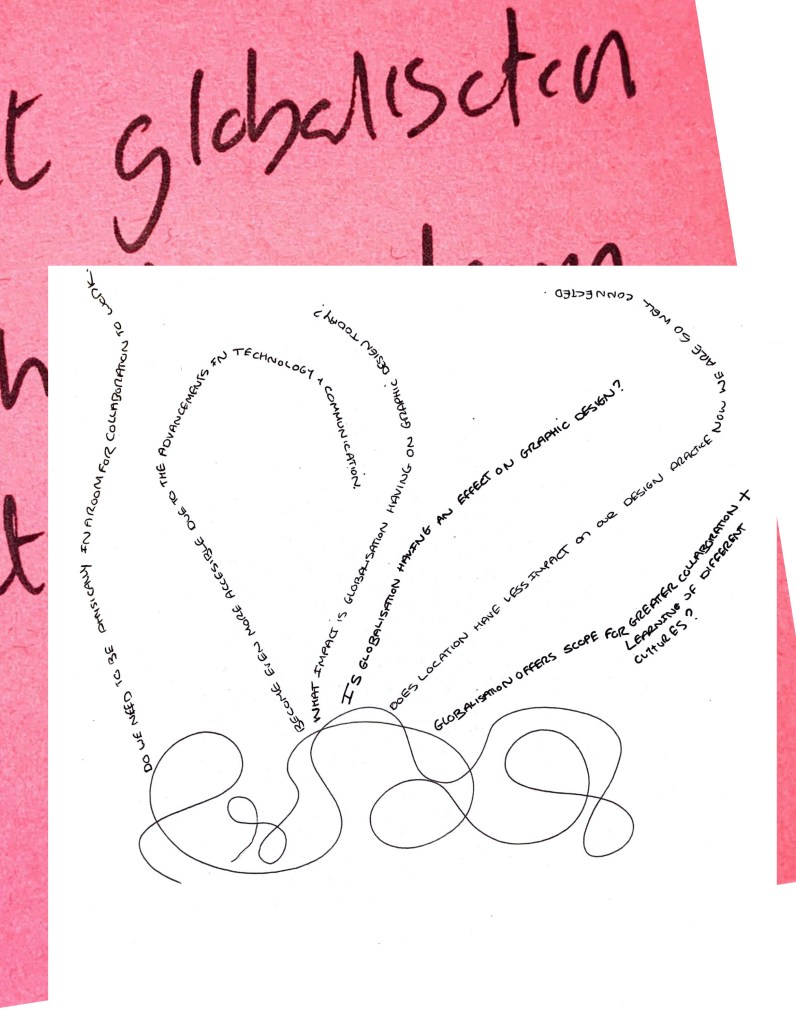
Thoughts and Questions raised:
– Globalisation offers scope for greater collaboration and learning of different cultures.
– Is globalisation having an effect on Graphic Design? Is it changing the way we work?
– Is globalisation a positive thing to happen to Graphic Design?
– Become even more accessible due to the advancements in technology and communication
– Does location have less impact on our design practice now we are so well connected?
– Does being face to face in a room really solve all problems quicker? Covid is a great example of how we adapted so quickly to circumstances out of our control. We adapted quickly to technology and its possibilities within business and communication
– Aspects of Graphic Design are received and represented differently across the globe for example the Mcdonalds brand. The red will not connote good luck in America or Europe like it does in China.
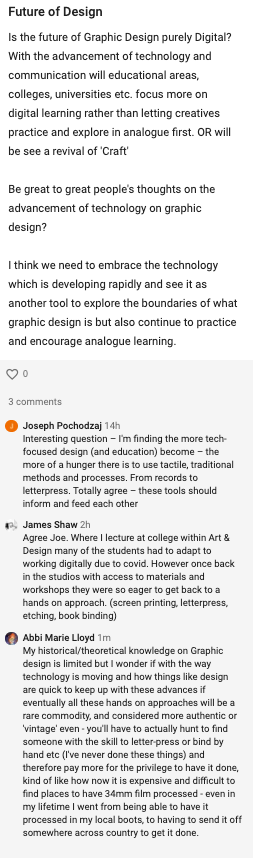
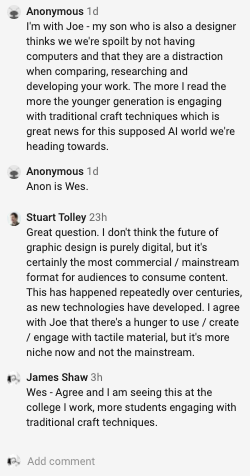
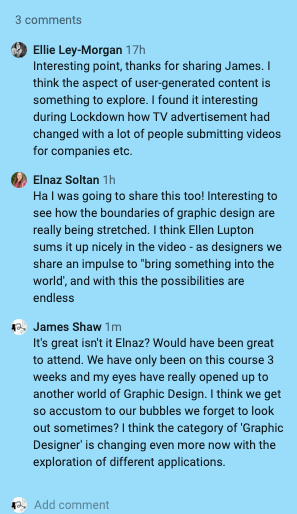
Reflection from this weeks lectures:
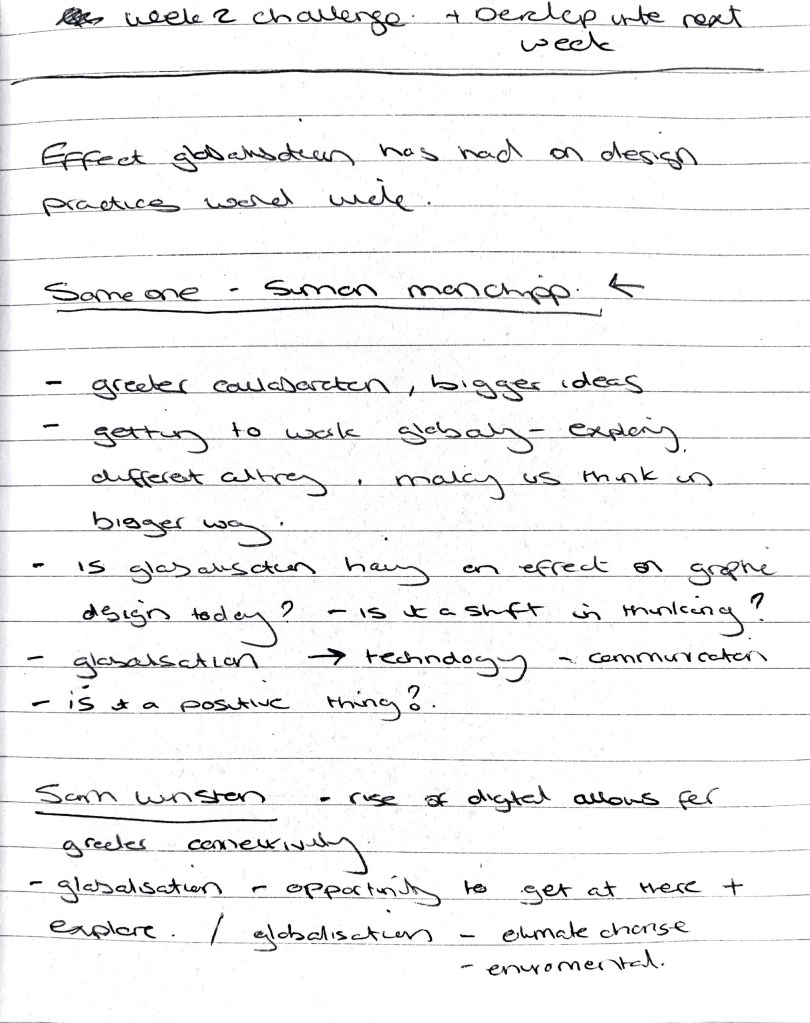
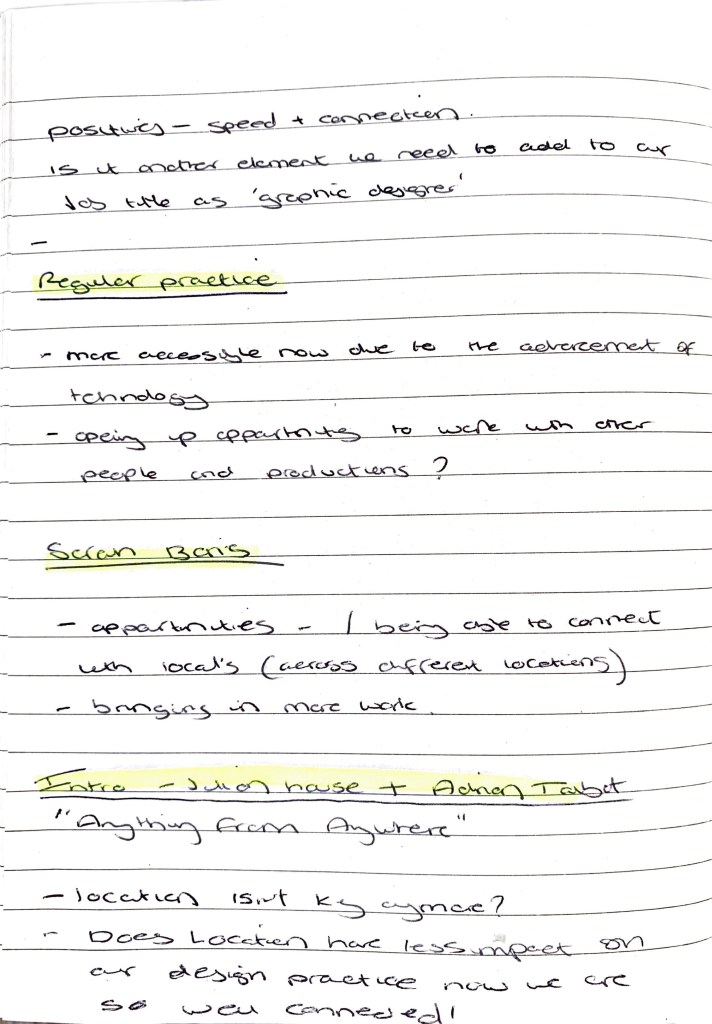
A key theme which ran throughout everyone’s responses was the greater ability of collaboration on a global scale. Simon Manchipp from Someone saying ” getting to work globally allows us to explore different cultures, making us think is a bigger way” I think collaboration is such an exciting opportunity for us as designers to come together and deliver something interesting and larger scale. Over the past few years there has been more and more designers going ‘Freelance’ and studios scaling back, I think this offers the opportunity for creative freelancers alike to join forces and tackle briefs together? Brining their own skills to the table.
Simon Winston brought up that globalisation can be seen as exploring and getting out there, finding out what’s going on locally and globally, both in physical form and in within communities, news social issues etc. With such easy access to the internet and anything at our fingertips are we forgetting to explore in person. Simply going out for a walk and finding out what’s going on, speaking to people, or is the power of globalisation just making it easier and cost effective? Do we get the same responses from connecting virtually as we do by being there in physical form? Julian House and Adrian Tabot have stuck to face to face meetings in person in London and are yet to adopt this digital connection of meeting online. This could be due to them having all their clients within London. For them is globalisation having less impact on their business? Or are other factors associated with globalisation within design have an impact?
Workshop Challenge 1
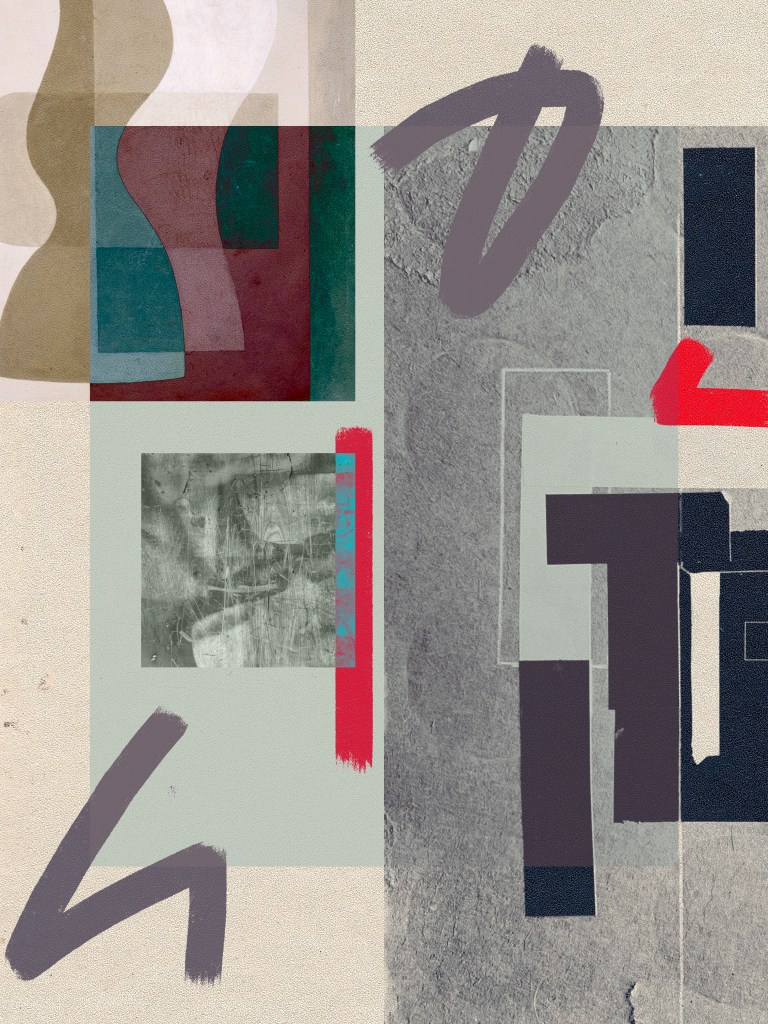
What category do I put my practice in to = When I am working for clients I would frame myself as a ‘Graphic Designer’ However if you were to look at my non client output you may see me as an artist? (example below) Client output VS creative outlet. But this is where I find my role as a Graphic Designer interesting… Could my ‘creative output’ be ‘Graphic Design’ if applied in a certain way?
Asking peers from outside the course what they think a ‘Graphic Designer’ is. Responses below:

D&AD have 40+ categories on their site but for me the core categories are : Graphic Design, Illustration, Animation, Gaming, Art Direction, Film, Motion Design, Photography, Web Design. Within these there are then different routes, outcomes, applications, all which have titles themselves that people might use differently to others? For example what I might call digital design someone might call motion design or movement design? Isn’t titling of your outcome down to you or is that where the blurring of disciplines is happening…
Are we creating new categories all the time? Do we work within our own category which isn’t any of the ‘Known terms’ Grounding that the role of the Graphic Designer is changing.
Synopsis:
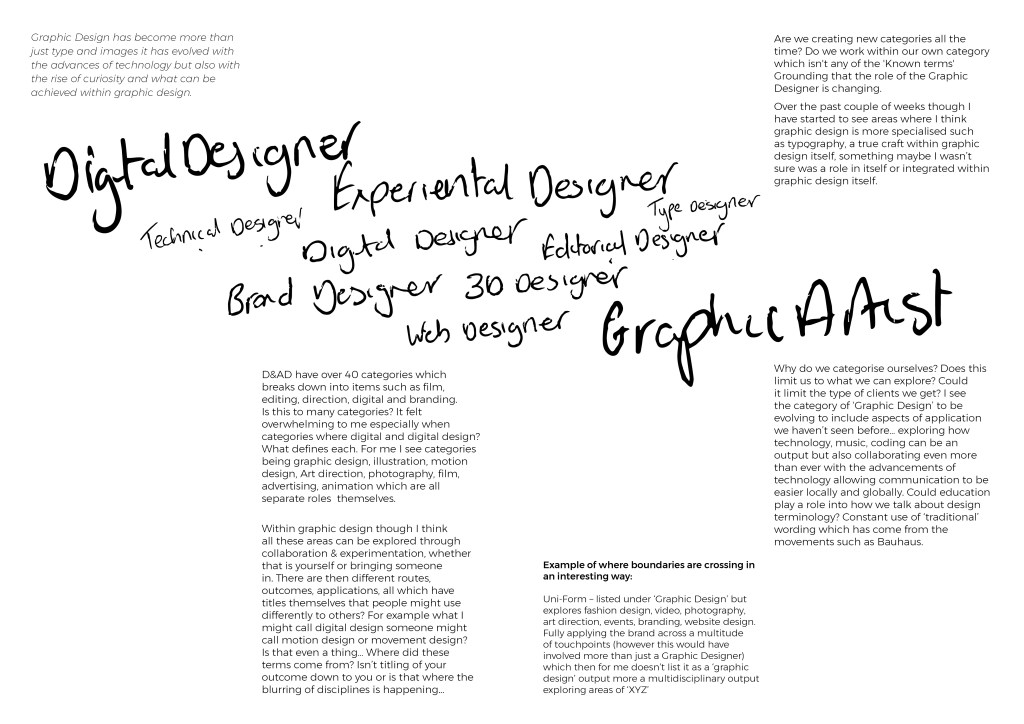
Graphic Design has become more than just type and images it has evolved with the advances of technology but also with the rise of curiosity and what can be achieved within graphic design.
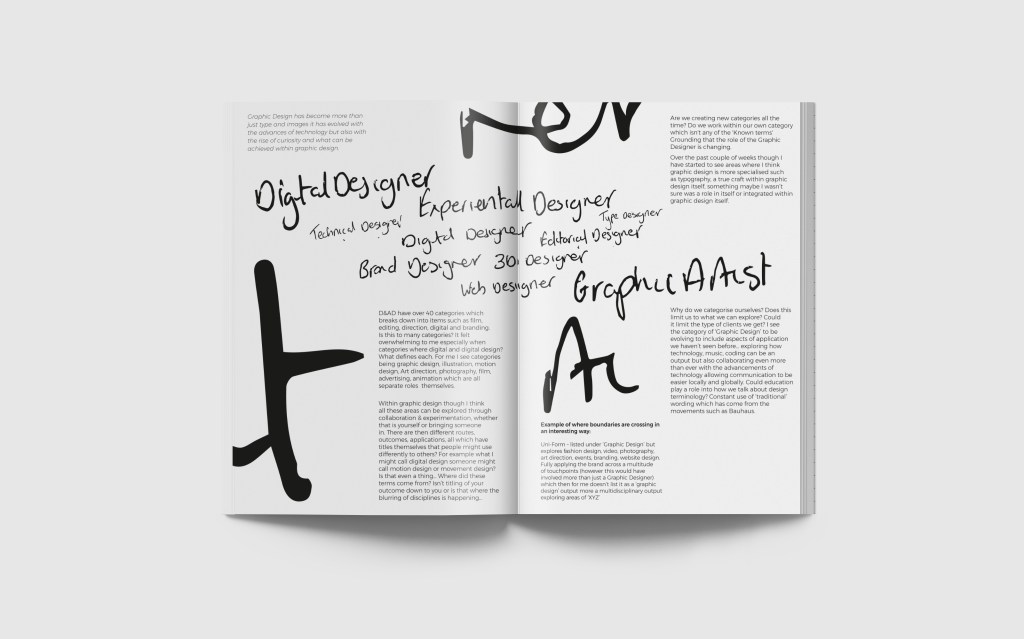
D&AD have over 40 categories which breaks down into items such as film, editing, direction, digital and branding. Is this to many categories? It felt overwhelming to me especially when categories where digital and digital design? What defines each. For me I see categories being graphic design, illustration, motion design, Art direction, photography, film, advertising, animation which are all separate roles themselves. Within graphic design though I think all these areas can be explored through collaboration & experimentation, whether that is yourself or bringing someone in. There are then different routes, outcomes, applications, all which have titles themselves that people might use differently to others? For example what I might call digital design someone might call motion design or movement design? Is that even a thing… Where did these terms come from? Isn’t titling of your outcome down to you or is that where the blurring of disciplines is happening… Are we creating new categories all the time? Do we work within our own category which isn’t any of the ‘Known terms’ Grounding that the role of the Graphic Designer is changing.
Over the past couple of weeks though I have started to see areas where I think graphic design is more specialised such as typography, a true craft within graphic design itself, something maybe I wasn’t sure was a role in itself or integrated within graphic design itself.
Why do we categorise ourselves? Does this limit us to what we can explore? Could it limit the type of clients we get? I see the category of ‘Graphic Design’ to be evolving to include aspects of application we haven’t seen before… exploring how technology, music, coding can be an output but also collaborating even more than ever with the advancements of technology allowing communication to be easier locally and globally. Could education play a role into how we talk about design terminology? Constant use of ‘traditional’ wording which has come from the movements such as Bauhaus.
Example of where boundaries are crossing in an interesting way:
Uni-Form – listed under ‘Graphic Design’ but explores fashion design, video, photography, art direction, events, branding, website design. Fully applying the brand across a multitude of touchpoints (however this would have involved more than just a Graphic Designer) which then for me doesn’t list it as a ‘graphic design’ output more a multidisciplinary output exploring areas of ‘XYZ’
Editorial Ideas
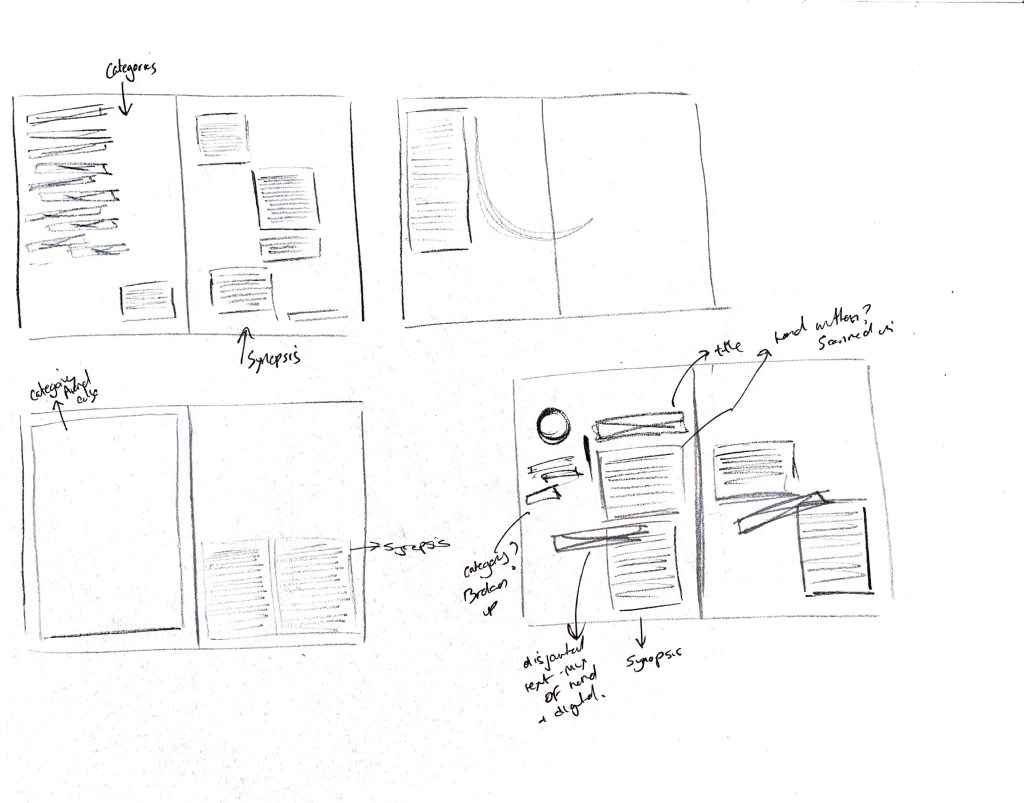
Initial Sketches:
Editorial Review Output

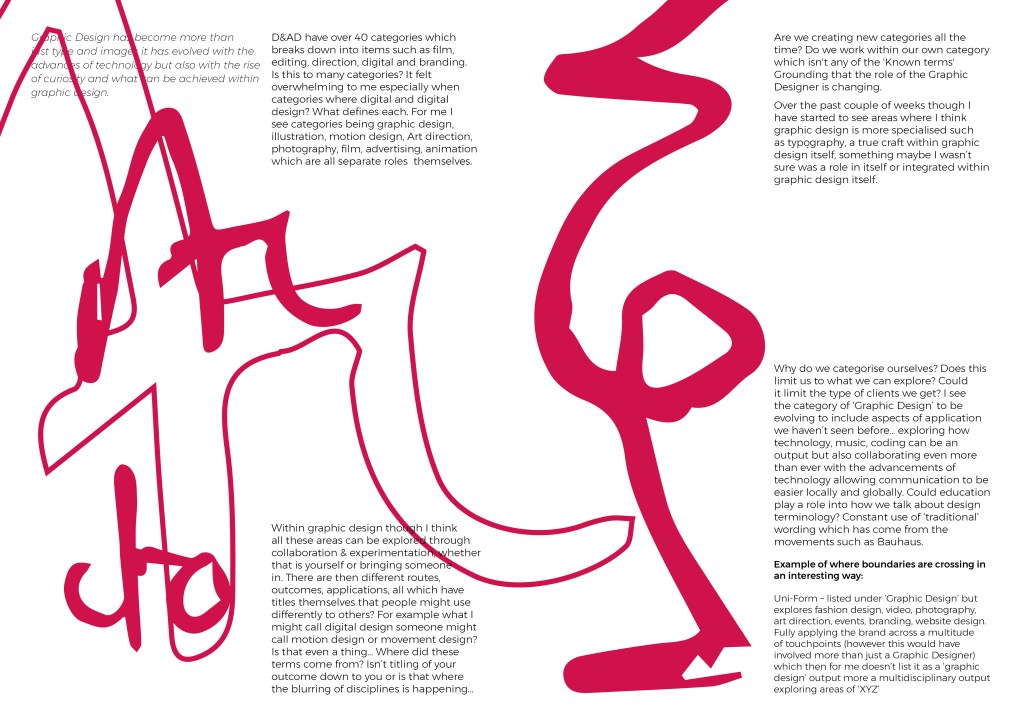
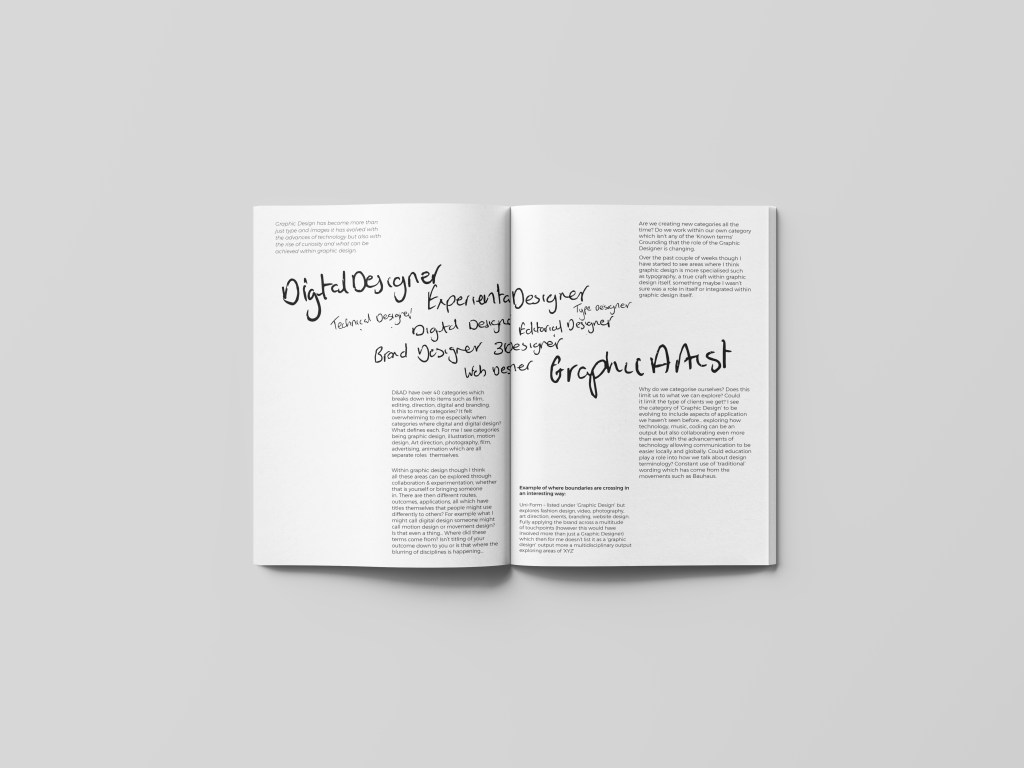
Open Magazine Mockup by Anthony Boyd Graphics
10 Terms of Graphic Design
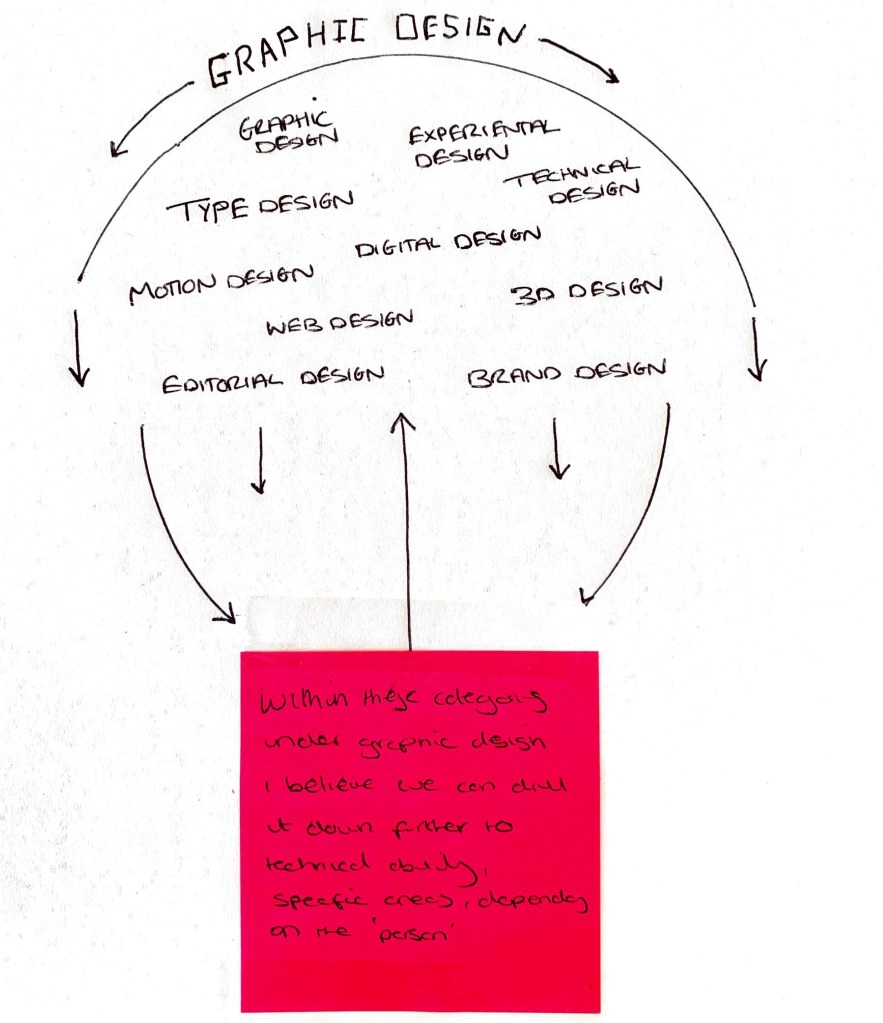
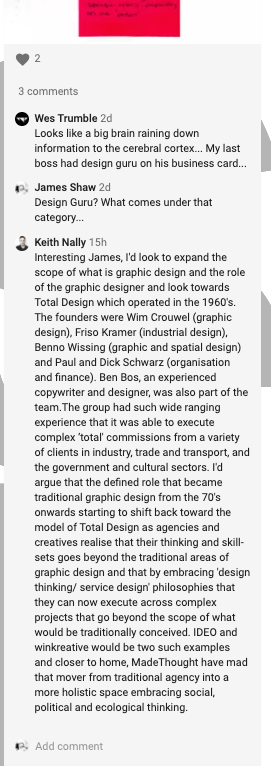
Within the category ‘Graphic Design’ I see these being some of the main terms of work today however I think ‘Graphic Design’ goes beyond this. If we look at what a team at an agency might look like that could have Freelancers, Marketers, Strategists, Social Media, Designers (Junior, Midweight, Senior, Art Director)
Those Freelancers could be brought in to work on anything from motion, interaction, architect, illustration, 3D, sewing, pottery, photography, film, design, typography, signwriting etc…
Brainstorm of terms:
- Multimotion
- Inter Communication Design
- Intermotion Design
- Multi Motion Communication
- Interexperience Design
- Multicom Design
- Multi Process Design
- Multigraphic Design
- Multicommunicator
- Multioperation Communications
- Construct Design
- Method Motion Design
- Immersive communications
- Immersive Motion
Workshop Challenge 2
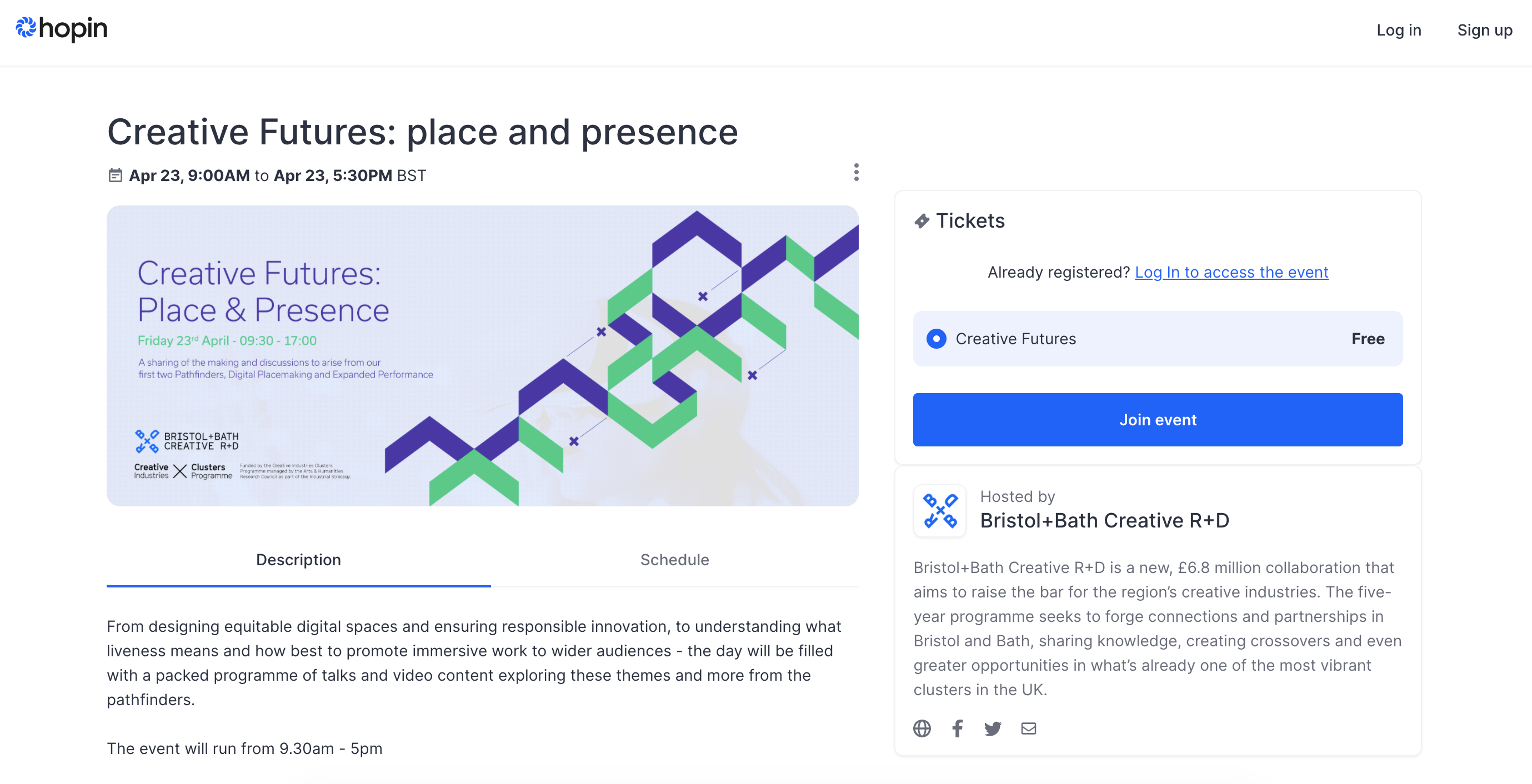
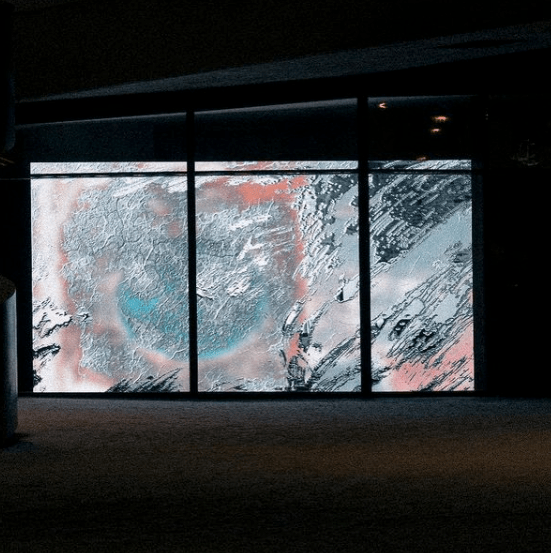
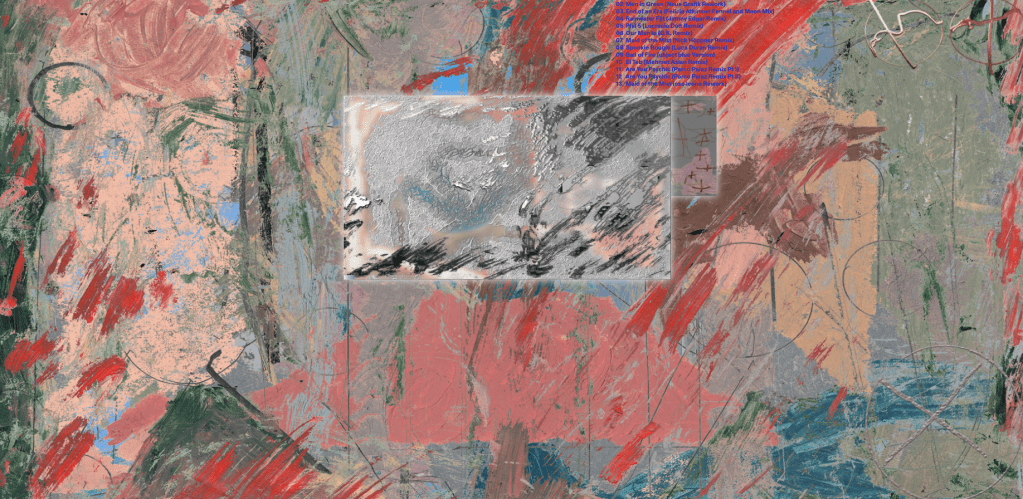
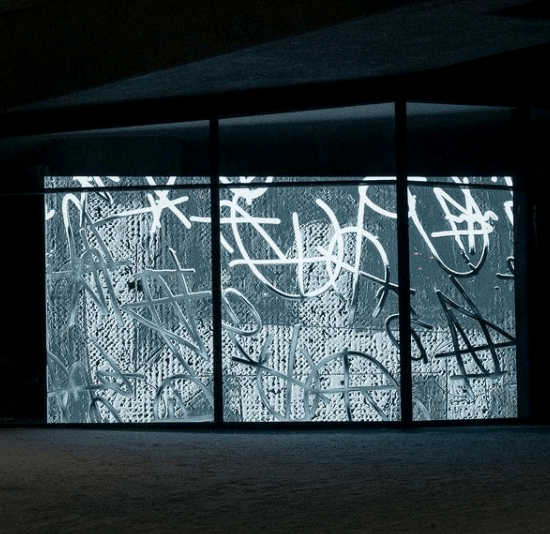
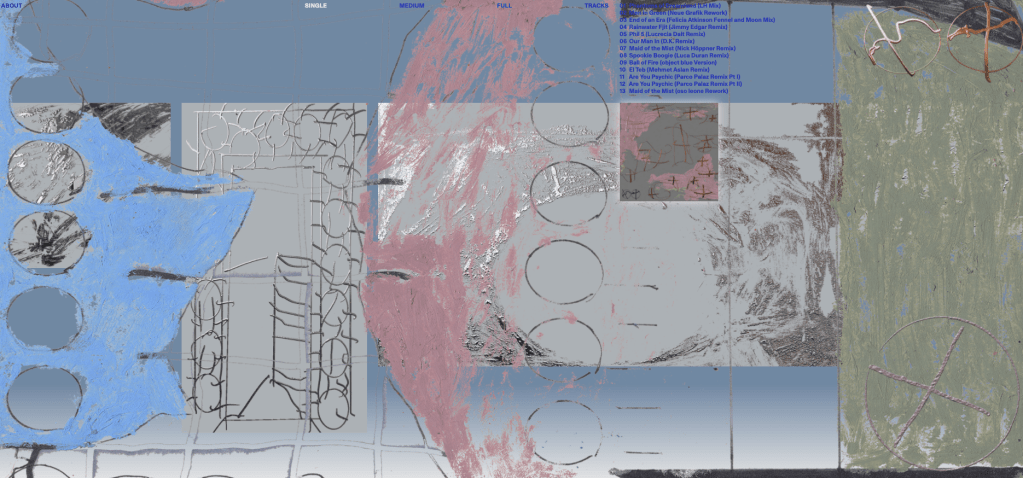
Design Practice thats breaks boundaries: The ‘Hybrid Visualiser’ of ‘Michal Turtle Reinterpreted’ presented by PLANISPHERE in collaboration with Jonathan Castro Alejos, Chris Harnan, and Sander Sturing. Combining design, motion, music, and visuals to create a visually immersive space. The Hybrid Visualiser is a piece of work which pushes beyond any boundaries of design, allowing the viewer to go in an immersive journey through music. They say “It invites the audience to halt, reflect moving away from certainty to orient itself towards the unknown to reach new pathways of thought far from comfort theories and into a more cosmological state of being.”
The project has also made its way to a physical space allowing the viewer to interact with the visuals. Is this too far gone from graphic design? or is this the future? I think it’s incredibly brave, interesting and future thinking. This can work across so many touchpoints as well. From the more traditional print to experiential design.
Planisphere, the people behind the project categories themselves as: Creative Production I Cultural Programming I Editorial
My new term for this area of work – Multimotion Design OR Multigraphic Design.
Research
Graphic Design: Now in production exhibition.
“Graphic Design has multiplied in many different directions”
Andrew Blauvelt
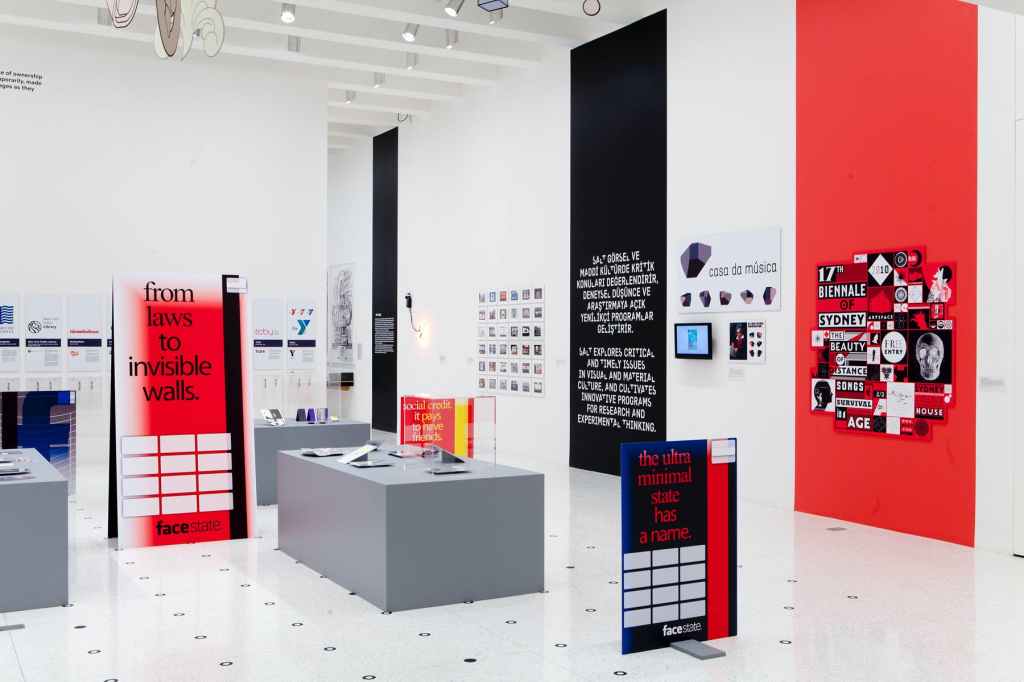
Type/Dynamics Exhibition – Dutch Studio L U S T
Reflection: Pushing the boundaries of graphic design – creating immersive, interactive exhibitions with graphic design at its core. Taking information into a physical space. This exhibition was in 2014 over 7 years ago but it still feels fresh and the future of graphic design? Why are we not seeing more design being pushed beyond the ‘brand’. Celebrating the work of Juriaan Schrofer this exhibition pushes design into such an exciting space
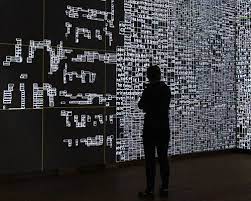
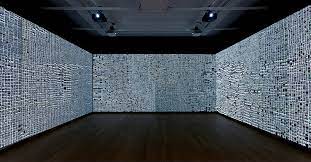
Wenjie Lu – Out of print installation
Reflection: Creating interactive environments where the viewer can interact with all matters of visual communication. Bridging the gap between interactivity and graphic design. There is a whole world of projects exploring this same matter of graphic design and interactivity and it makes we wonder what’s next? Could we start to see interactive experiences accessible to all? For those potentially deaf and blind.. How would they interact with an experience like this. Could these start to evolve into VR experiences or spaces within themselves.


Webinar Reflection
Points of interest:
Social media’s effect on Graphic Design: We are bombarded with so much content on Instagram it’s hard to distinguish what’s what at times. With the ability and accessibility of technology many can and have labelled themselves as ‘Graphic Designers’ I’m not saying they aren’t talented but they bring in new language and terms to the industry. Does this dilute and become unfocused on key design terms? (especially when speaking on a client / business context) Do clients expect more of us as designers after hearing other terms?
The rise of sites live Fiver & Pay as you go design, I think personally are having a negative impact on the design industry. You have to ask when can you call yourself a Graphic Designer? Is it after gaining a qualification? or industry experience? OR nowadays can you just become a ‘Graphic Designer’?
Final Outcome
References
Lu, W., 2016. » Out of Print interactive installation by Wenjie Lu. [online] Retaildesignblog.net. Available at: <https://retaildesignblog.net/2016/06/05/out-of-print-interactive-installation-by-wenjie-lu/> [Accessed 21 June 2021].
Weekly Reflection
Week 3 is already over… Time is flying by.
I feel this week I have become more aware of what is going on around me, more open to discussions and confident in sharing my opinion on my practice. Exploring design terminology has made me think about where I am right now and how I want to develop. It’s also made me aware of how saturated the industry is becoming due the advancement of technology… there are so many terms and categories out there but being true to your practice and being willing to learn is so important.
The course this week has also allowed me to research into the growing boundary break down of graphic design and it’s possibilities… something I looked over and pushed aside.
Moving into next week – Try out new ways of recording work (written) Give myself time to edit and make work accessible for viewer. Continue to be more free with experiments and not think to much about the outcome at first? Refining and editing can come later. Continue to share emotions, thoughts, opinions on the topics and questions raised.
 James Shaw