Lecture Comments
What do we mean by the term research methodologies?
Part 1 – Curiosity
My definition of research – ‘Investigating a topic of interest visually or academically. Exploring the historical impacts, inspirations and ideas around a chosen subject’
Technology again having an impact on our lives – The development has meant that research and discovery is right at our finger tips, easily accessible and allowing us to search more widely than ever before.
I think research is an activity of life – we research all the time from mundane research on a daily basis to more in depth research around health, science, climate, news, history and nature.
Last time I was engaged with research – I undergo research on most week’s within my lecturing role, researching and showing students influential artists/ designers both historically and contemporary.
Look around the room and choose and object – analyse it.
Why are the doors at the back of my house placed centrally? Could they be installed off centre to the back of the house to make room for more usable space within the room? This could potentially help in the summer months when it’s warm. The door’s have been placed there to let natural light in and allow access to the outside space without these the house would only have once entrance – through the front door.
What if we removed the doors all together? – This would mean adapting to the situation, walking around the block to get to the garden, natural light would also be limited to upstairs, we could move the lounge upstairs and flip the house around?
As a designer I feel the engagement of research is a critical part of what I do, I research to understand things better, I research for inspiration, I research for clarity, I research to help build a project, research comes in many forms even like I say daily life.
Guest Lecturer Reflection – Bureau Borsche
Kickz Project reflection points:
– Simplicity at it’s best? the use of the shapes within the abstract logo allowed it to be adaptable and playful across multiple touchpoints. It allowed them to ‘play’
– Thinking beyond traditional application and outside of the graphic design bubble – How there design could work in other creative sectors (fashion in this instance)
– Inspired by the use of two logos for the brand, a more structured formal logo vs the more abstract ‘graffiti’ style logo both though can work together and apart. (expands the brand)
La Biennele Di Venezia reflection points:
– Pushing the boundaries of what Graphic Design can be. Again the simplicity of its structure was versatile to work across multiple platforms and touchpoints. The braveness of using such a bright neon yellow worked so well in a city muted with stone and brown colours.
– Enjoyed it’s scale and growth around the city – engaging with the public in a fun way, interests me to explore how I can look at doing this locally.
Research into: Spike Art Magazine & Julia Stoschek Collection
Question raised by Lou Hardy around the concerns of changing / working with a brand OR logo with such a high profile. Do they put in place anything before getting started? (IM Re-brand)
Design Development (weekly Challenge)
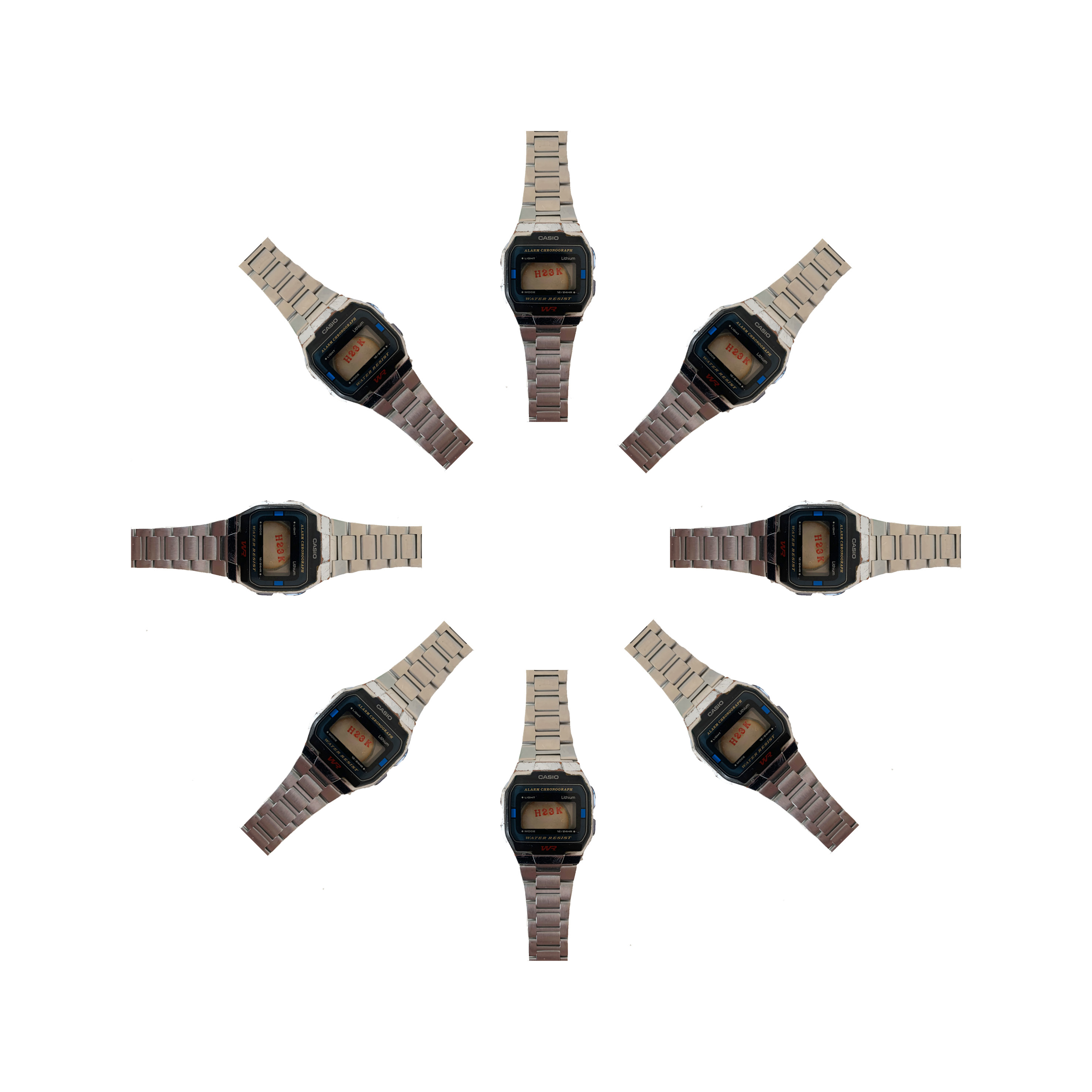
Chosen Object – Casio Digital Watch.
Why? I choose to pick my Casio watch for my object for a few reasons:
1. I wore it everyday and it was an object which had a purpose (to tell the time)
2. It was an object which was part of my everyday routine (I put it on every morning)
3. It’s time, something which everyone is effected by / uses.
What’s inside the watch? The batteries, the mechanisms. What stories do they tell?
What story lies behind this watch – This watch was worn by me for years both while studying for my BA and also in general, so it carries so many stories from the time it kept (whether that was to catch a train, meet people, go home, get a flight) All these stories this watch came on with me. The watch wasn’t the focus but it was part of it.
A watch tells us the time which overall guides us on how we go about our daily lives. Without the watch or even time what would our lives be like? Chaotic? more streamlined from adopting other methods?

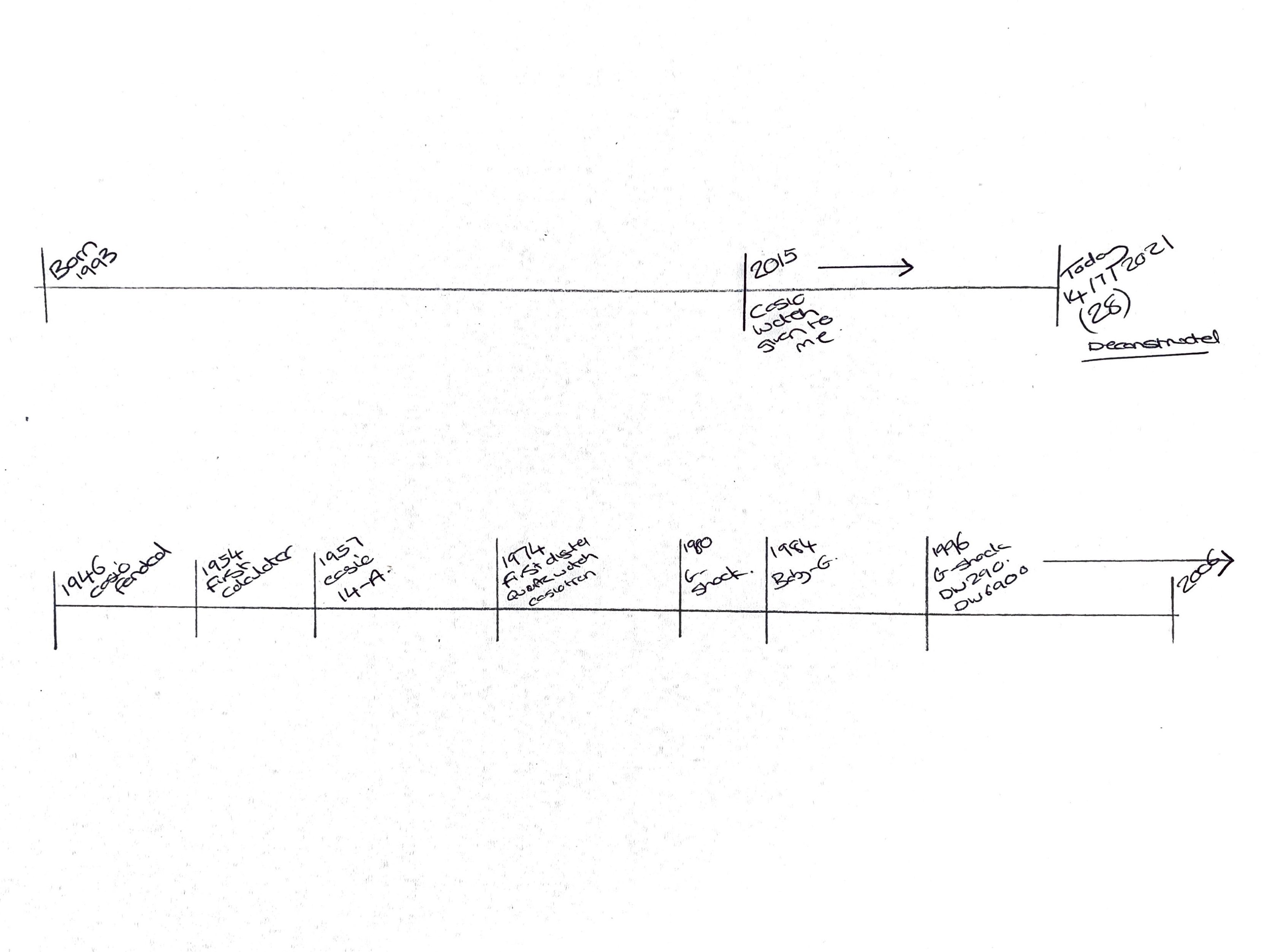
Below – The timeline of my life and where I first acquired the Casio watch (2015) to when the watch was taken part in 2021. Below this is a brief timeline of how Casio watches came about and developed through to 2006.
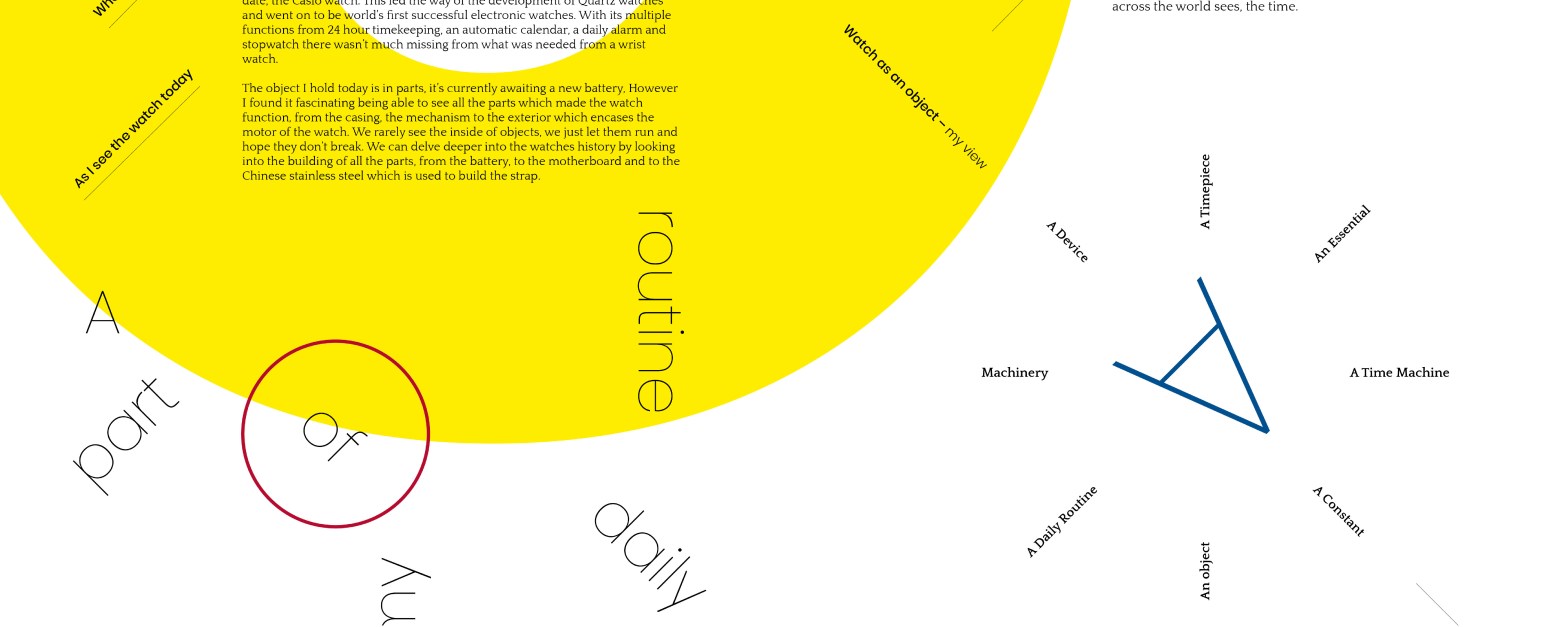
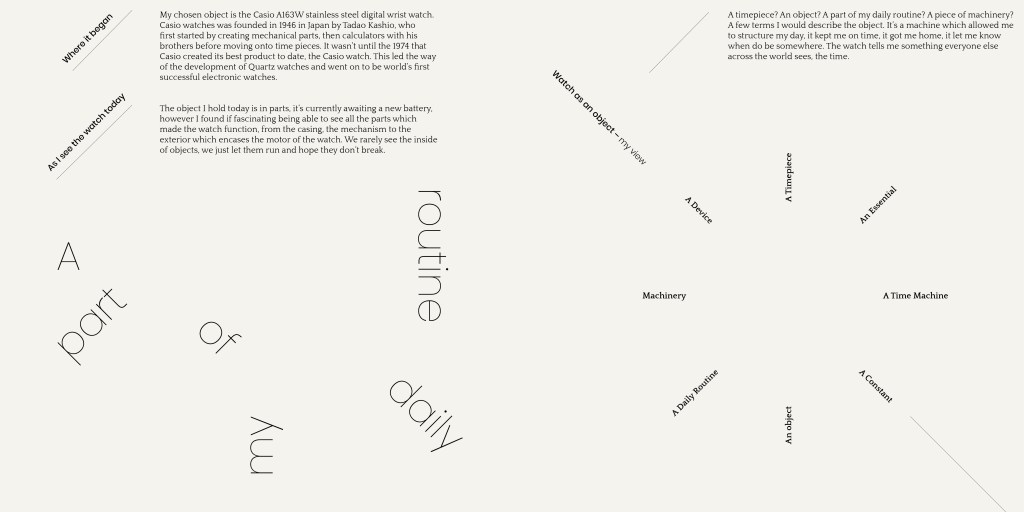
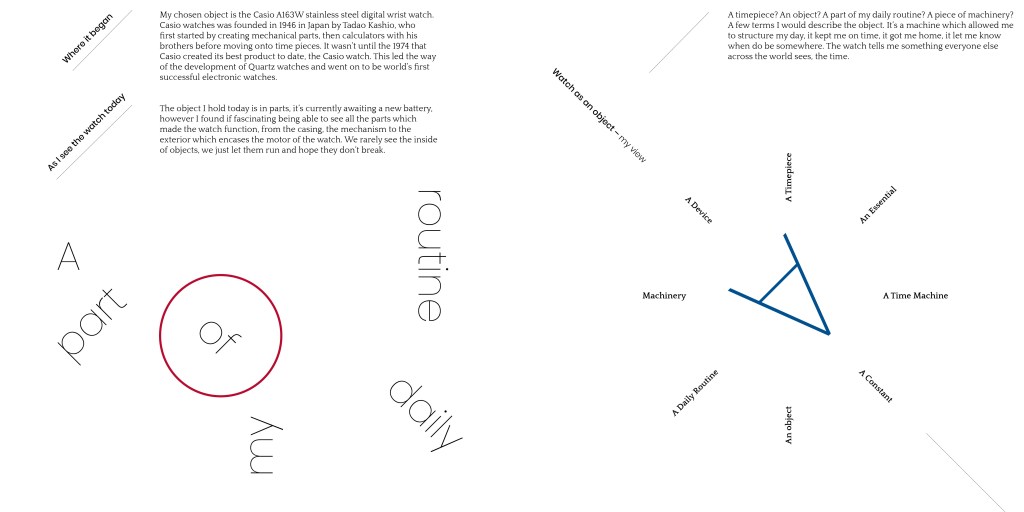
Working on editing together my precis into an editorial layout. Exploring the use of the clock face shape (24/12 hour clock) as the masters for the typography. Using the angles of the clock face to work on the titles of the precis. I want the editorial to have a mechanical / working feel about it, as though its moving or turning.

Object to shape to pattern, Inspired by the work of Paul Elliman (Found Font)


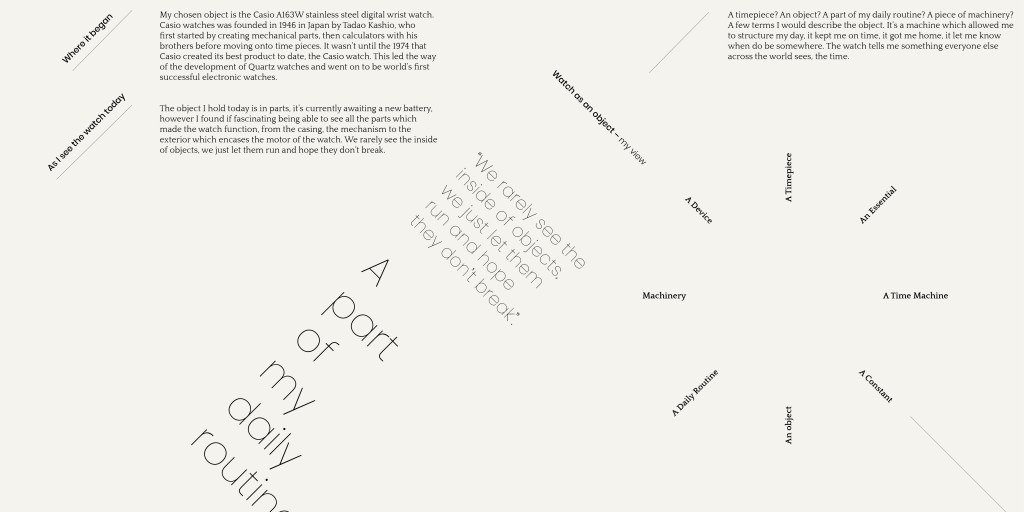
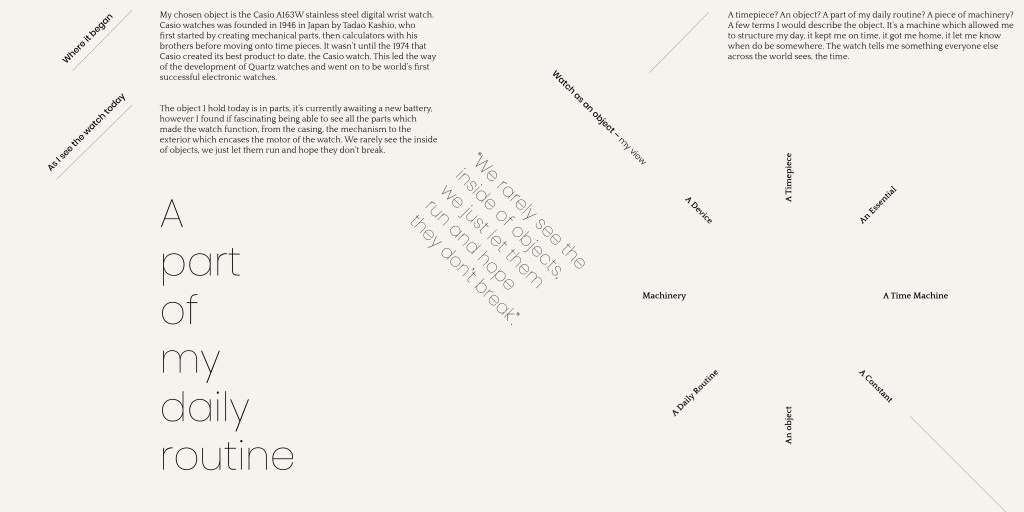
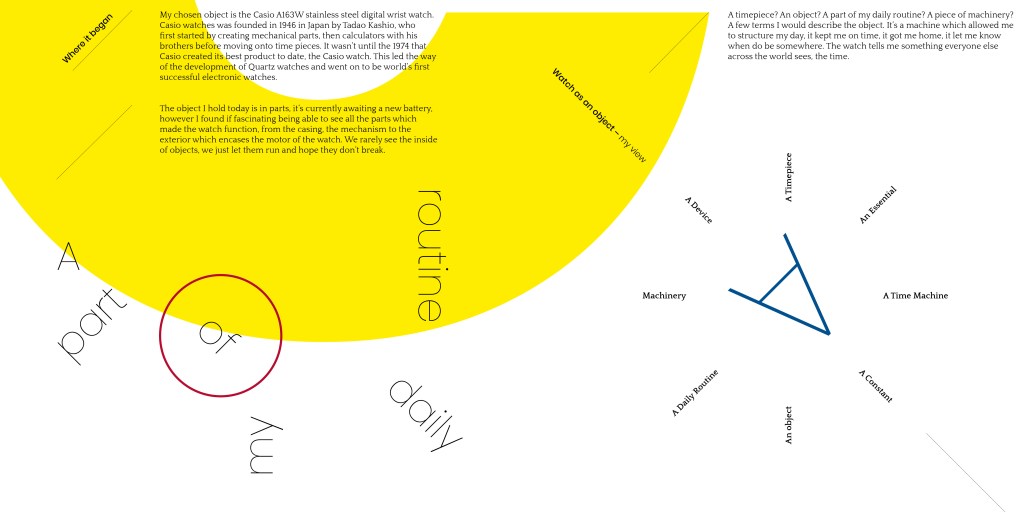
Continuing to develop my editorial for this week’s challenge. I am excited by how this is starting to develop into a stand alone design piece, it almost feels like a deconstruction of precis, like my object. Could I look into removing all the imagery and just working with typography? Or does it need the imagery for balance?
Could I be braver and us larger typography on the headings?
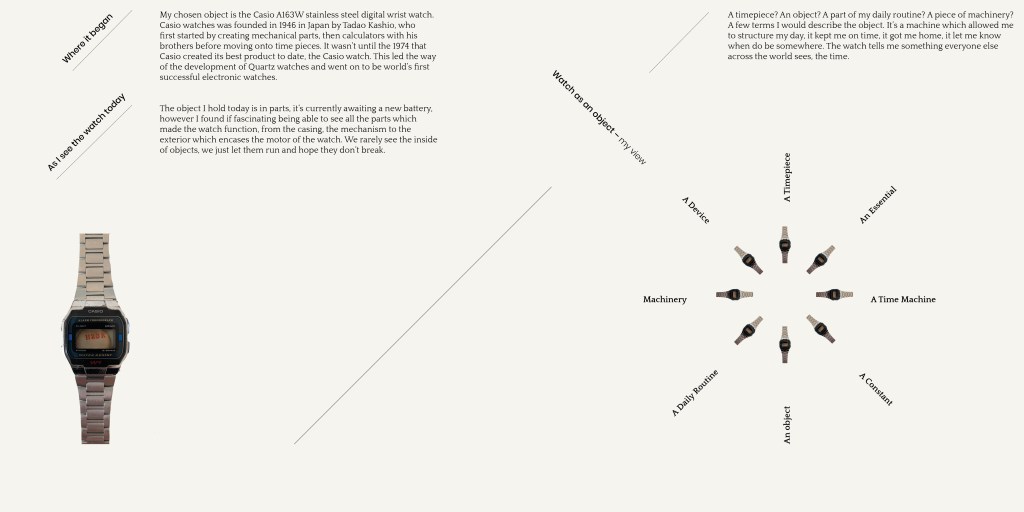
Exploring the use of type placement in relation to the ‘clock face’ Inspired by the work of Piet Zwart . Piet’s work experimented with typography and shape on the page. Piet often referred to himself as a ‘typotekt’, a contraction of the words typographer and architect (taken from http://www.iconofgraphics.com/Piet-Zwart/)
The next stage I think here is to maybe introduce colour and weights of letters? It feels abit ‘monotone’ in it’s appearance which is potentially making it look ‘flat’?
Research
Ideas Wall Research

Wes made an interesting point around researching into different time zones (GMT) to see how it came about and why we have different zones.
Greenwhich Mean Time was first started and based on when the sun crossed the meridian at Greenwhich, known today as GMT. Before GMT all of the towns in the UK would have gone off their own time, with there being no standard time to when the day began or ended. An ‘hour’ of time was also not defined, this could be longer or shorter than the ‘hour’ we go by today.
We are born into a world where time is already established and we mould into working time. We go about our daily lives around our ‘day’ some get up early, some get up late, some go to bed late, some go to bed early. What does time do for us? It allows us to structure our day, arrange, sort and delegate, but without time we could still do all these things?
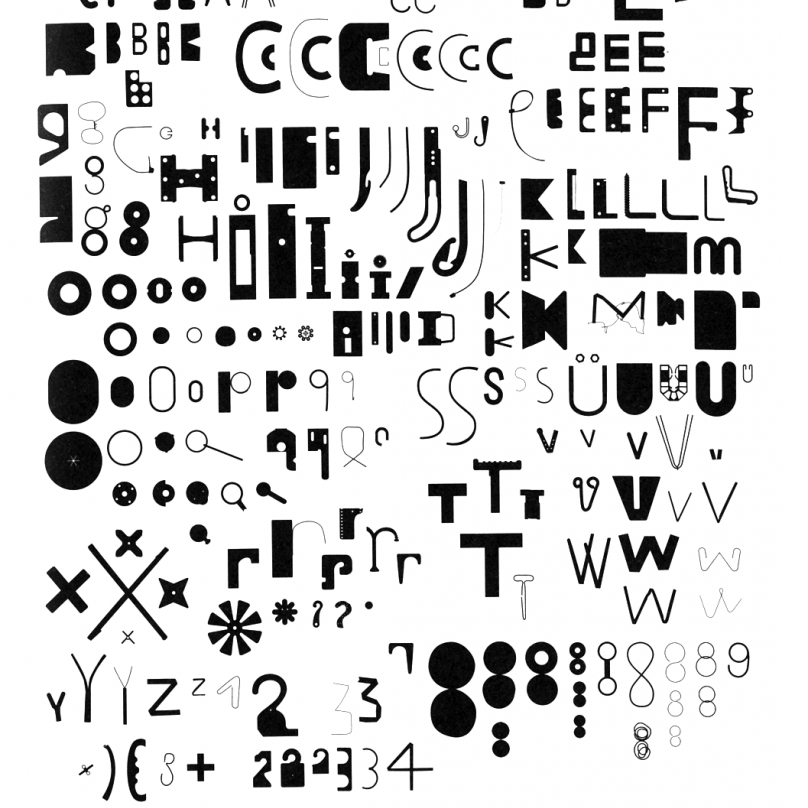
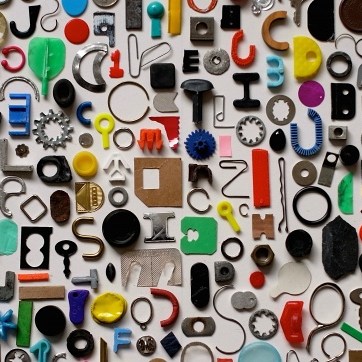
Paul Elliman – Found Font (1995-present)
Multiple directions, multiple answers, multiple stories, Found Font or ‘bits’ by Paul Elliman gets you thinking about the stories behind the objects displayed. There unique size, texture and form are all individual and each has there own narrative from their found geographical location. For me this really answers ‘the stories that objects hold’ You can create your own words from this collection, choose your own story? imagine what these pieces were and could be?
This has me questioning again the advancement of technology and how its yes having a huge positive impact on design but also stopping us from seeing mundane objects with endless stories and communication?
The Role of research in Graphic Design (Why & How)
Research can go beyond a collection of information to inform the project, it can help build new approaches and ways of working.
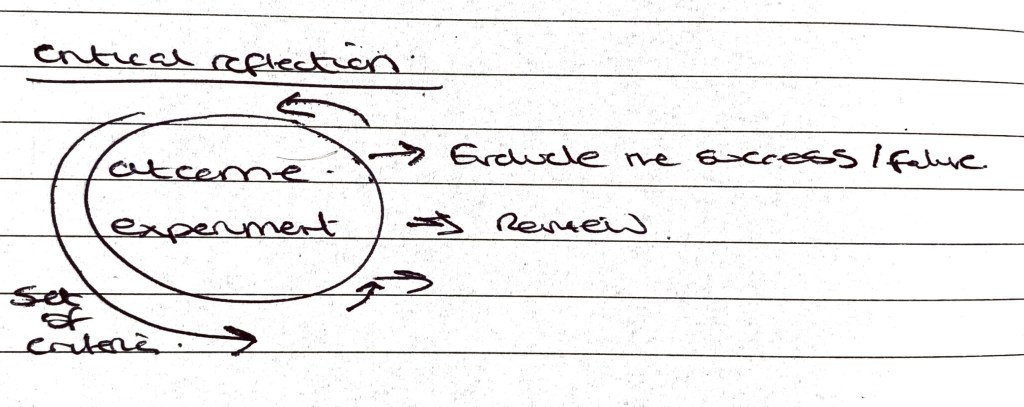
“Graphic Design does not begin nor end in the objects it makes”
Andrew Blauvelt
This refers back to the design process and design methods, as designers we break out of the process either side I believe, firstly by researching (this could be visually, historically, socially depending on subject / brief. Beyond the delivery of the project we also continue to research, through the design process with a client we may have explored something new that we want to continue to research after the project or even research new processes?
Christian Marclay’s The Clock
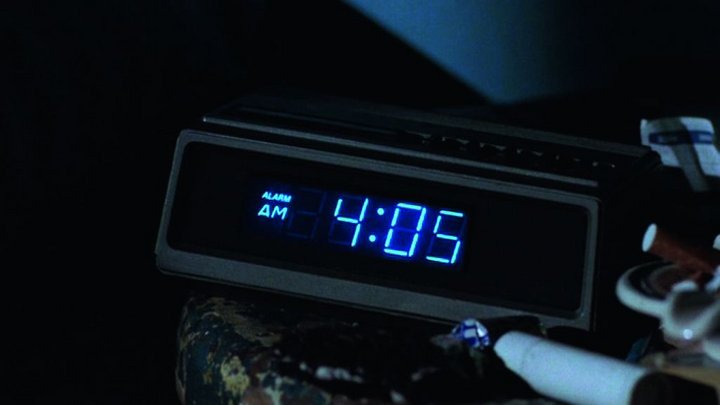
24 hours of time clips? ‘The Clock’ explores time pieces in a 24 hour montage of film clips. Not only does this go to the extreme of using a single ‘object’ such as time pieces but it’s brave enough to show it within such a long period of time as well.
Watching the clock is a trance-like experience, almost hallucinogenic, you’re liable to see things that aren’t there.
Zadie Smith
With time being all around us, and our daily lives being almost controlled by time, this film stops you from looking at the time you are in and worrying more about the time left of the film. What drew me in was the use of such a widely used object (time) and turning this into an experience which can be viewed and interpreted differently by everyone. Some people might not have a time-piece, they may run off the day light and go with their daily routine, or rely on others to inform them of the time.
The film also explores narrative beyond ‘the clock’ beyond the tick tock of a clock, how music and image can represent time. But time isn’t present? we can’t physically see it or hear it… So where did time originate from and why do we use it today across the glob in different timezones.
Willie Cole – Seeing beauty in the mundane
Willie Cole took the mundane object of an ironing board and created a series of prints which evoked suffering, creativity and power of the women who used them. These everyday objects have been changed, they have been hammered down giving them a new meaning, and opening them to interpretation from the viewer. This powerful take on the object can be used to communicate real life matters, giving the narrative more power and sense? Objects are just the object until we research, understand, take apart and re do, objects hold more stories than potentially what they have been used for.
Creator Willie Cole says that his feelings towards the pieces have changed over the years. He has become less emotional about the pieces and can handle talking about them without crying now. For an object with such a powerful story to have an impact on an individual is incredible interesting.
His work has got me thinking about how I go about my process more, should I be taking more time to connect with the objects / brief first to really understand. I feel we can get carried away and take on any projects. Allowing for this to happen will connect us more with what we are creating.
“The things you touch hold onto a part of you”
Willie Cole

Final Outcome – Precis
Narrative of time – The Casio Watch
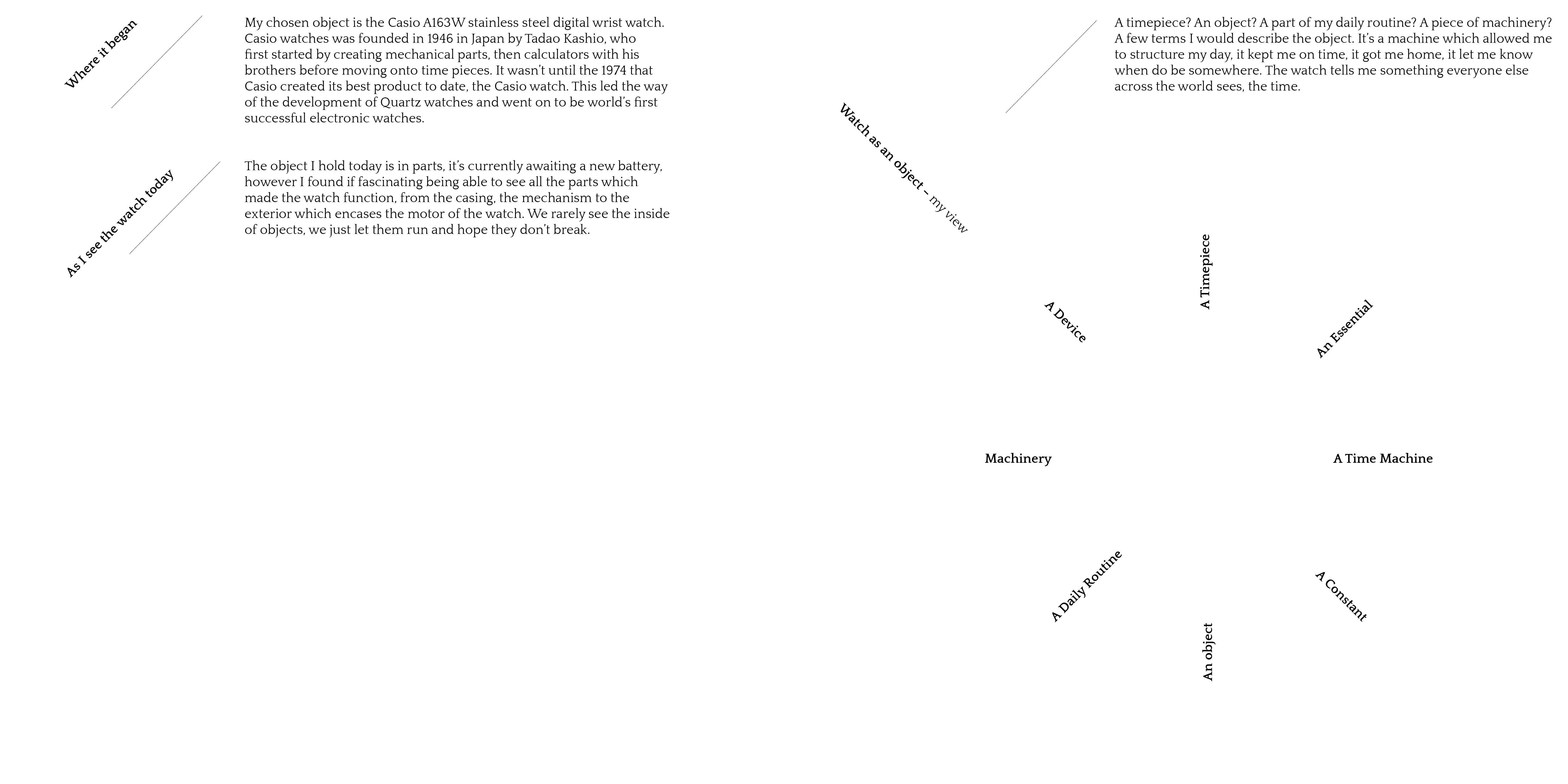
Where it began
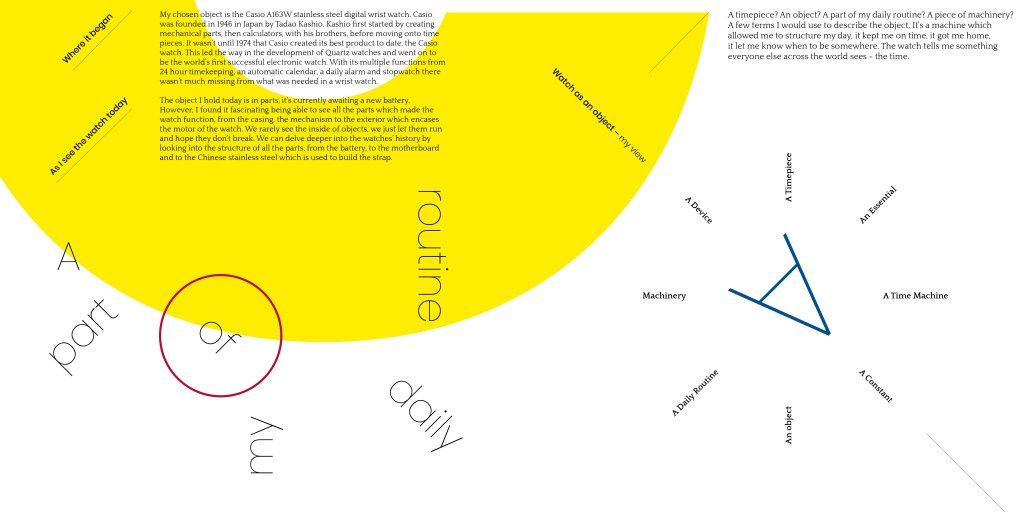
My chosen object is the Casio A163W stainless steel digital wrist watch. Casio was founded in 1946 in Japan by Tadao Kashio. Kashio first started by creating mechanical parts, then calculators, with his brothers, before moving onto time pieces. It wasn’t until 1974 that Casio created its best product to date, the Casio watch. This led the way in the development of Quartz watches and went on to be the world’s first successful electronic watch. With its multiple functions from 24 hour timekeeping, an automatic calendar, a daily alarm and stopwatch there wasn’t much missing from what was needed in a wrist watch.
As I see the watch today
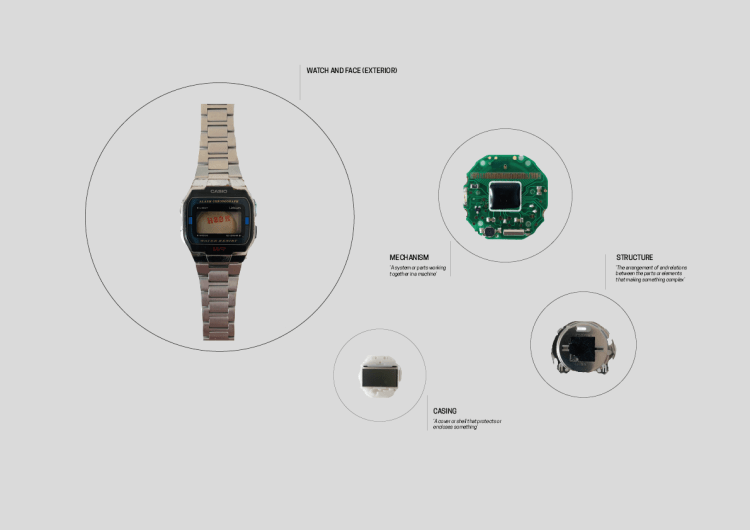
The object I hold today is in parts, it’s currently awaiting a new battery. However, I found it fascinating being able to see all the parts which made the watch function, from the casing, the mechanism to the exterior which encases the motor of the watch. We rarely see the inside of objects, we just let them run and hope they don’t break. We can delve deeper into the watches’ history by looking into the structure of all the parts, from the battery, to the motherboard and to the Chinese stainless steel which is used to build the strap.
Watch as an object – my view
A timepiece? An object? A part of my daily routine? A piece of machinery? A few terms I would use to describe the object. It’s a machine which allowed me to structure my day, it kept me on time, it got me home, it let me know when to be somewhere. The watch tells me something everyone else across the world sees – the time.
Final outcome – Editorial
Exploring the movement of time and a visual reference of a ‘clock face’ to explore typographic application for this week’s editorial output.
References
Royal Museums Greenwich, 2020. What is Greenwich Mean Time (GMT) – and why does it matter?. [online] Rmg.co.uk. Available at: <https://www.rmg.co.uk/stories/topics/greenwich-mean-time-gmt> [Accessed 18 July 2021].
CASIO, 2021. CASIO History 2010. [online] CASIO Official Website. Available at: <https://world.casio.com/corporate/history/chapter05/> [Accessed 18 July 2021].
Icongraphics, 2008. Piet Zwart – iconofgraphics.com. [online] Iconofgraphics.com. Available at: <http://www.iconofgraphics.com/Piet-Zwart/> [Accessed 18 July 2021].
Lloyd, A., 2017. Alexis Lloyd — Object Narratives. [online] Futureofstorytelling.org. Available at: <https://futureofstorytelling.org/video/alexis-lloyd-object-narratives> [Accessed 20 July 2021].
Wooldrage, C., 2017. Found Font (1995 — present). [online] Medium. Available at: <https://medium.com/fgd1-the-archive/found-font-1995-present-2328b96459fe> [Accessed 20 July 2021].
Sayu, S., 2020. History of CASIO watches. [online] Hsjohnson.com. Available at: <https://www.hsjohnson.com/blog/2020/06/the-history-of-casio/> [Accessed 20 July 2021].
Walsh, C., 2019. Harvard exhibit reveals ‘the spirit’ within everyday objects. [online] Harvard Gazette. Available at: <https://news.harvard.edu/gazette/story/2019/04/harvard-exhibit-reveals-the-spirit-within-everyday-objects/> [Accessed 20 July 2021].
Weekly Critical Reflection
What went well this week: How are we at the end of week 7 already? this week was my least creative week. I struggled to find the motivation and get going this week. This said I think I have managed to create an interesting and ‘out of my comfort zone’ editorial piece. I am not one for writing and constructing text but felt this short piece captured what I wanted to capture.
My process this week wasn’t as natural and free as previous week’s and I think this shows slightly in the rigid outcome? Again though I think it’s given me a different outcome to what I normally produce which has surprised me slightly.
Keep working on: Research around themes of the week further , try and dive deeper into research methods to find further narratives. Continue to document process throughout the week – this week it dropped off slightly. Take time to explore on paper rather than solely digital.
Into next week: Process, Documentation, bBe creative, Adapt, Be Ambitious!
 James Shaw