Lecture Comments & Reflections
This week’s questions:
1.What would you like to be doing that you are not doing within your work?
2. How important are side projects and are you currently working on any?
Pull out notes:
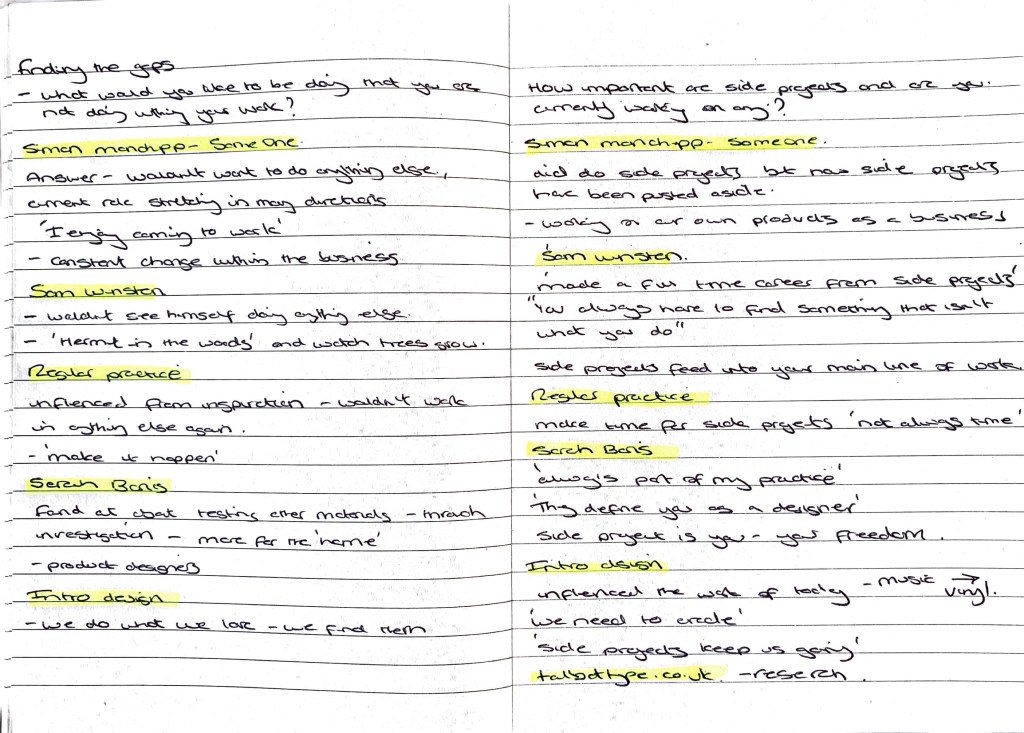
– Everyone was happy in what they were doing as they saw it as a sector where you can constantly challenge yourself and work in different mediums, this fuelling creativity.
A mixed response on side projects, with Simon Manchipp from SomeOne saying he simply doesn’t have the time to do side projects however ‘SomeOne’ are starting their own range of products, almost a side hustle within the business.
Sam Winston pointed out that his career was born from side projects and that ” you always have to find something that isn’t what you do” – From this it could be finding a hobby which almost pulls you away from creativity for a second to let the brain refresh or a new way of working within design, to test and challenge yourself.
Sarah Boris made a point on side projects that ‘ They define you as a designer’ I agree with her to an extent as I started off doing side projects but if I look back at those projects they wouldn’t define me now as a designer. I think it’s an evolving process, you exploring and finding out what you enjoy creating. It allows you to be free, you own creative freedom.
My response to this week’s Questions:
1. What would you like to be doing that you are not doing within your work?
I currently love being able to be creative full time however since joining the masters and before I have always wanted to be involved in more experiential design projects, getting the public involved and seeing design come to life. Both music and live performance really interest me, especially as design / production is such a key part of live performances. I would love to be able to start using music / large scale objects within my work.
From a business point of view – I want a small team (1-3 of us) collaboration is one of the things I wish I was doing more within my work currently. This for me is something I want to build and develop into my current practice.
2. How important are side projects and are you currently working on any?
My view on side projects has changed. I think I set myself up to go freelance through doing side projects, and at the time I was preaching that it was the way to get into the design industry. I think you have to be careful though, as you can get comfortable and business wise it might not work.
However saying this I think side projects are a branch of your creative body that should be considered, it allows you to be free in what you want to create, allows you to investigate new areas and have fun. Yes you can do these within client work but there will be some desire to try new things. If I was asked by someone coming into the industry how important side projects are, I would say very important, it shows you are keen to practice, own initiative and motivation to create, discover and solve problems.
My current side projects have changed over the years and now I see them as real interests of things I want to play with, for example at the moment I am working with needles and thread (cross -stitching) an outlet I give when I have time. In terms of ‘Graphic Design’ side projects I currently don’t have any and haven’t for a while…. This has been due to ongoing client work and working, there hasn’t been the time.
Brian Eno – How to beat creative block reflections:
– When working alone there is more chance for creative block
– When working in a team there is more time for distraction with a constant barrage of change, conversation & opinion
– I found it interesting that Brian wrote himself a set of cards (prompts) that he would pull upon when in a creative block. The one that stood out to me was ‘work at a different speed’ – We constantly go about our business as we do, but do we rarely think about how fast or slow we are working? When you get stressed or overloaded you work faster, having a prompt to ‘slow down’ could be an interesting take. Brian used it to go really slow, even moving to the area he was working, really stripping it back and focussing on what he was doing. He mentions that under pressure we loose all those creative idea from our brain as it’s moving fast and we are thinking about finishing, working on that one project.
Brian Eno on creative potential:
Brian says ‘ persuade you to not gave a job’ – really bold statement and as he said it was received negatively by some within the education sector. I however to an extent agree with him. We as creatives have passions and interests different in some way to everyone else, why should we have to mould ourselves into a way of working of someone else? Learn and inspire from them yes!
The journey I have been on since graduating with my BA in Graphic Communication almost follows this statement. I always felt I wanted to create work of my back, not wanting to work for someone else within an office setting, however I did also want to learn what’s it like to work in a studio.
Design Development (weekly Challenge)
Weekly challenge questions:
IN PROGRESS
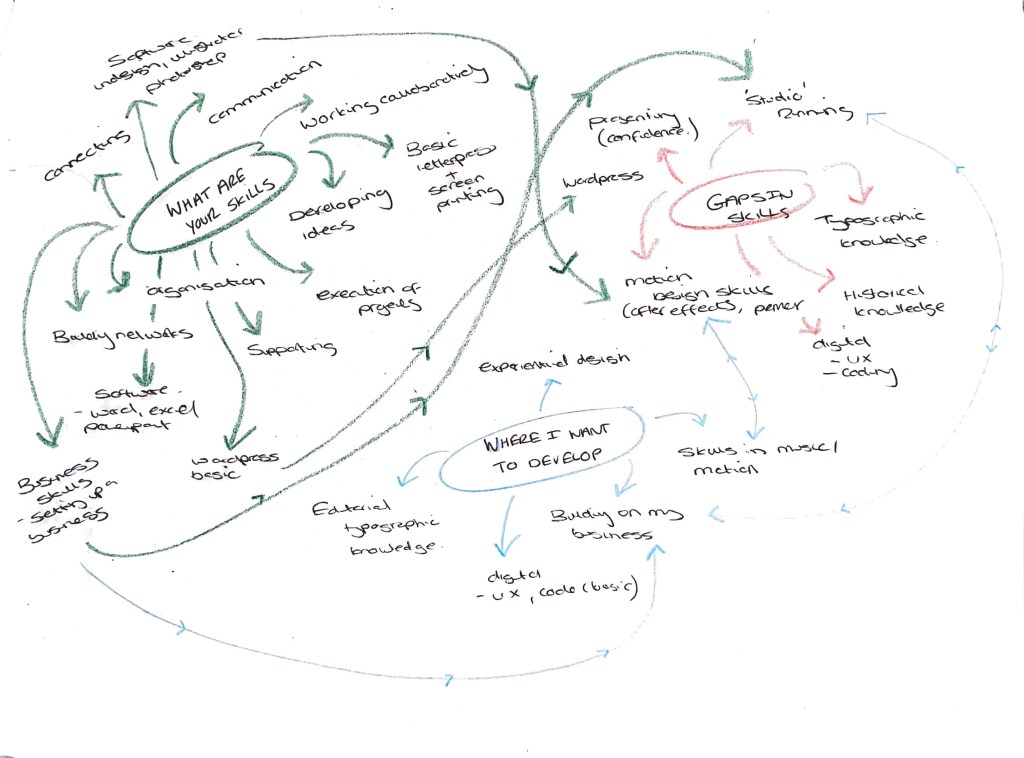
What are your skills (Current)
– Developing ideas and creating initial thoughts / sketches in response to a brief (client & personal)
– Communication – Communicating between me and the client
– Organised
– Experimenting with new materials and mediums for creative outcomes.
– Entrepreneurial Skills
– Setting up a freelance business
Gaps in Skills:
– In Depth- typographic knowledge
– Confidence in myself when talking about my work and pitching ideas.
– Digital Skills (After effects, motion)
Ways of thinking (current)
– Ideate
Where I want to develop:
– Further development of entrepreneurial skills into how to run a ‘studio’ / a small team.
– Skills in working with motion and music (within graphic design) – area I am very keen to explore and experiment
– More in depth skills within typography – allowing me to be confident experimenting with type
Initial Sketches thinking about my design process below (brain to paper)
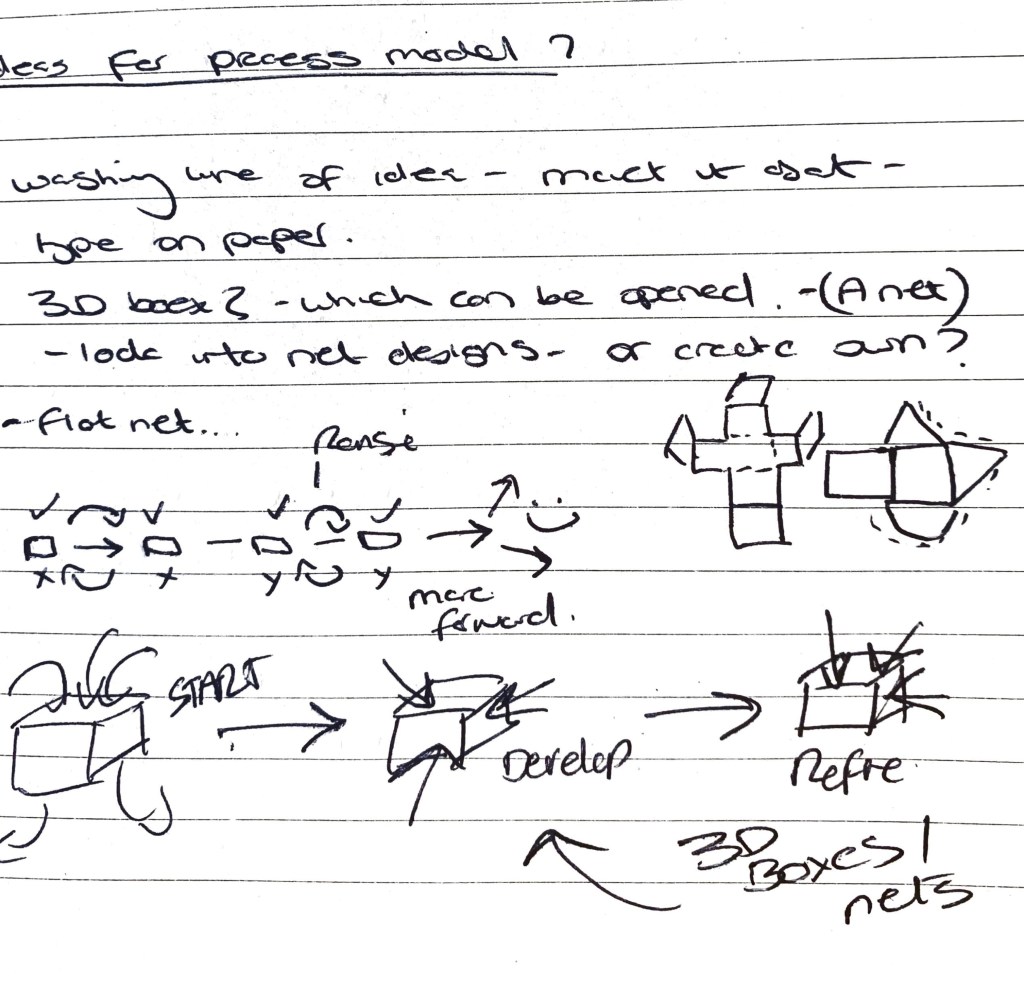
Left sketches
1. A ‘net’ approach – thinking how each part of the process creates a whole (but can be left open at multiple stages for further exploration and development.
2. A series of ‘3D’ boxes – showing that inside there is a wide range of creativity and exploration but on the outside it’s yet to be explored
Right sketch
Grid based map which takes you on a journey – allowing for multiple routes, directions and exploration and adventure for both the client and myself (shapes / objects defining key areas of development) Skill gaps defined outside of the map almost as highlighted zoomed in segments?

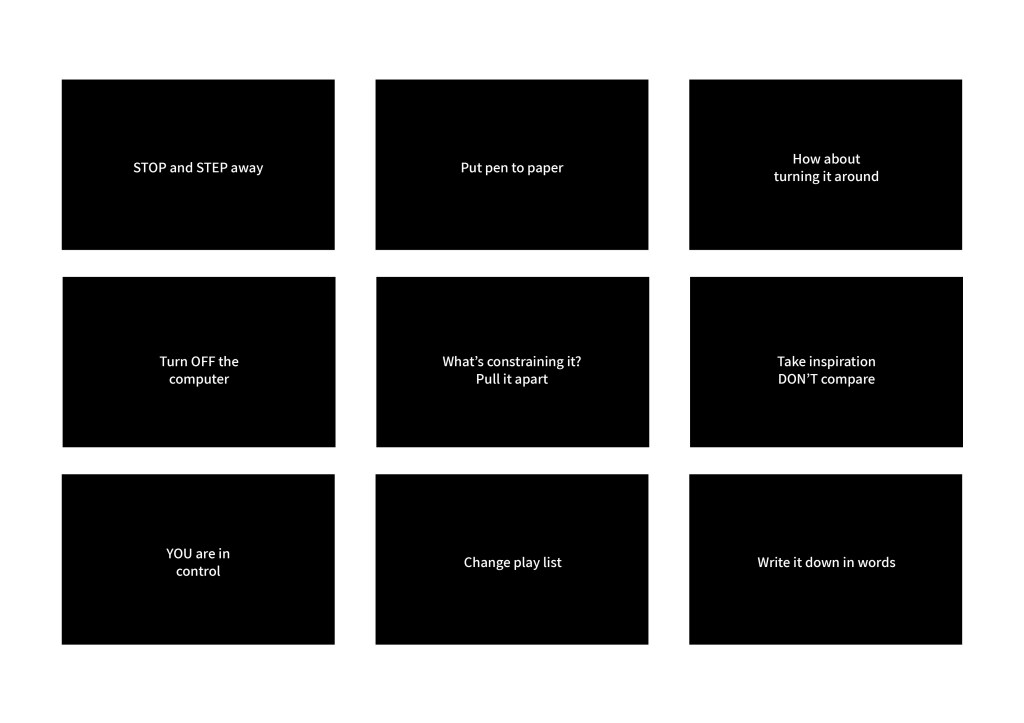
Creating my own ‘Cards’ in response to Brian Eno’s Oblique Strategies (results below)
– I based these on tasks I have put in place for myself before which have had an effect. We are so glued to our screens not just working but also daily with smart phones. It’s good to step back, step away and get back to basics at times. Refresh the creative juices, try new things and take a breather.
Process Model First sketches
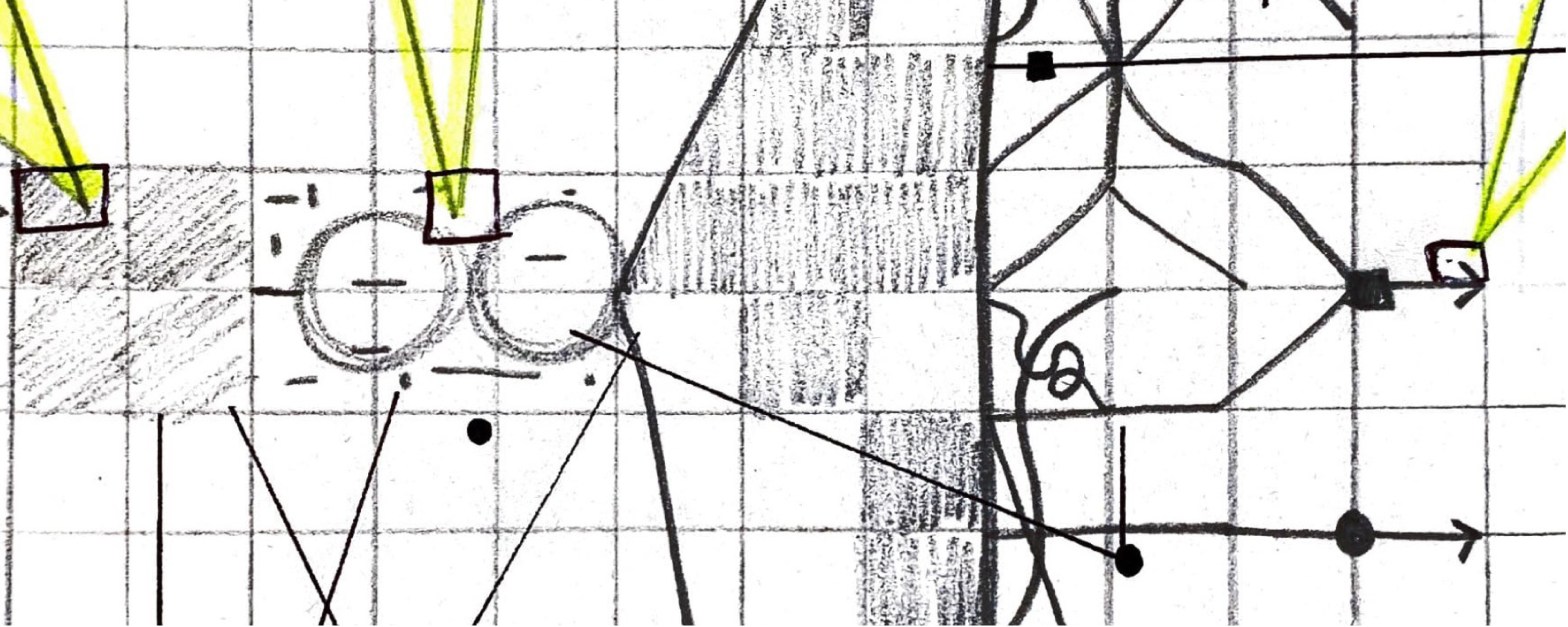
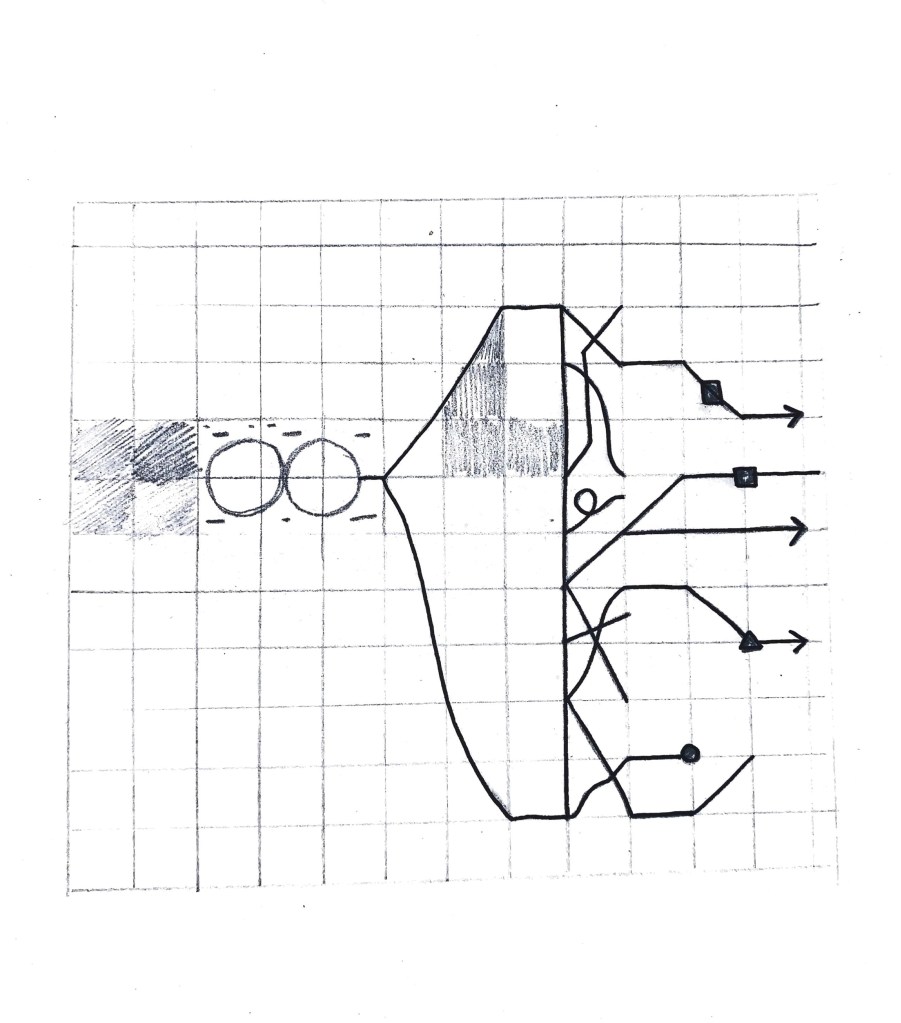
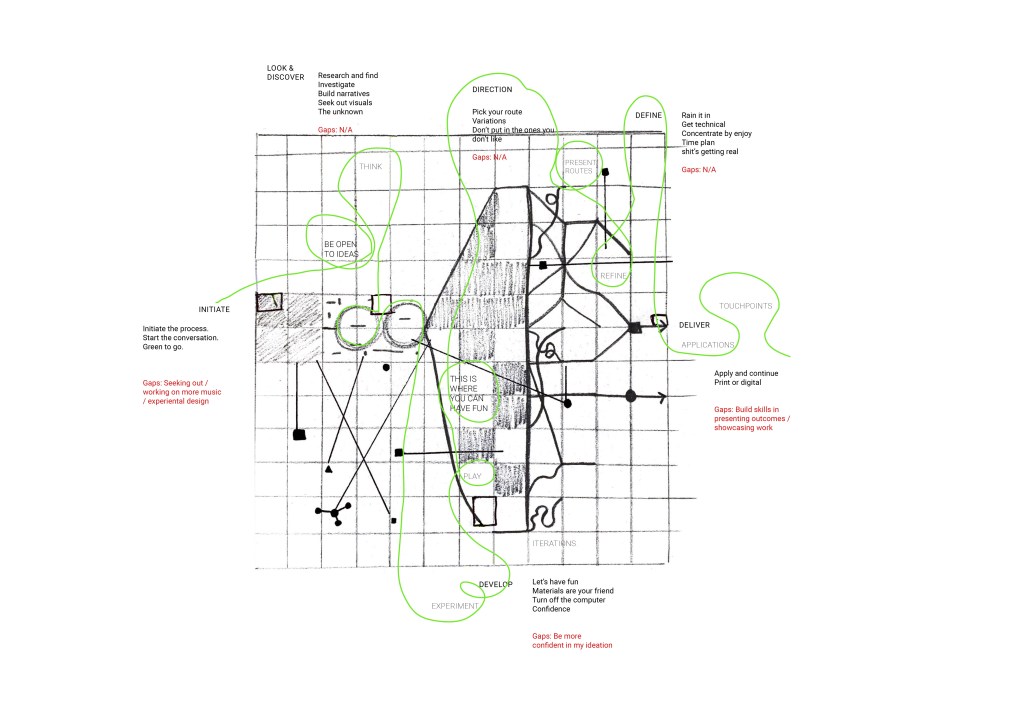
Thinking about the way in which I work (format & Structure) I am an organised person and feel my process is quite formatted and structured at times (almost map like) Through my process of working though many interactions take place. whether this is feedback from clients, peer feedback, reviewing the work so far, research, inspiration these all feed into the process. Key areas such as Discussion, Ideate, develop and deliver however these areas are still open slightly.
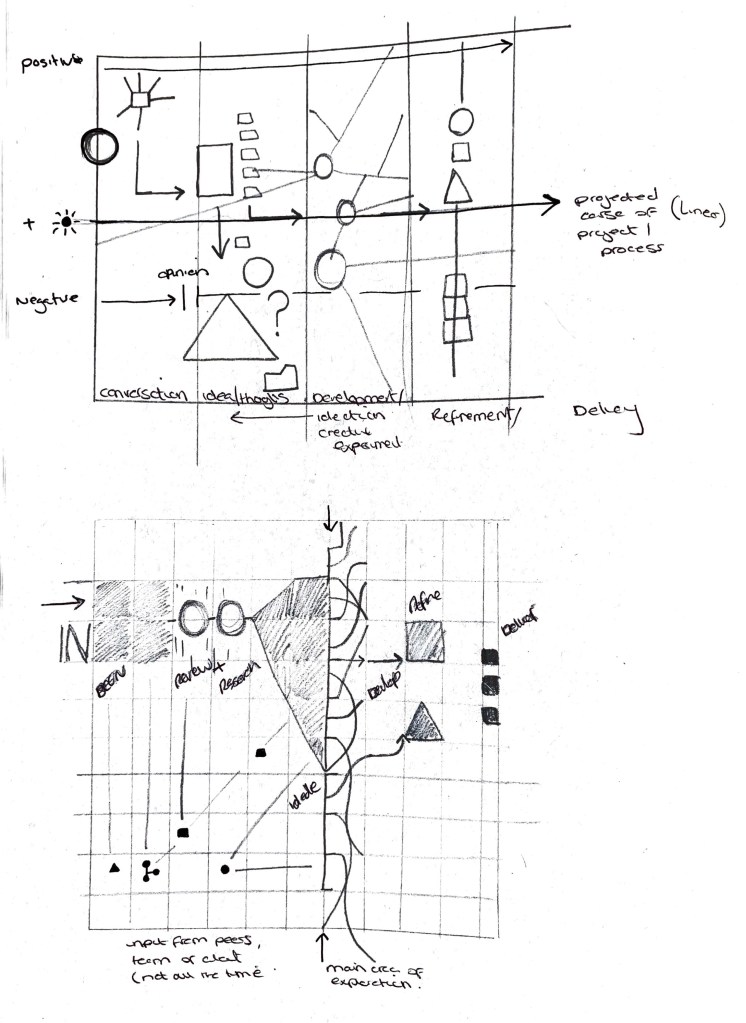
*Above – Second sketch is a progression and thinking more about those outside influences (small black squares, circle, connecting dots) Thinking more visually how the research and development stage happens, it’s always a busy part of the process (many outcomes, many opportunities)
I like how this flows but also contracts throughout the process.
Next I want to include skills gaps, areas I want to work on. This could be overlaid onto the image? Using acetate or tracing paper?
Should it all be black and white? Parts of the process are full of life, maybe these should be pointed out with colour and not just black. Keep black and white areas at the start? (but you could argue getting the brief to be an exciting and motivating part of the process)
*Below – Further development of my process and highlighting skills gap / areas that need working. Really enjoying how the piece is coming together. I think I could start to introduce some typographic elements and potentially remove the grid or make it less harsh?
Something interesting developing from the arms spanning off from the main process model design. Could these then become there own process of up-skilling / building knowledge in areas.
Next stage is looking at taking this into a digital space. I want to look at how both digital and analogue can work together to create my design. Plus still want to explore the use of tracing paper / a film over the top of the process.

Feedback from Wes on the ideas wall about the above sketch / development. Wes mentioned about using multiple layers/ paper stocks to create the process journey into a book. As mentioned above I want to investigate how I can introduce other layers to show my gaps / skills overlaying my process. I also want to introduce typography into the diagram and think this could also work well as a separate layer.
*Below Taking the thoughts in from Wes I started to work on create separate layers using different papers and tracing paper. After a few experiments it wasn’t getting to where I wanted it to be. I wanted it to feel almost like a journey of peeling back the layers. It felt clunky and clumsy not playful and creative.
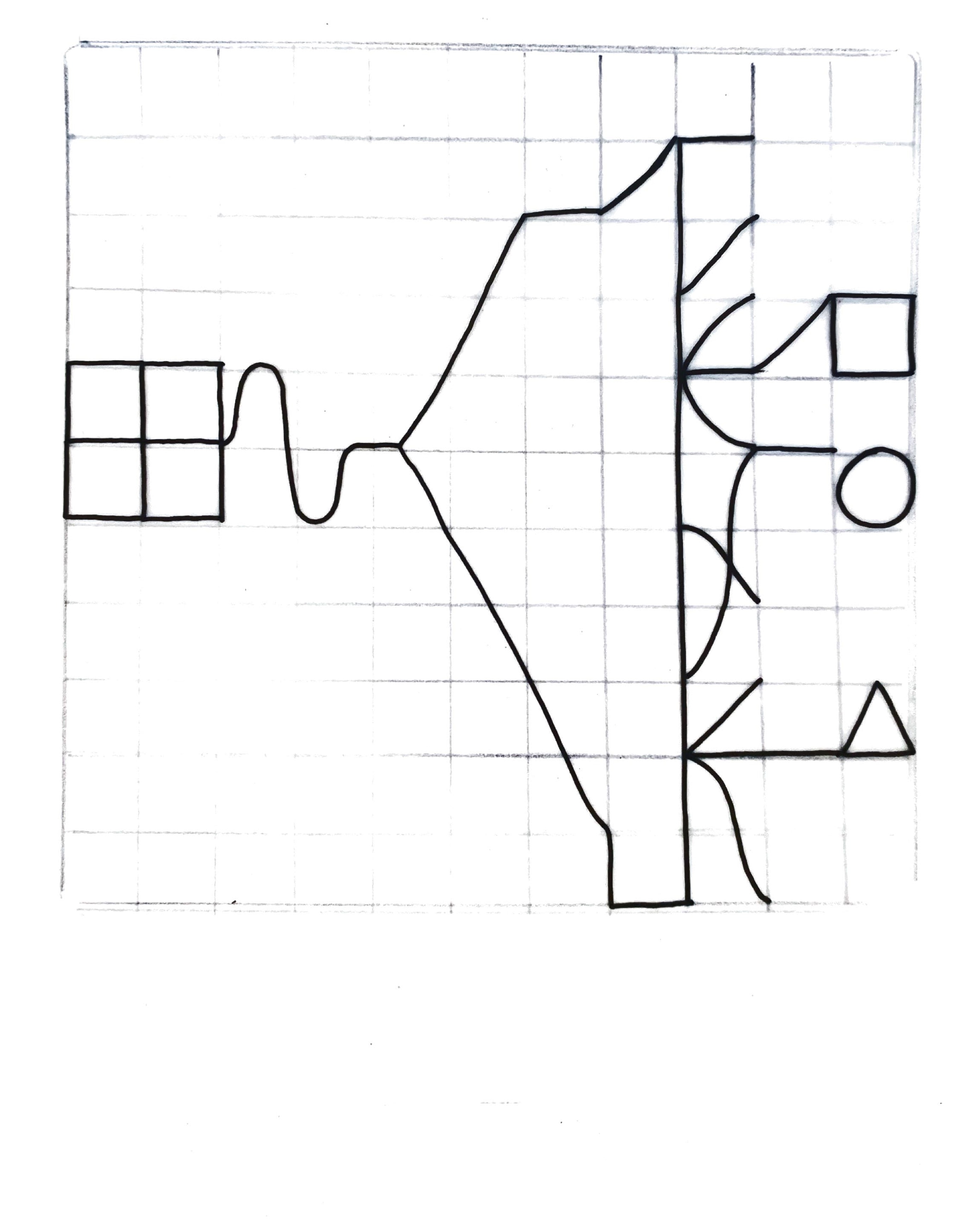
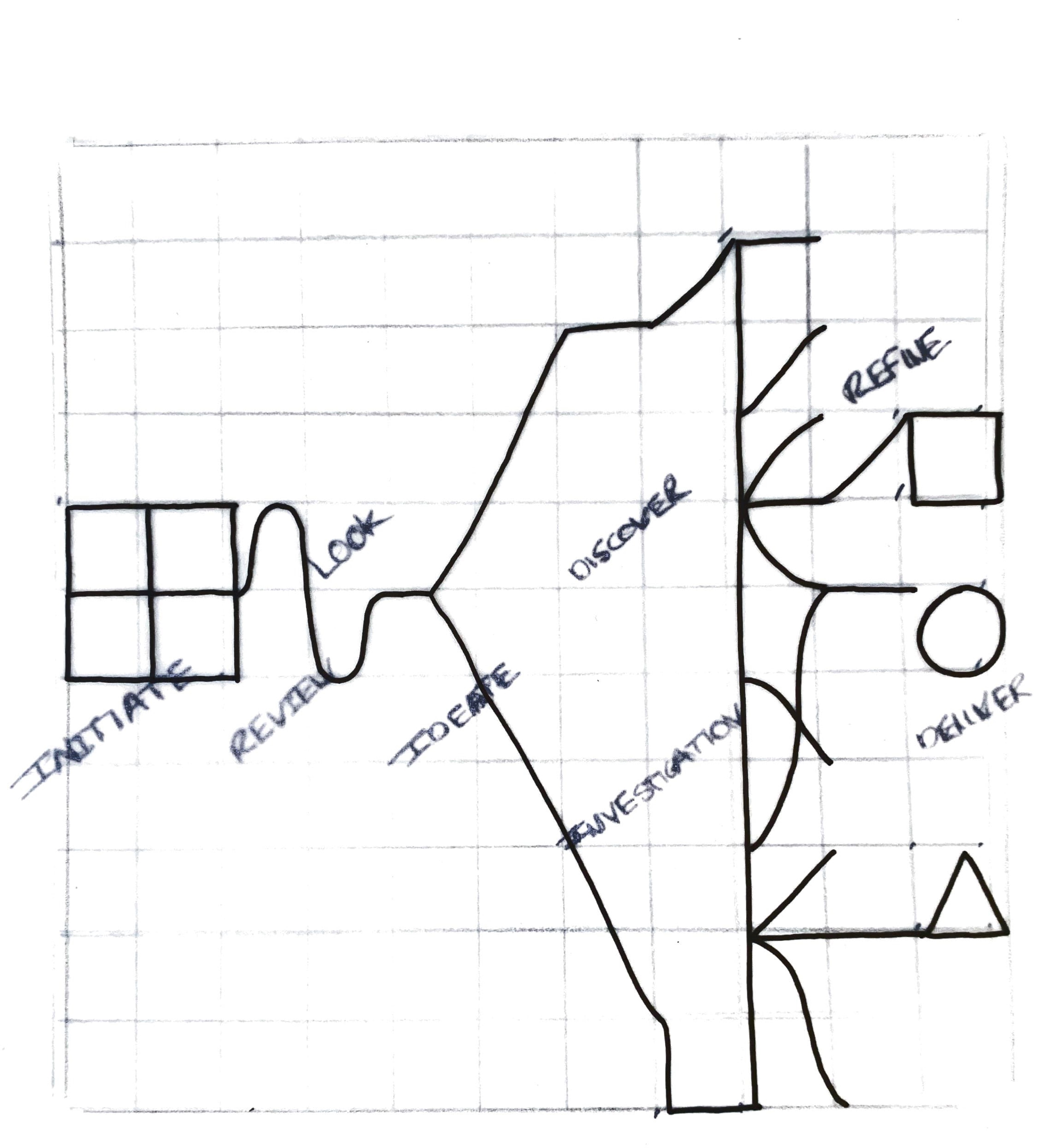

*Below you can see the multiple layers separated out into individual sections, for me these work really well as stand alone but also when layers (bottom right image) i am wondering If I could create a whole piece which also pulls out these elements and using descriptions to explain their purpose.
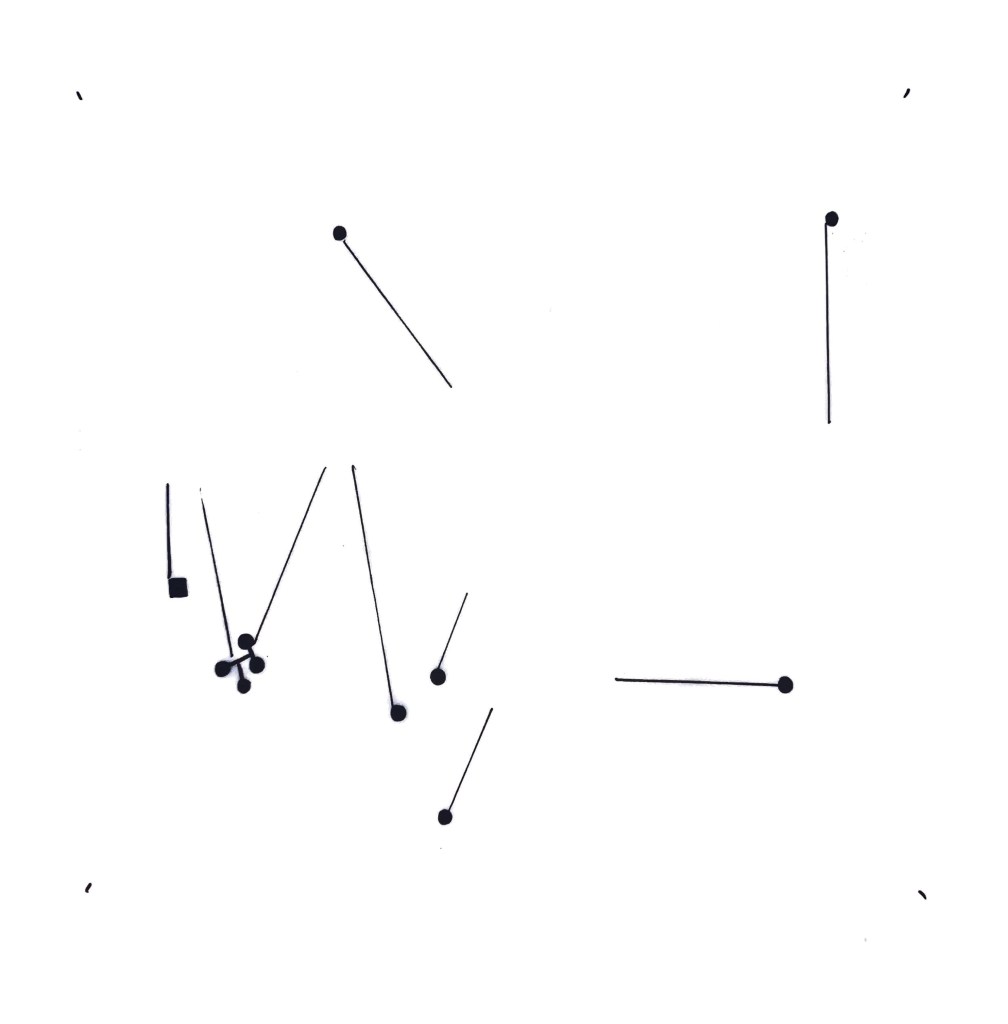
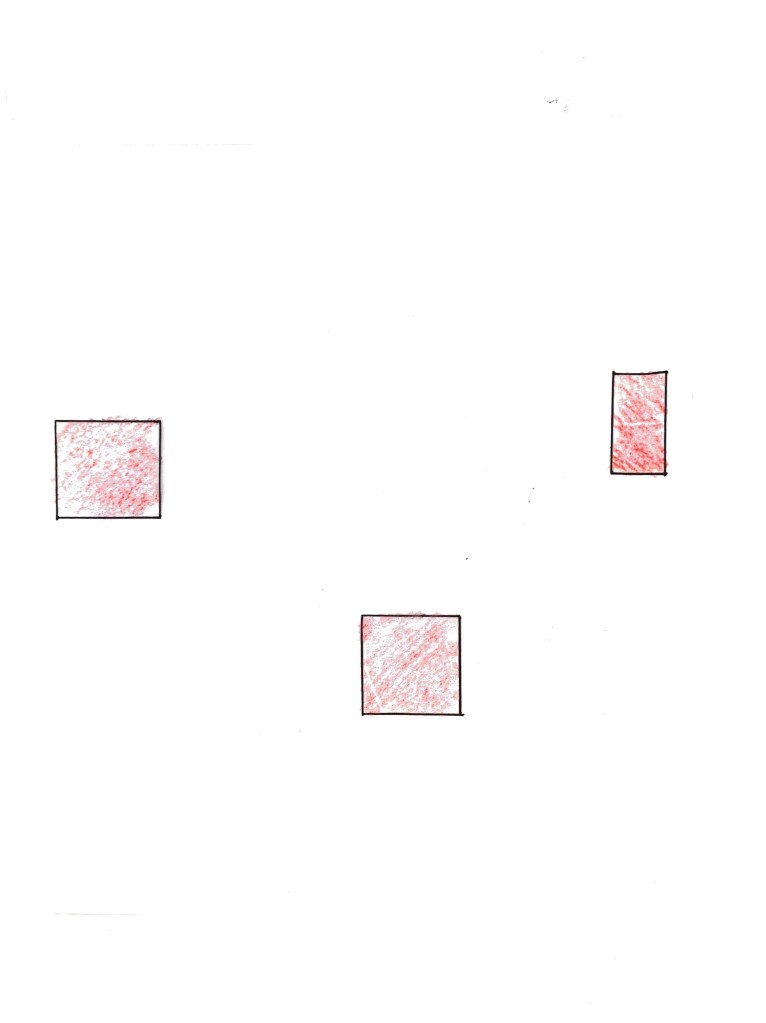

Below – Process stripped back to show areas along the journey
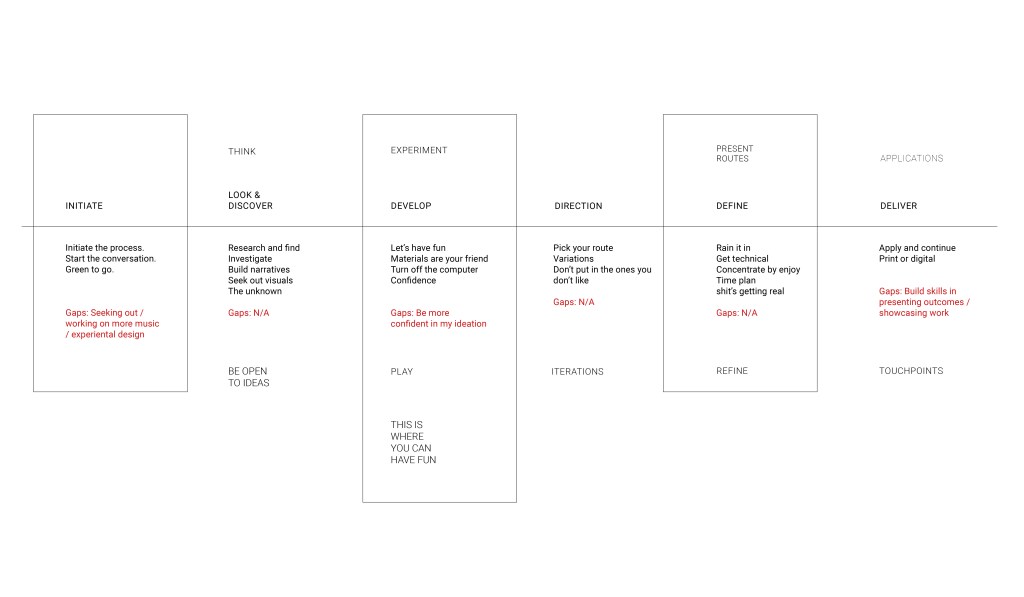
Below – Something drew me back to this sketch – it felt right, it felt like it was going in the right direction and that maybe I was over complicating the process with adding ‘layers’ and other materials.
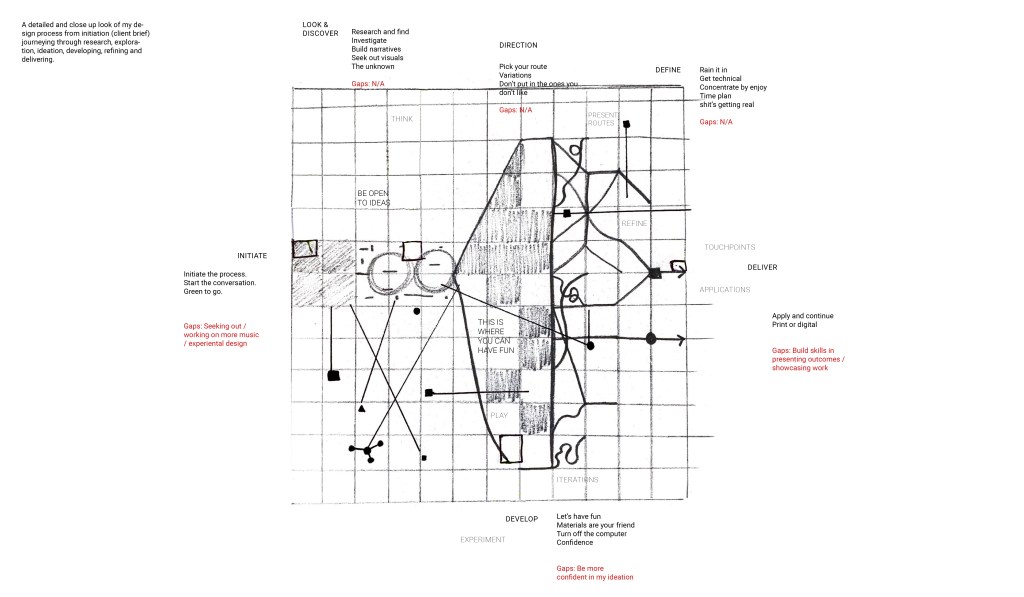
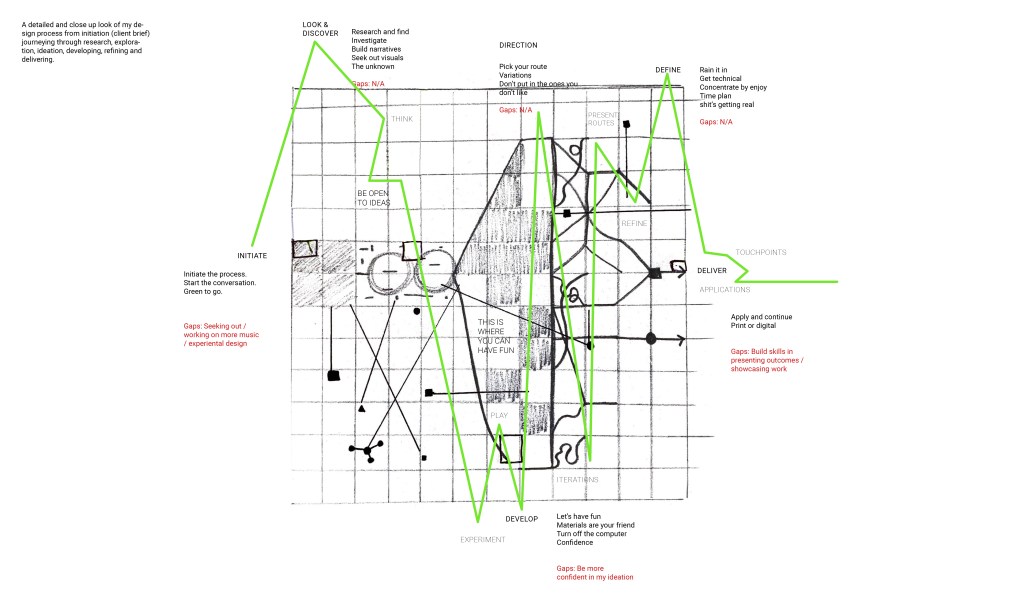
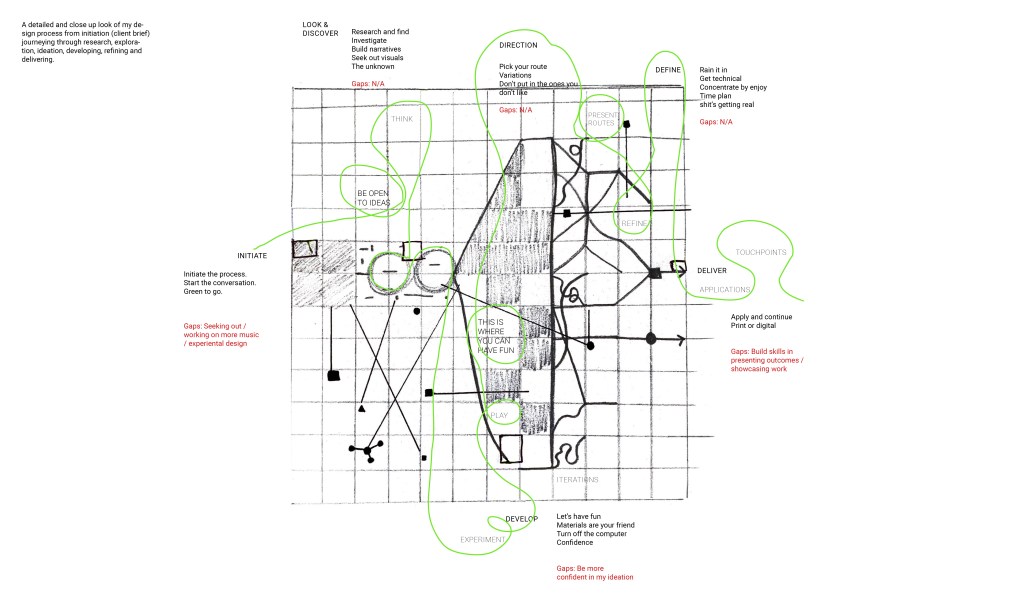
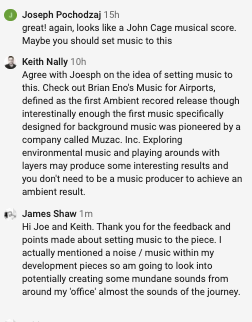
Feedback from ideas wall on latest development (shown above)
Both Joe and Keith mentioned looking into music / sound to accompany the piece. I want to look into this further as I did previously mention in in my development. I spoke briefly about how my process/ journey can change with the music / sounds around me. I am going to explore recording a few mundane sounds from around the home office and merge / play with them.
This could add another layer to the diagram without physically drawing / showing the layer in pictorial / diagram form. When I think of my process there is elements that people don’t see like the mind working, thinking, thoughts, noises, humming to songs.
Process Sounds
Keith and Joe inspired me to try creating my own sound/music to work with my process model. I wanted to capture what was almost going on inside my mind. I picked up sounds from around me, from the kettle boiling, door handle opening, keyboard typing, conversations, the fan on. Keith linked me to the work of Brian Eno’s Music for airports. I liked this almost calming, euphoric sound as if your starting your journey to your destination.
Final Outcome
Full experience below via the Youtube link.
Research
Björn Giesecke
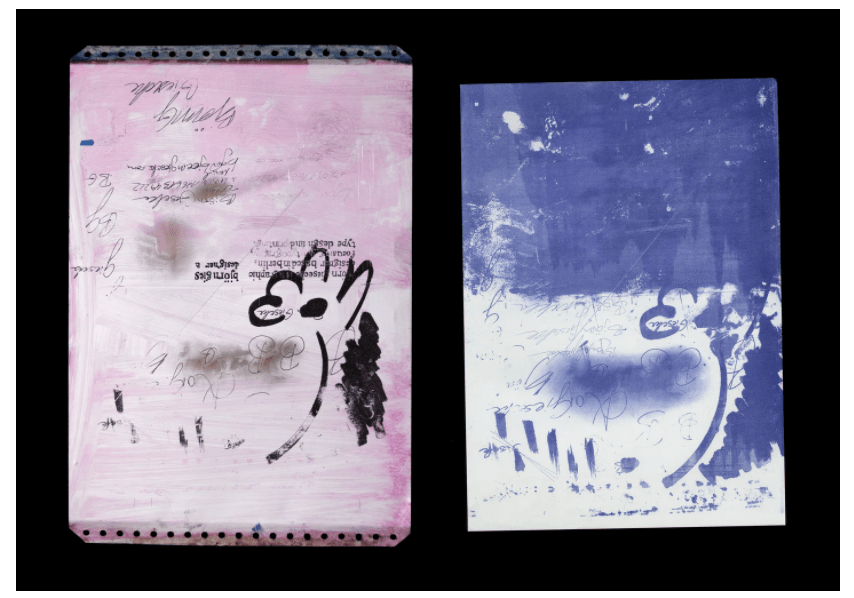
“anything is possible,” as Björn rejects a formula or “recipe” in his process. ‘ Björn’s projects often think about how a specific printing technique can lead all his design decisions’ – It’s Nice That.
Printing process driving the outcome of the project? To go this route is brave I think, you are almost working in reverse and constraining yourself to that printing method. Bjorn work is very expressive, loud movements accompanied by delicate typography (below) What draws you in is the personal element, you feel you really get to see the process Bjorn is going through.
John Cage – Notations
Images from – https://www.openculture.com/2018/01/notations-john-cage-publishes-a-book-of-graphic-musical-scores.html
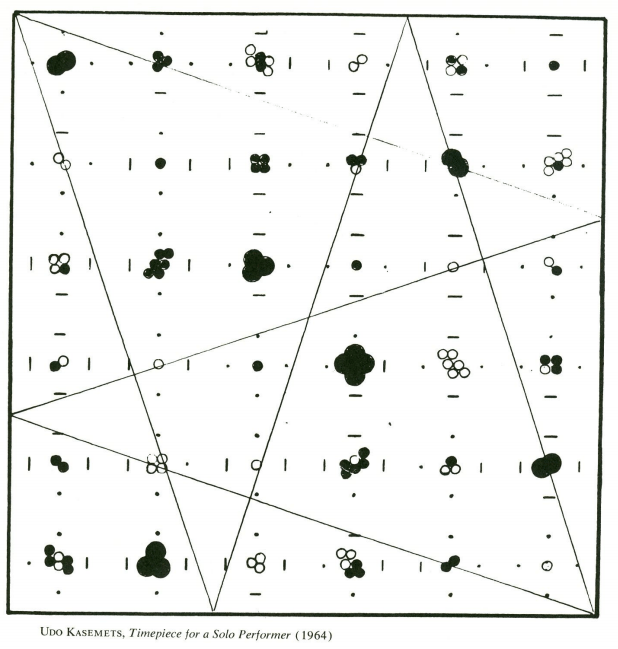
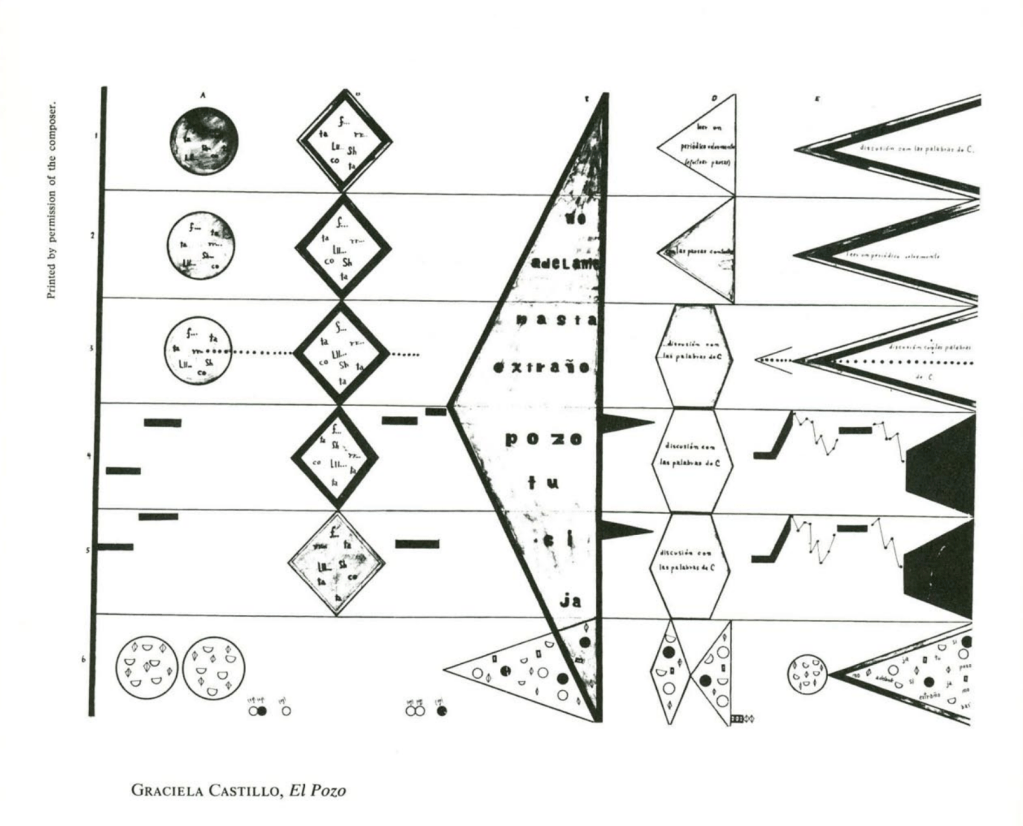
A catalogue of graphical scores! A delight to the eye. A complex set of tangled compositions which for me explore the journey from A-B, the individual process and the routes it can take. These are musical compositions which is also interesting as through a musical piece you can have areas of calm, faster moments, dramatic drops, silence zones, areas of pause, areas of prolonged notes, all similar motions which could occur in a design process.
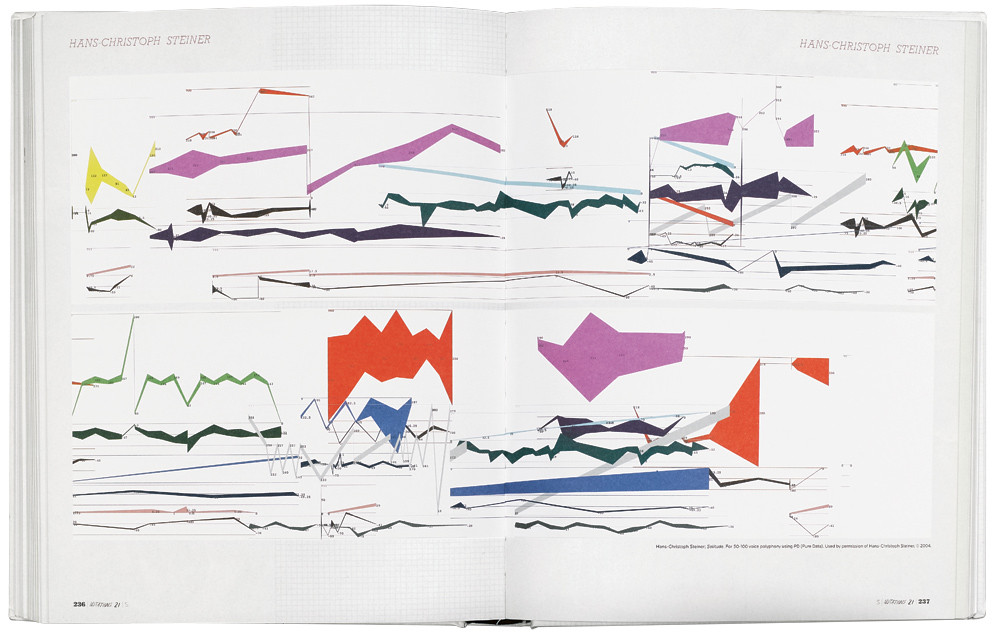
For me these really stand out as an inspiration in how I go about my design process, both visually but also how they have been presented. I work best when in a good flow and mood (music on). There is something emotional and individual about each graphic score as well.
Maybe I could use a piece of music I work to and represent this within my design process. Would this correlate to how I work or be a sharp contrast?
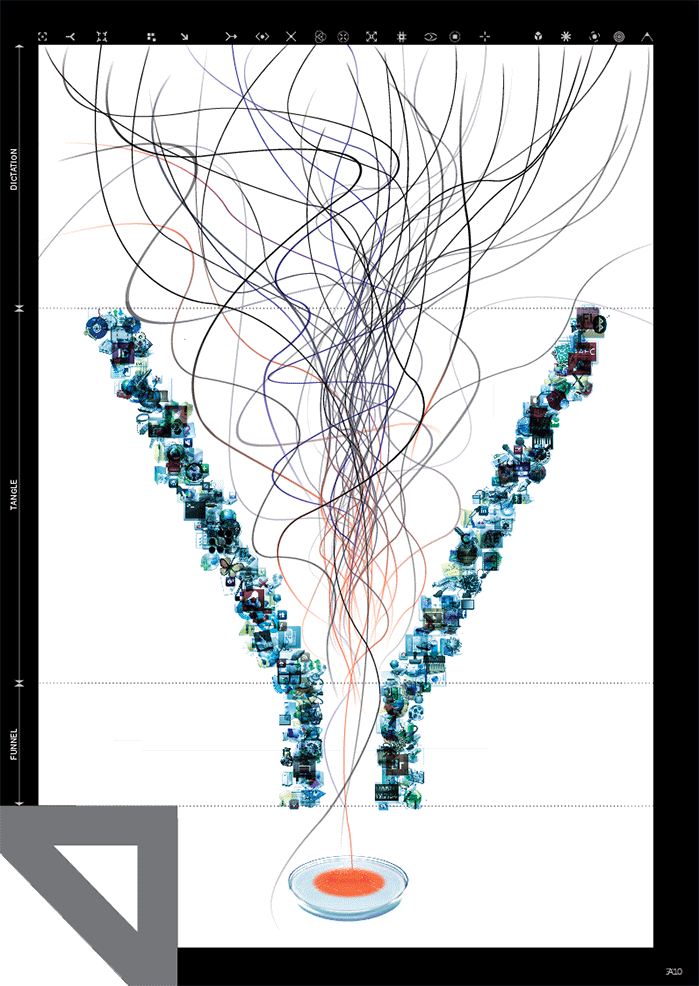
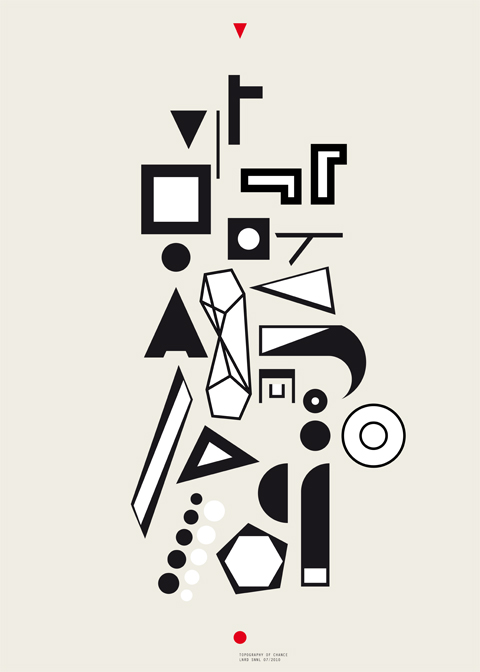
Mapping the process – AGI Porto 2010
Alliance Graphique Internationale challenges its members to respond to a brief in 2010 this was to interpret the ‘creative process’
“I do not own a creative process. If any, it is an ever shifting jumble of expressed and implied concerns from client, audience and so many stake holders. Therefore, each project is a unique venture” – Erik Adigard
One of the members Erik makes this bold statement which resinates to me and my creative process. I feel I own some type of creative process but this does shift and move with each client/ project. For me the thin baseline helps me organise my time and meet deadlines. The process around this though shifts all the time giving each project something new? I agree with Erik in that it’s a shifting jumble but I do think having a baseline can help keep things on track?
Erik response to the brief (left) On the right hand side is another response to the brief from Leonardo Sonnoli
References
Giesecke, B., 2021. Björn Giesecke. [online] Björn Giesecke. Available at: <https://bjoerngiesecke.com/> [Accessed 27 July 2021].
Ibrahim, A., 2021. William Jacobson’s dialogue with his machine explores the border of text and language. [online] Itsnicethat.com. Available at: <https://www.itsnicethat.com/articles/william-jacobson-graphic-design-190721> [Accessed 27 July 2021].
Boddington, R., 2020. Björn Giesecke allows printing processes and techniques to guide his design decisions. [online] Itsnicethat.com. Available at: <https://www.itsnicethat.com/articles/bjoern-giesecke-graphic-design-280920> [Accessed 27 July 2021].
Wikipedia, 2021. Oblique Strategies – Wikipedia. [online] En.wikipedia.org. Available at: <https://en.wikipedia.org/wiki/Oblique_Strategies> [Accessed 26 July 2021].
Walters, J., 1998. Sound, code, image. [online] Eyemagazine.com. Available at: <http://eyemagazine.com/feature/article/sound-code-image> [Accessed 26 July 2021].
Marshall, C., 2018. Notations: John Cage Publishes a Book of Graphic Musical Scores, Featuring Visualizations of Works by Leonard Bernstein, Igor Stravinsky, The Beatles & More (1969). [online] Open Culture. Available at: <https://www.openculture.com/2018/01/notations-john-cage-publishes-a-book-of-graphic-musical-scores.html> [Accessed 26 July 2021].
Ambient 1: Music for Airports. 2016. Directed by B. Eno. Youtube: Methadone Methadone.
Adigard, E., 2010. “Mapping The Process”. [online] M-a-d.com. Available at: <http://m-a-d.com/TEXTS/mapping_the_process/index.html> [Accessed 28 July 2021].
Middendorp, J., 2010. Maps and legends. [online] Eyemagazine.com. Available at: <http://www.eyemagazine.com/blog/post/maps-and-legends> [Accessed 28 July 2021]
Group Crit – Feedback
This week we had a group crit feedback session about the past 4 weeks. Overall this was a positive experience however I do feel my outcome this week was at times misinterpreted in the main group chat. My outcome for week 8 featured music which I had created. Wes thought this was a fantastic idea and said it allowed him to see colour within my process drawing – a point I am curious to explore more? Can colour be represented by sound?
Alli mentioned it felt like the inside of her brain, quite chaotic but with times of ‘hope’ featured. This elevated the whole piece and allowed her to understand my journey better.
Feedback from the crit on week 8 challenge (object)
Points made:
– Eye was dancing around the page of the editorial (wasn’t a negative a positive to take away in relation to the object I choose,
– Consider the object and it’s part much deeper, study them further and show their meanings, structure, shape, form within the editorial
– Be bolder within the use of typography in relation to your object
– Consider the concept of ‘The Broken’
A few interesting points made within the Crit. One point really stood out for me and that was made by Georgia about studying my object even further. She said this would allow me to take away the objects and really apply there feeling to my editorial – Georgia felt I could go further here which I agree with. I think I want to go away and study them further, break them down even further and re think how my editorial is both laid out and presented?
Weekly Critical Reflection
What went well this week: This week I really let go! I felt like I was slightly holding back after seeing other peers work, almost like I wasn’t creating design? But I then realised that I was and it was work I was intrigued and excited about. This week I took on board feedback from Joe and Keith and went with it, exploring the use of music within my work. This led to an exciting and dynamic multi-layered outcome which for me was pushing what graphic design could be. I felt motivated by it, I wanted to create more? It had impact an impact on peers, it got them talking? I communicated something differently to a range of people? That felt good.
So what is next from this – Keep pushing the boundaries and start to introduce music into my work more? Continue to explore this – I felt connected to this. This feels like a small turning point on the course so far for me. I feel rejuvenated to continue exploring what interests me. It’s significant as I am creating work which I haven’t before and can generally see this turning into something more?
Keep working on: What can be learnt from this week? Peer feedback and communicating with the viewer is a great resource. Being able to gain feedback, views and opinions this week elevated my work and thoughts, giving me new routes and avenues to experiment and think about in the coming weeks.
What needs considering? Keep in mind my interests and not shy away from being experimental. I feel I always have to go onto the computer to finish the weekly challenge? This week I left my outcome 80% raw because it felt right, it didn’t need to be refined digitally.
Where else could this week’s learning be applied? I’m going to take this week’s learning into the rest of the masters, especially about exploring graphic design and music further. Continue to be confident in the work I create and speak honestly about the struggles faced each week.
Into next week: Experiment, Mix, Review, Feedback, Honesty, Play
 James Shaw