Lecture Comments / Resources
Johnson Banks – Mozilla Re-brand
The last few years re brands which have been shared online have come under fire with criticism. Brand reveals also happen with out any notice, they tend to have been projects which have been developing behind the scenes before anyone sees them. Then once it’s released feedback both positive and negative is received. A way of getting around the negative comments? Publicly share the design process, this is what happened during the Mozilla re brand by Johnson Banks.
This doesn’t just allow for feedback to be taken on board throughout the process but it elevates and strengthens the re brand. Does sharing it outside of the design team (for example) provide a stronger backbone to the project? or does this open up for critique, negative feedback? (you could see this as a positive to take the feedback on and develop.
For me I think this is a fantastic way to collaborate with a large audience, you could even target certain audiences to share the designs with?
Design Development
Initial visual development of ‘tool’
How can I communicate a tool for collaboration which is inviting to the public of a location? I feel the design needs to be honest and not over produced? I want the feeling of collaboration and that you can share your creative vision at the festival.
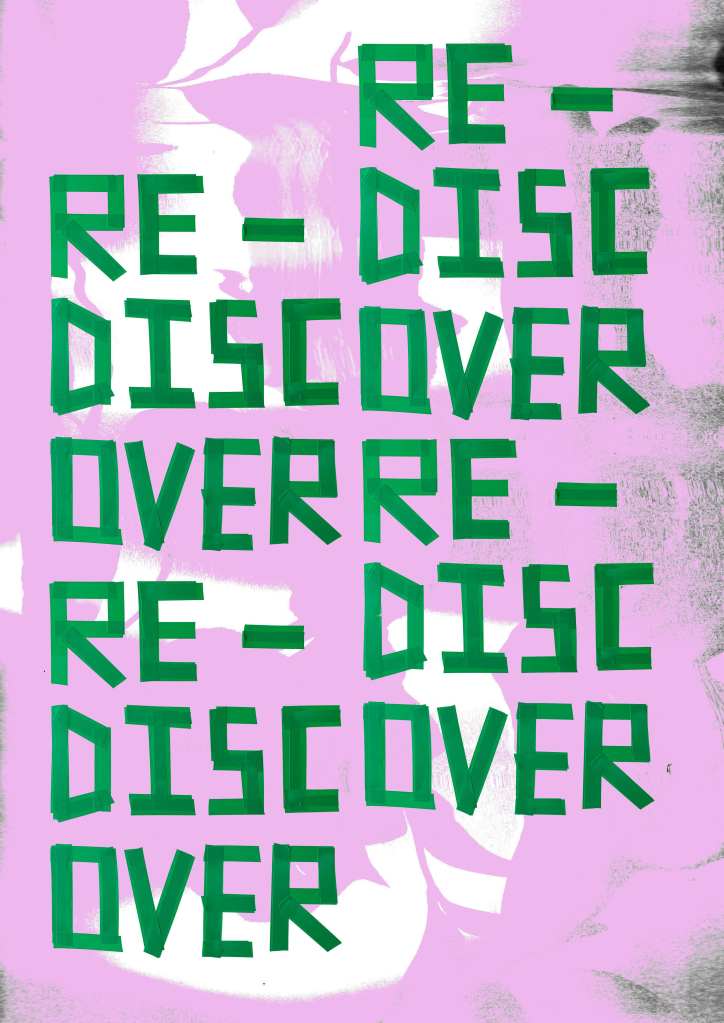
Exploring the use of tactile materials in the creation of assets for my collaboration tool ‘The Re-Imagine Festival’
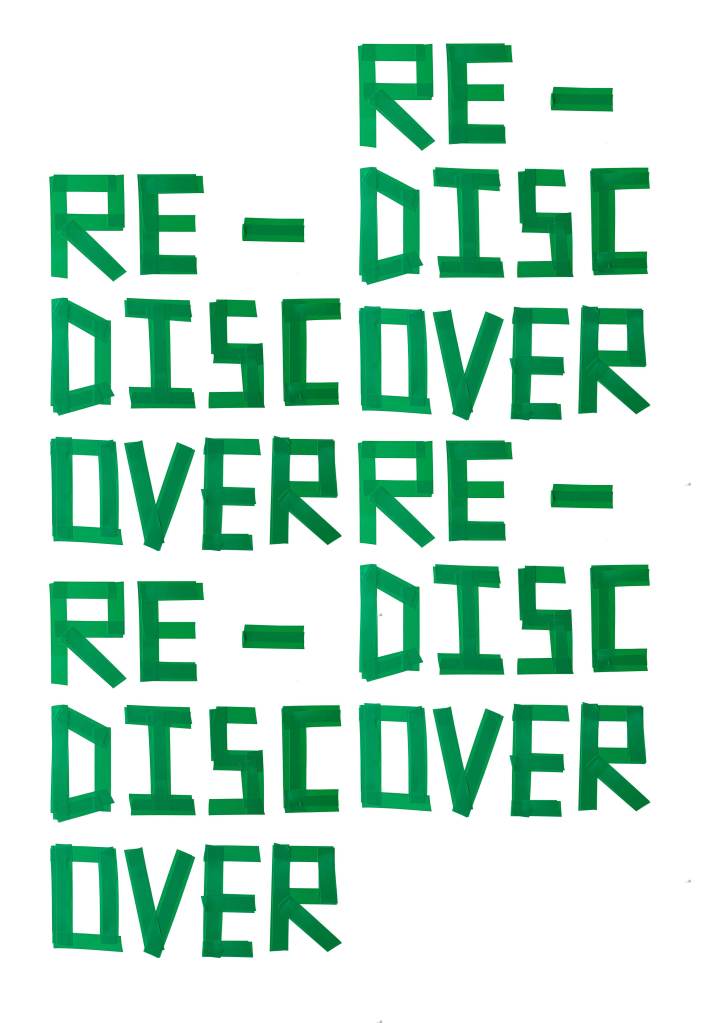
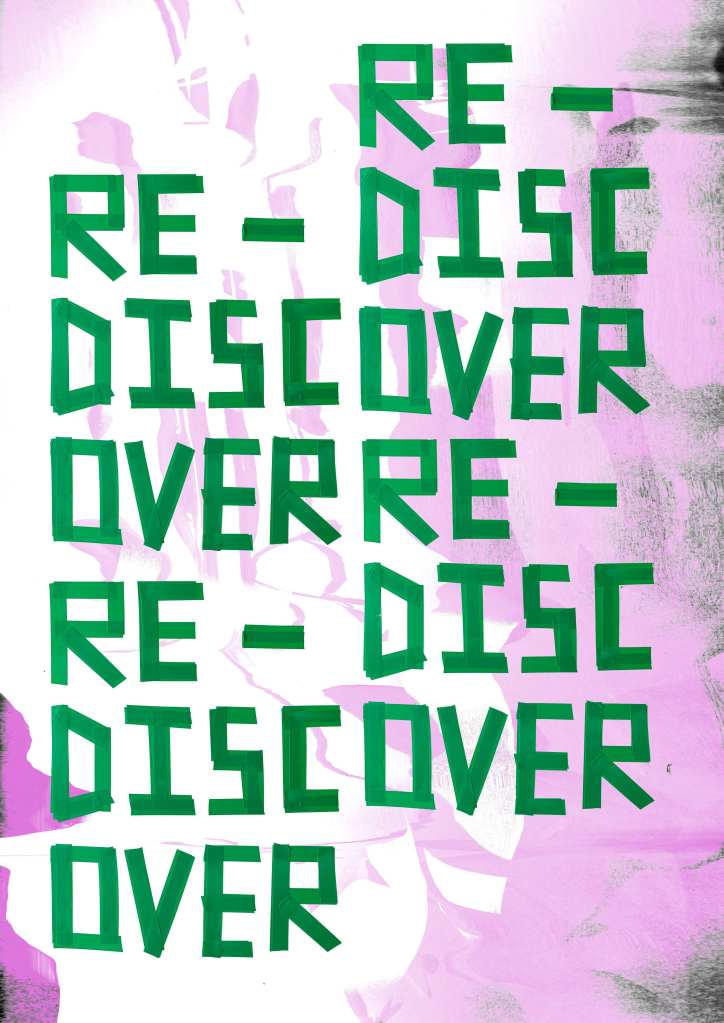
It’s important to me and my developing practice that the materials used I have involvement with before and if they go digital. These are initial typographic plays using words associated with the festival. Raw and low fi outcomes to match the feel of the collaboration tool. A workshop will also allow visitors to the festival to create there own typographic response to the pond using electrical tape. These will be captured and displayed on the digital archive platform (which is stage 2 of the collaboration tool)


What will the festival look like? How will it communicate
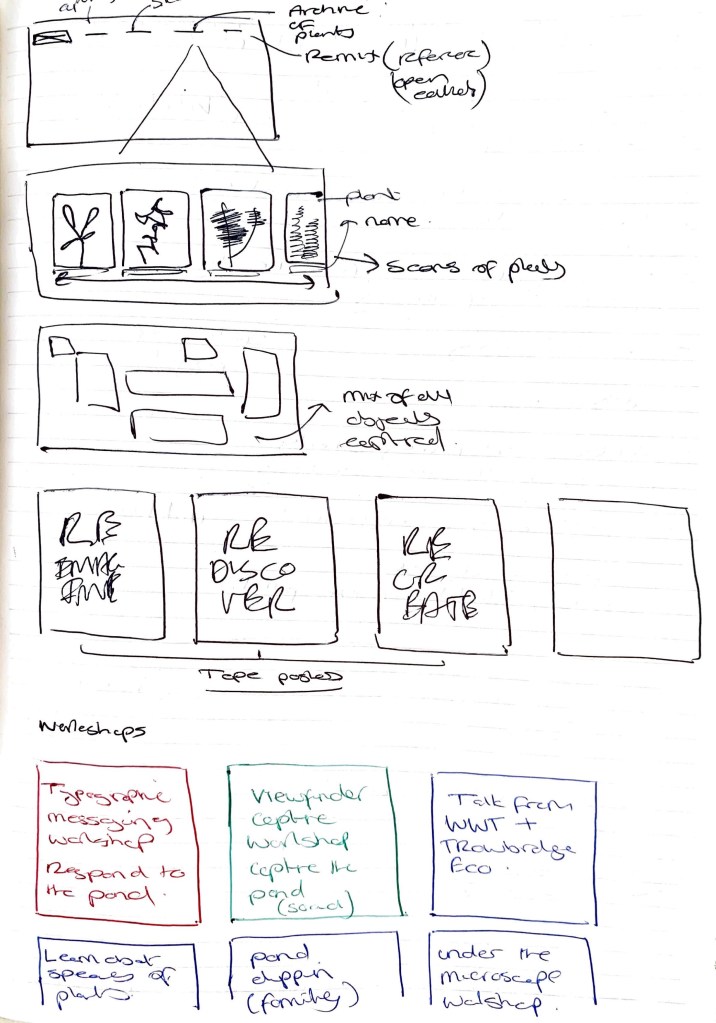
Thoughts on digital platform – Which will be spawned from the festival – as a response and ongoing archive for both creative practitioners and the community
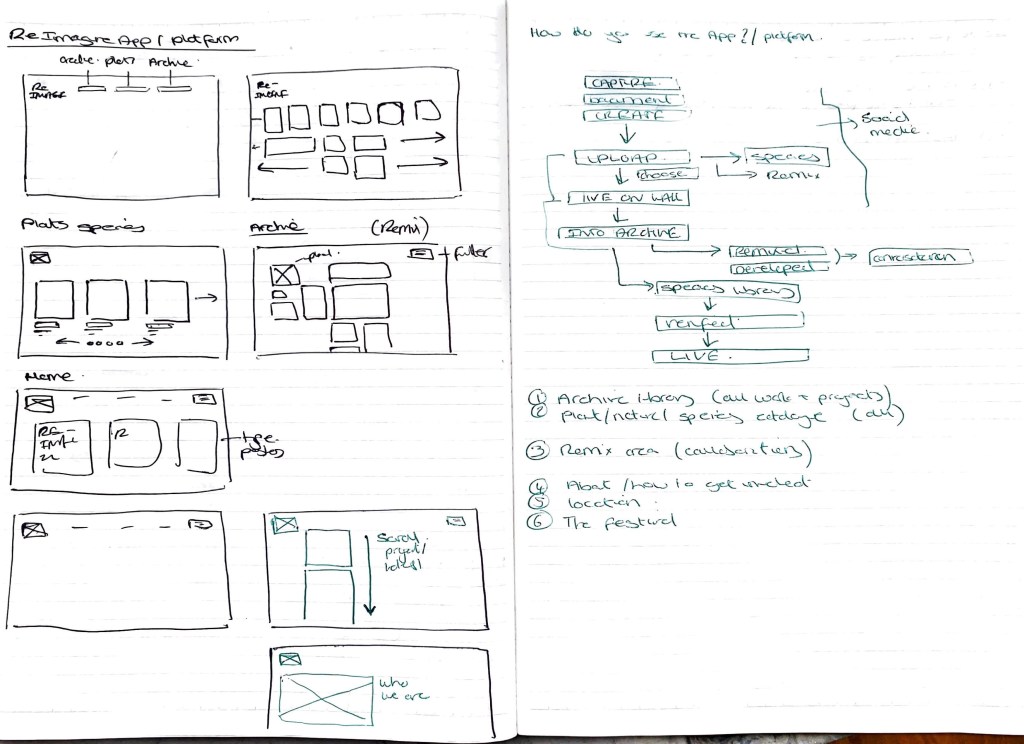
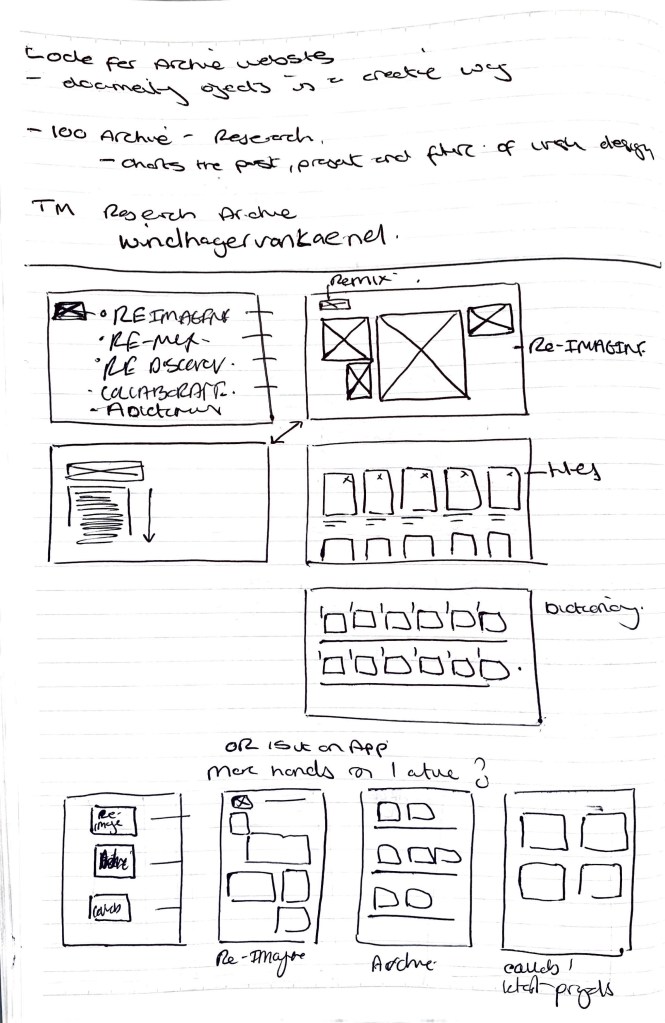
How will the collaboration tool ‘Re-Imagine’ Festival be put across?
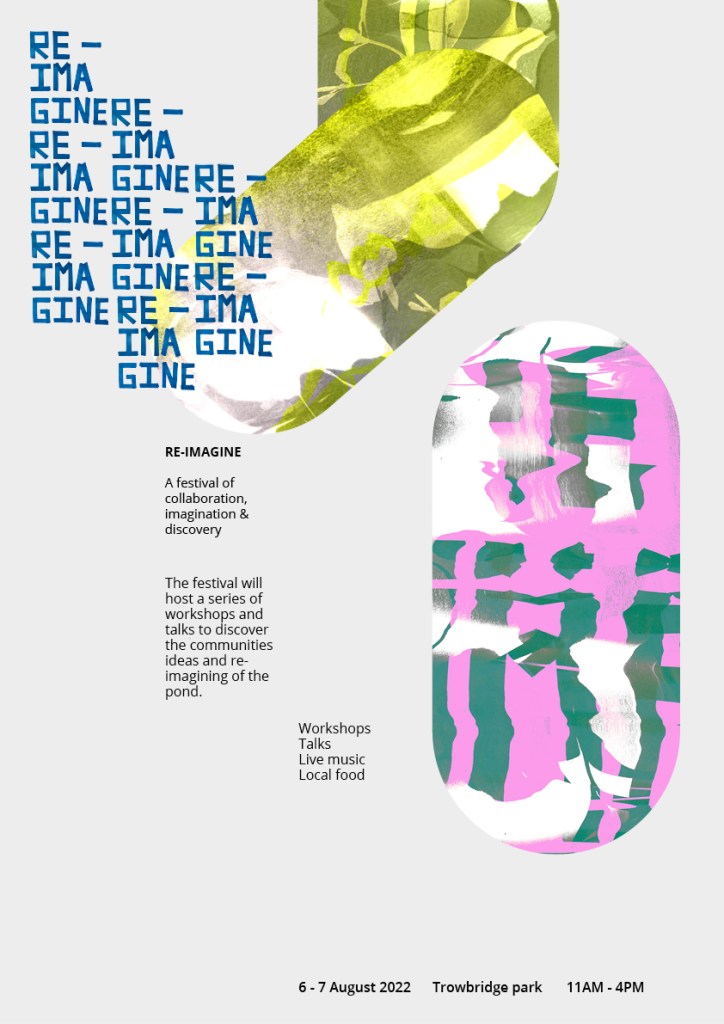
Here I’ve started to explore the use of posters / programmes to advertise what will happen on the day. I want these to however be part of the experience? How can these become an interactive element? Could they encourage drawing / sketching on the back?
Making a rubbing, Add some words, make a sketch of your imagination in response to Trowbridge Pond.
These ‘posters’ would help support the advertising of the event and invite people to the festival. I can see them being both printed but also digital.
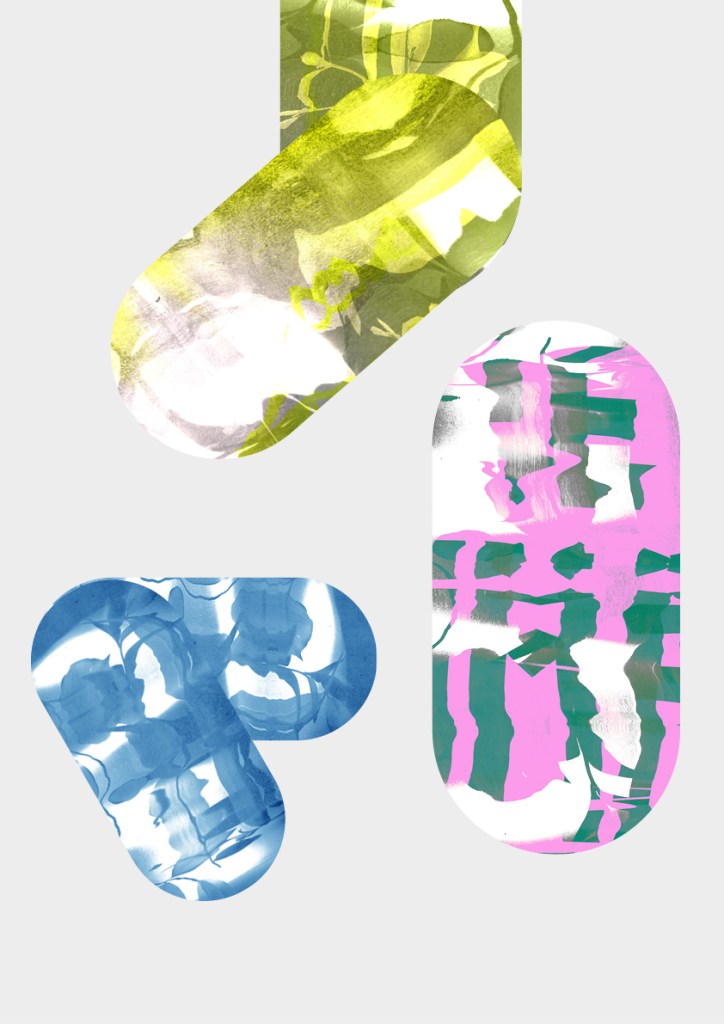
The design of them has been created from existing assets which have been collected from the location of the festival, Trowbridge Park pond. They capture a new view of the pond, a re-imagined world where colour and life can be brought back to the pond, making it the centre of the park again. How can others re-imagine the pond in this way?
The curved shapes reflect the structure of the pond and it’s curved formation but this also starts to think how the pond can be a more inviting space.


Figma Workings / early thoughts /wireframes
After feedback and further thoughts the digital tool would almost be phase 2 of the collaboration tool. The main tool of collaboration would be the festival. Later on the this digital platform would be developed to capture workings, developments, proposals, collaborations and the archive of wildlife and species.
The tool would be developed as a website which could be accessed by the communities via a ‘log in page’ There would be elements of the site which will not require this where the public can explore collaborations and the creative archive.
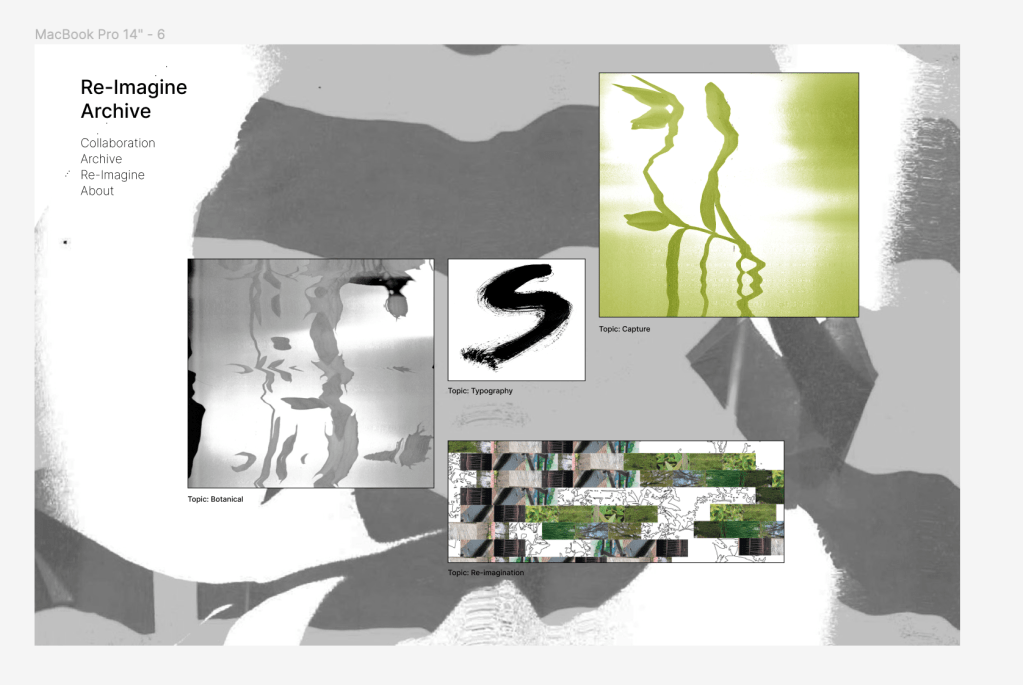
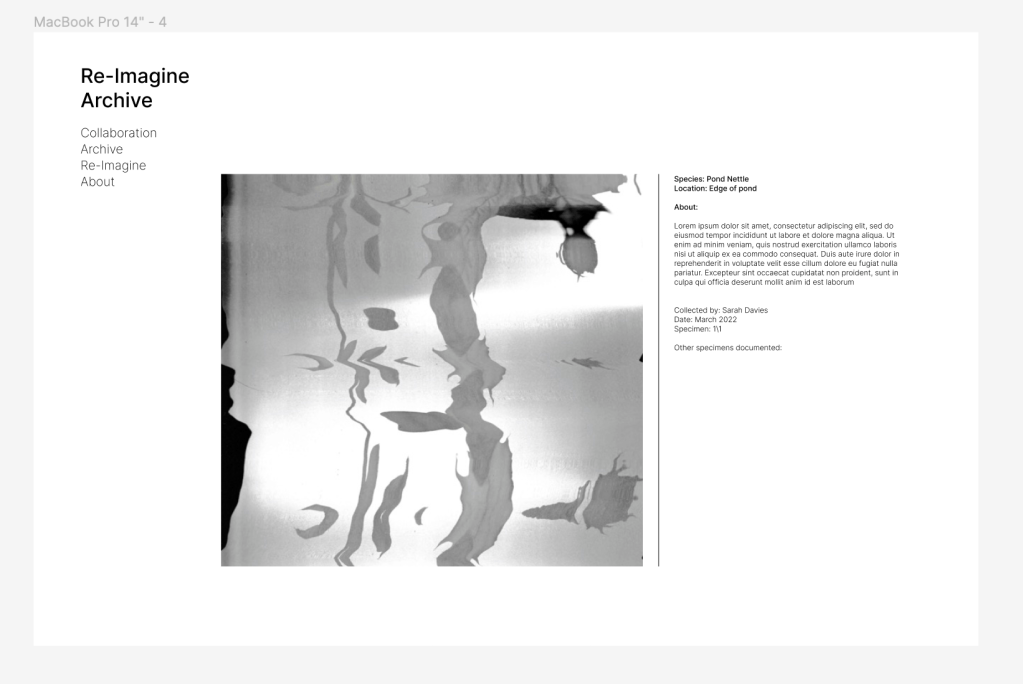
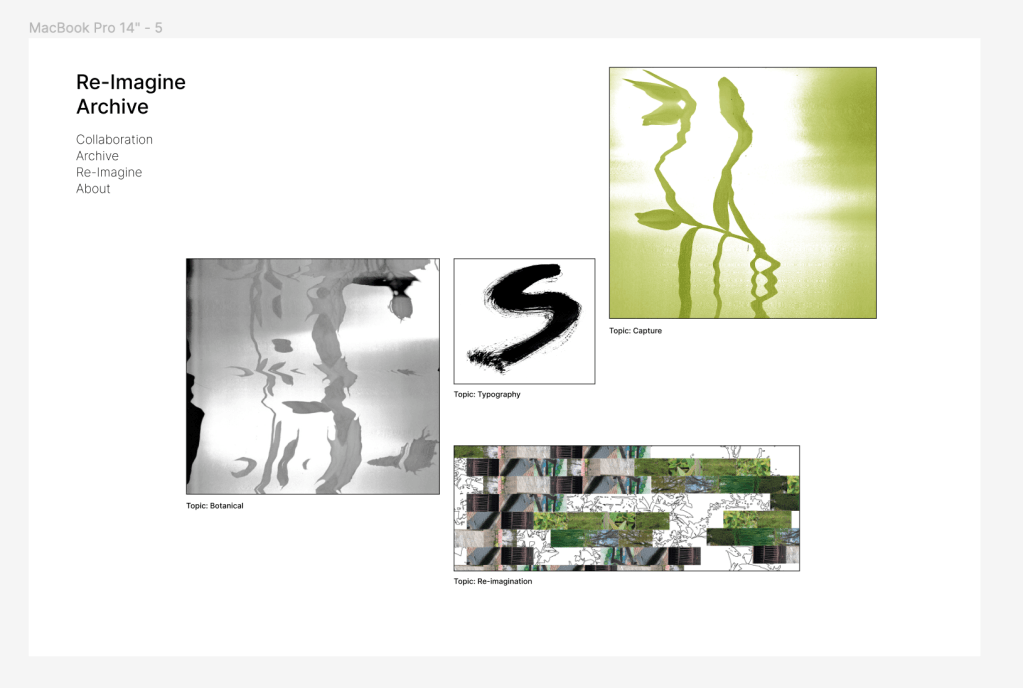
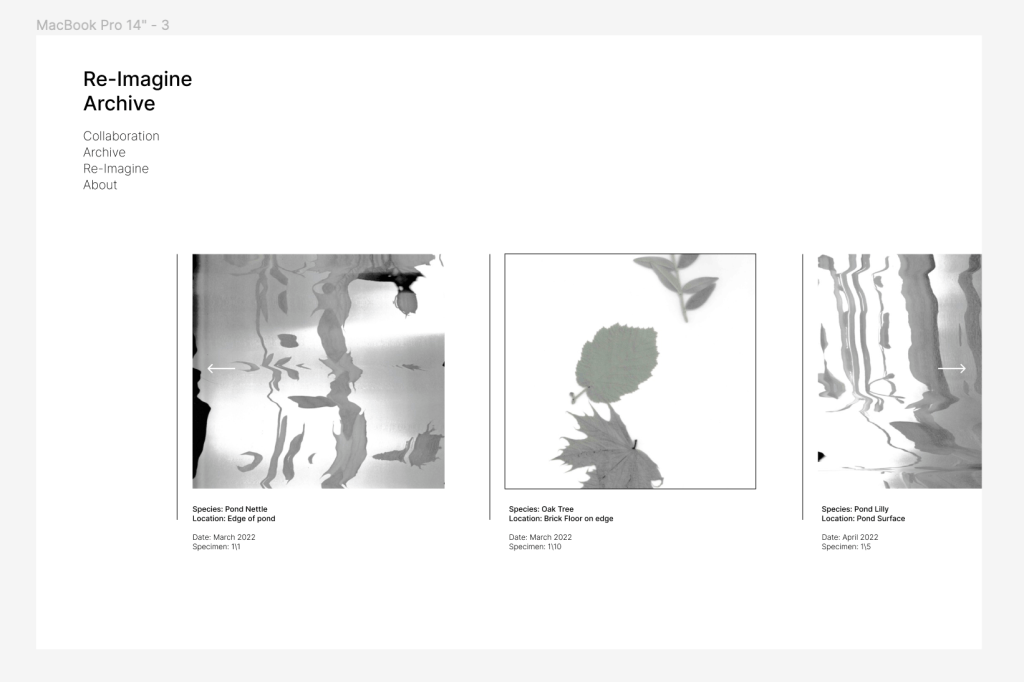
These initial drafts for the digital tool are in their very early stages and need more refinement in terms of User Experience and Design. However they do show how the platform could look. The importance of the site following the festival collaboration tool will be to continue and aid further collaboration within communities. Hopefully offering a place where this is documented and shared.
Initial thoughts are the site needs to be accessible for all and not have anything which is going to be a barrier to access. A simple design with clear text and imagery is key here so that everyone involved (or those who want to get involved) can at ease. Integrations to mobile will be important as on site capturing will most likely happen, this would then allow people to upload direct from phone (as an image, voicenote, video etc)
I’ve started to look at existing archive websites as reference including 100Archive and ReCollection to see how they are organising mass information in different ways. (making sure the content is the main feature)
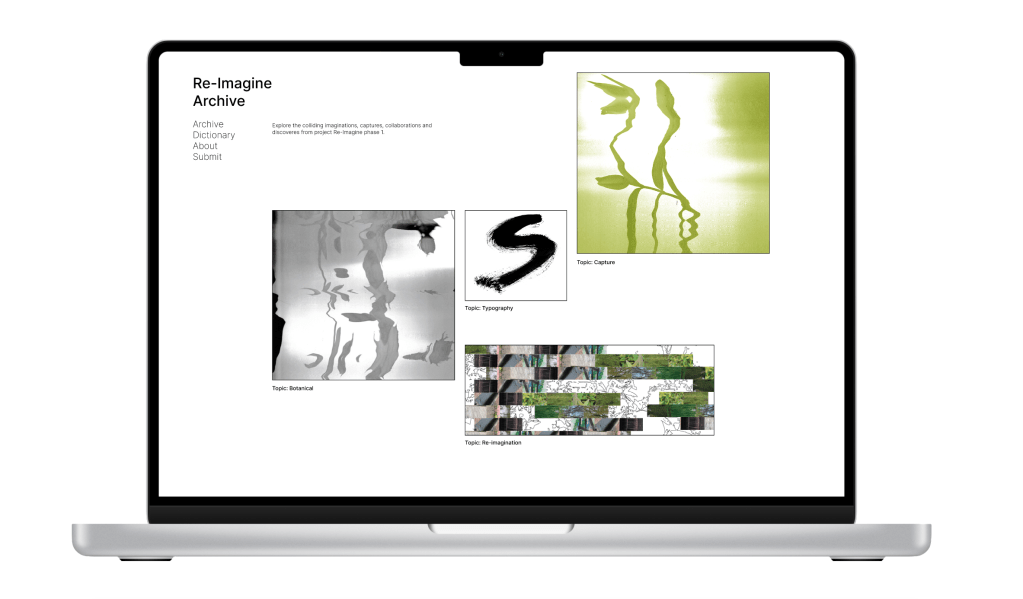
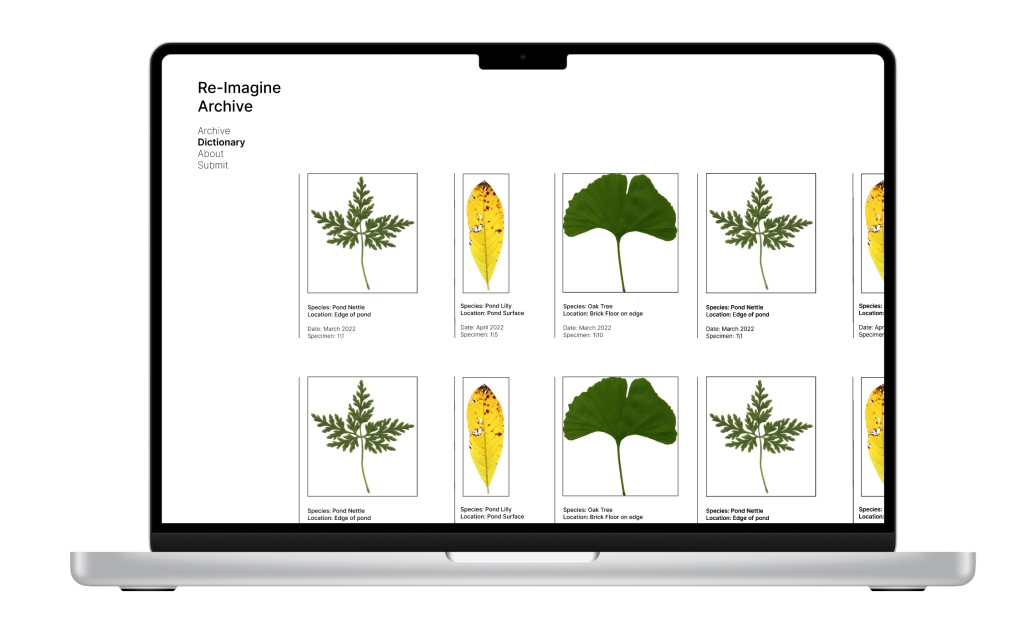
Re-Imagine Collaboration Tool Overview Document
Research
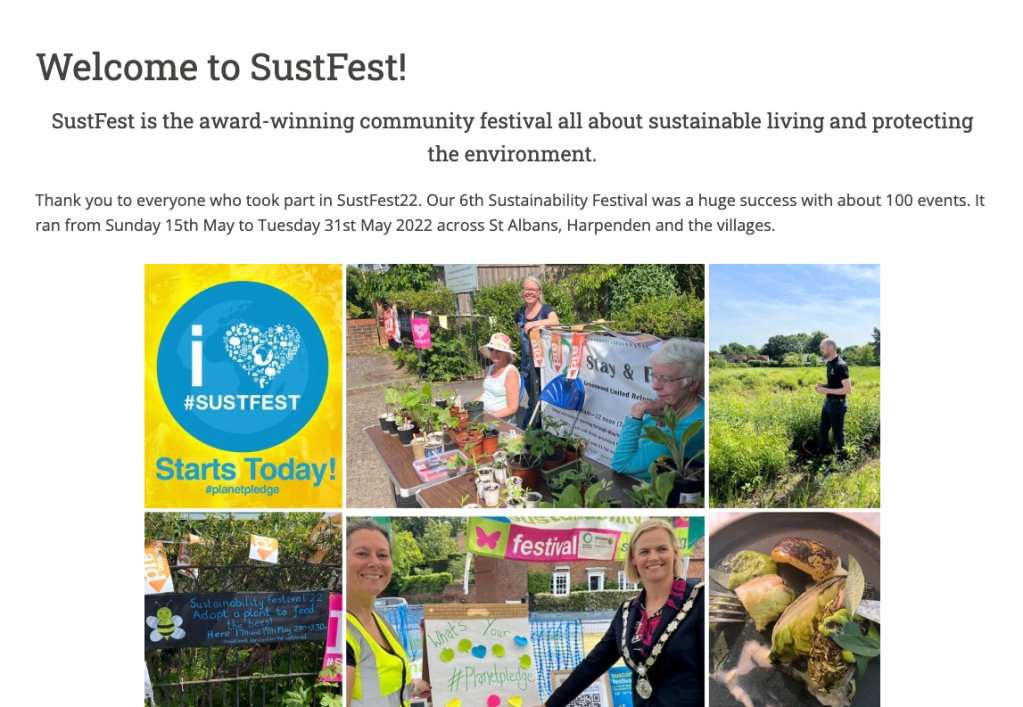
SustFest – Sustainability Festival
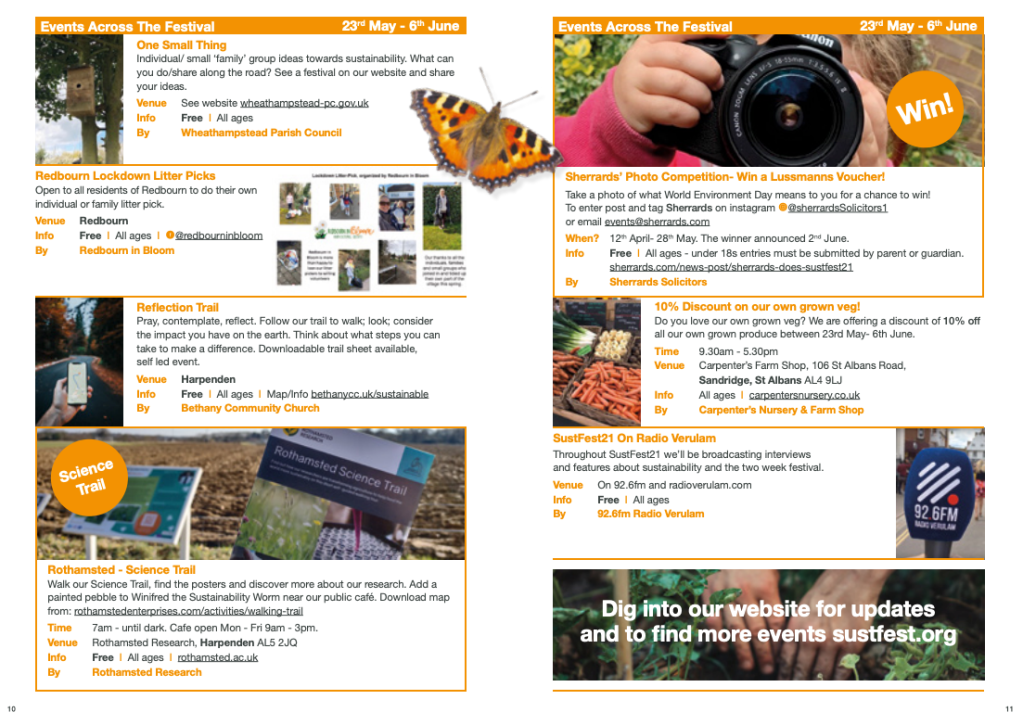
SustFest collaborates with the local area of St Albans on an event which comprises of multiple workshops, talks and activities. They refer to these as ‘A network of community events’
With what I’m currently looking at I wanted to explore what events are currently taking place and how. SustFest has to fully fundraise every year for the event to take place, this comes from the community and the success of grant applications. This is an established event but what I am taking from it is the community and how they have gone about organising it.
How can re imagine engage the community and have impact? How does the festival keep a legacy and engagement going beyond the festival? What needs to be in place for this to happen?
East London Waterworks Park
Their Summary – ‘A community vision to create an urban oasis where people can explore and swim in harmony with nature‘
They say that the East London Waterworks park is an idea conceived by local people. Local people have shared their visions and thoughts on an area and have worked with multiple groups and people to make their visions come to life. How can graphic design play a part in projects like this?

“Play is an important part of how we can grasp an increasingly disturbing and bewildering world.”
A+E Collective
Scrapbook annual documenting and recording of conversations, illustrations photographs and poetry. Archiving the work of A+E over a period of time. Its abstract presentation and construction has influenced thoughts around the creation of my ‘digital tool for collaboration’. How can images captured by communities (the public in a location) be kept raw and honest to aid the spotlight on an area. On the other side how can creative practitioners work with creative material like this to produce informative, engaging communication to a wider audience? Is there new ways which can be explored here. (music, photo, voice conversations)
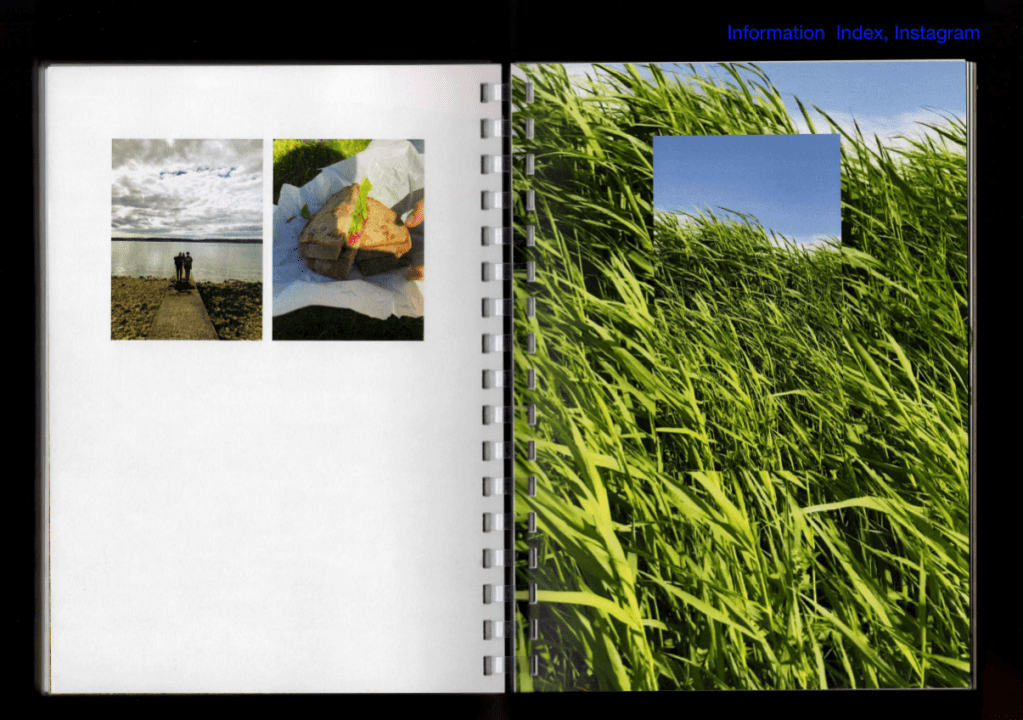
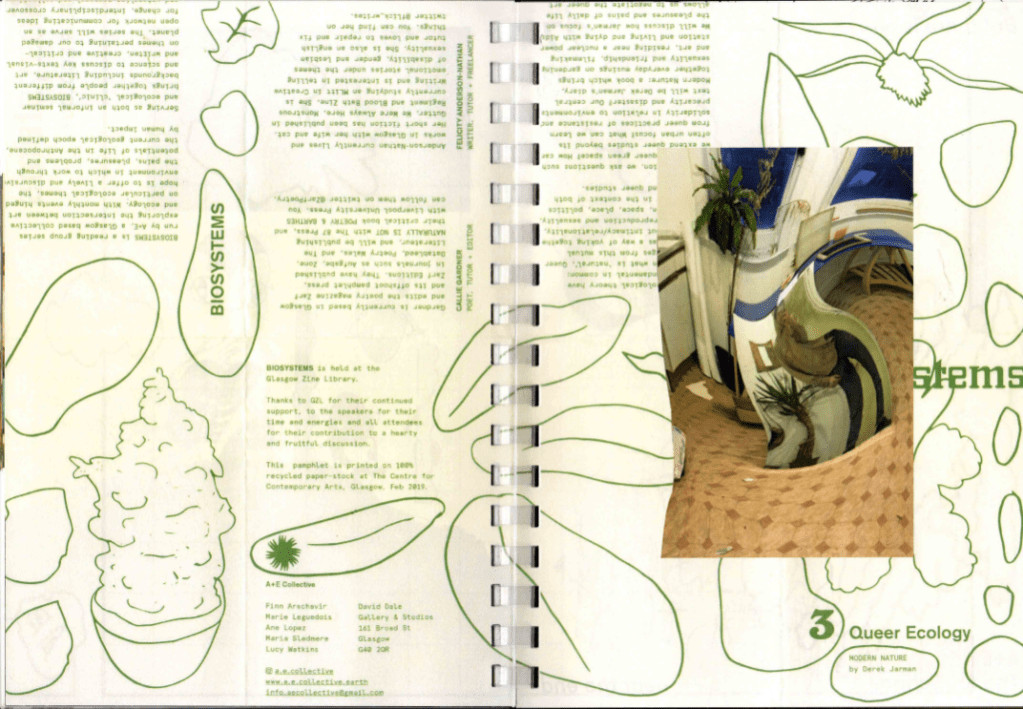
“Creative Carbon Scotland believes in the essential role of the arts, screen, cultural and creative industries in contributing to the transformational change to a more environmentally sustainable Scotland”
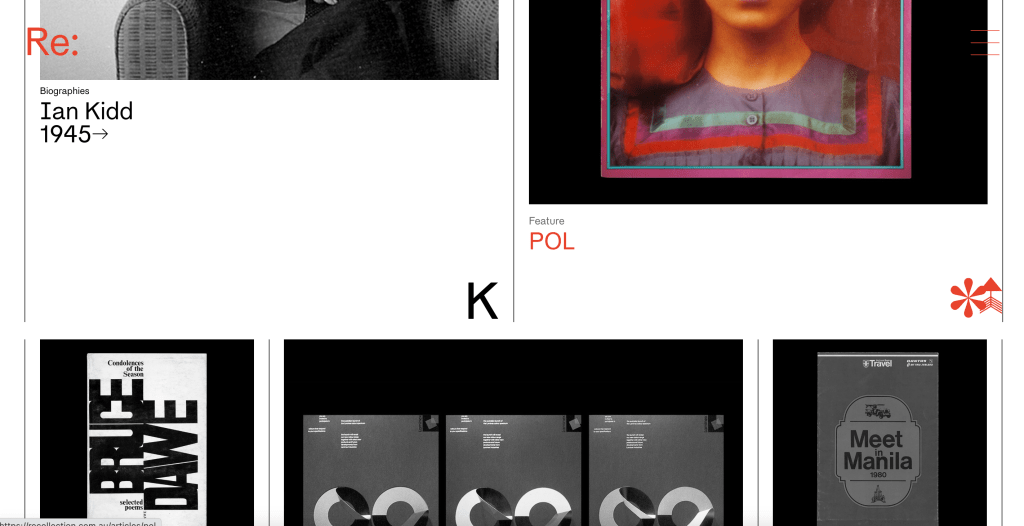
100 Archive
Archive documenting the past, present and future of Irish design. Looking at the way different platforms present information. Here they present it in a linear format which is easy to understand. What I think works here is the simplicity of the structure, however with my platform I think it needs to be more experimental and hands on – allowing the user to feel connected to it.
The 100 archive does however document work both from the past and what’s upcoming which I find interesting, almost constant cycle of conversations can be had – something I would want to implement in my solution.


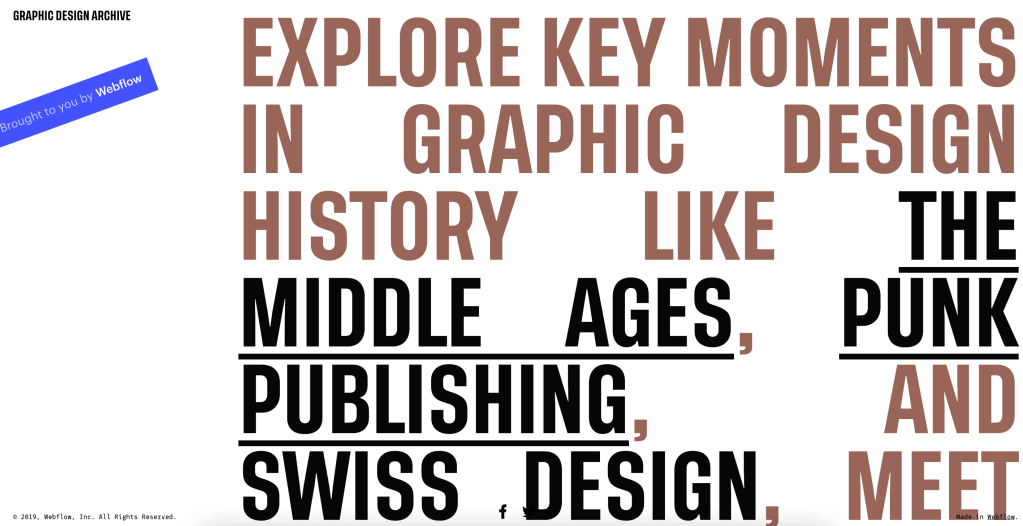
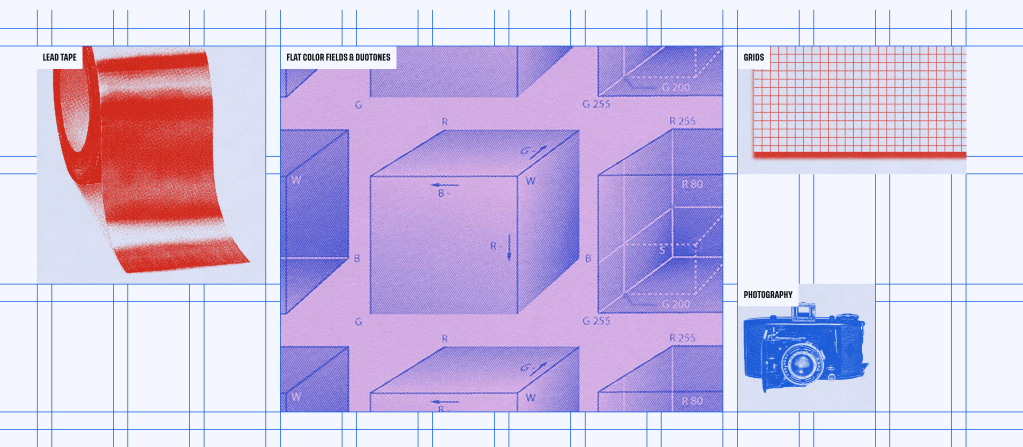
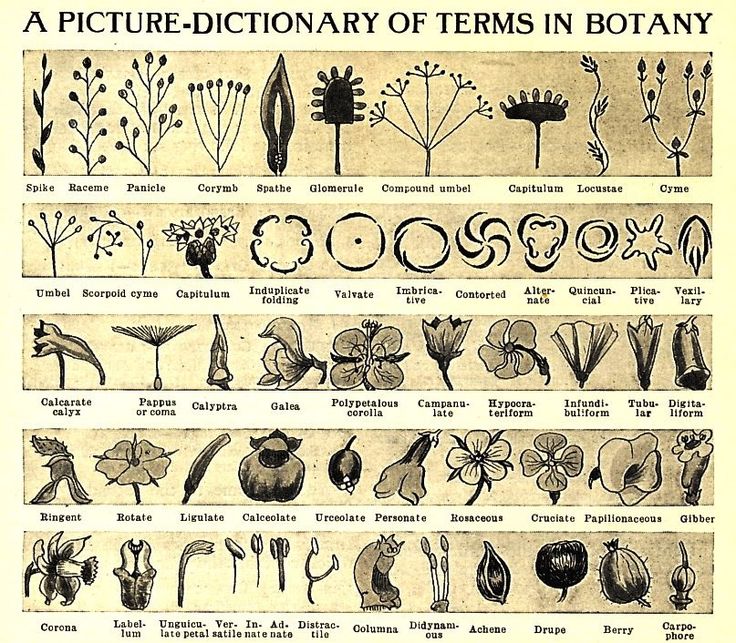
Graphic Design Archive
Flashback Archive
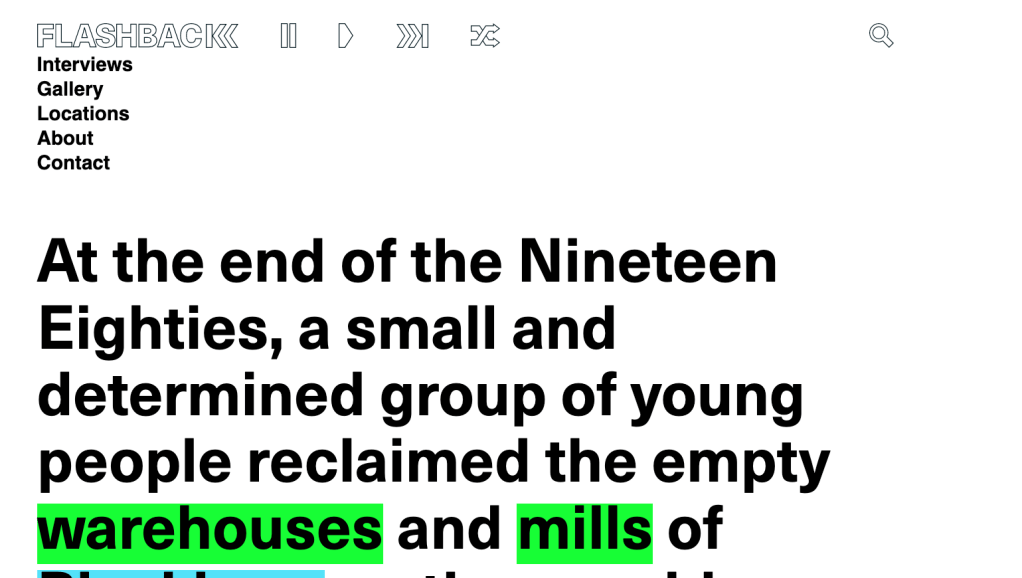
Archive documenting Blackburn’s Acid house era. Showcasing and sharing different stories through design, video, typography, articles. All from the communities. Flashback formed in response to the 2019 British Textile Biennial programme.
What’s exciting here is this documents all mediums within a community, collecting from those who were involved, creating a rich archive which can be shared and explored, this initiating co collaboration between artists and the communities. How can my collaboration tool enhance that experience while also having an impact? Can the tool advance out into other projects within the town? for example documentation of the mills within the town? (not to just celebrate but to highlight, enhance interest in the town and it’s history)
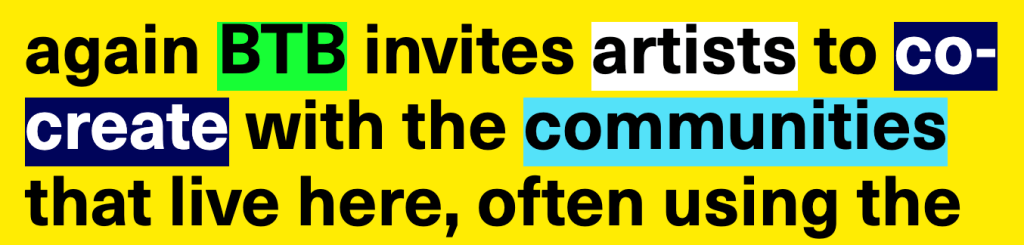
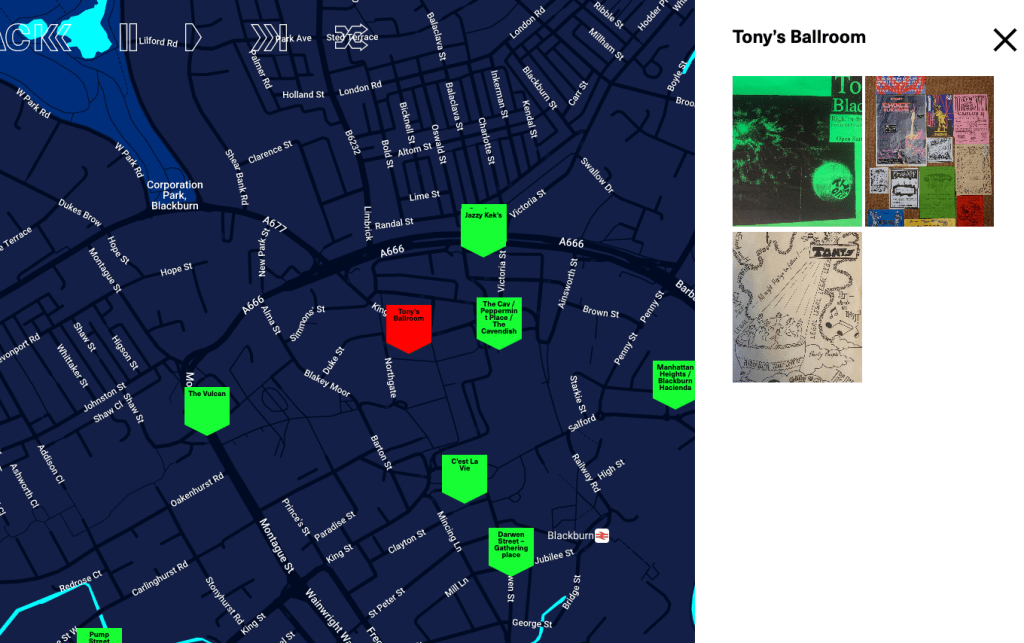
Design is clean allowing the content to shine. Design doesn’t overpower the imagery (which is the star) Shame no further information is tagged with the images (location, date) so people can relate to location or sites, potentially brining up memories and further archived materials? There is however a map which tags the images to location – which does this role. Could there be more of a community feel to it?
Submissions to the archive are now closed – was this a move to keep the content currently on there rich and not diluted? How did people submit there work? Was it via email or a platform on the website?
Weekly Reflections
 James Shaw