Lecture Comments
Everyone has a different route to becoming an entrepreneur. Is there a right way of going about it? Would going by the ‘rule book’ stump the imagination and depth of a developing entrepreneur. Is there a limit in just going with your gut?
From hearing from the three example it does give you a boost? It also reminds you to reflect on where you have come from. Build something which you want to build, be committed to it and allow people to support you on that journey. There will be a time that you need support so you can continue to develop the practice. How do design entrepreneurs today differ to those of 10 years ago? Is there more support out there? Has technology enabled individuals to start businesses easier and quicker? if so has the quality taken a hit and is the sector becoming over saturated?
Questions which have come from this for me:
What experiences have I had which I can draw upon to develop my practice
Within my 6 years as a freelance what hasn’t worked? What haven’t I enjoyed?
Is this the right direction I want to be taking?
Is there a direction I want to take and if so why am I not exploring it?
Should I be speaking to those who have established businesses to support my journey?

Lecture notes
As mentioned above I took away this overall thought that we all have our own journey. Everyones experiences are different but do have cross overs.
I picked up on what John Sinclair was talking about around the move from design student to designer working with clients. There is a gap between that and it’s sometimes here we loose our creative freedom as designers? We have to learn to work in multiple ways. This can then take over and become the ‘day job’ emailing people, managing people, briefing etc. It’s understanding that all the other parts are part of the process but there needs to be balance.
Sophie Hawkins spoke of her passion translating into here now self initiated business. However it wasn’t straight from uni to business – she used different roles to develop herself and practice, knowing she wanting to run her own business. There is an element of strength knowing and allowing yourself to learn and develop to be better when taking that next step – this also comes with knowing that it can take time – and that it’s OK.
Design Development
Response from Robin Worral – Creative Director of Red Nine Design Agency
I think the trick to becoming a true design entrepreneur is to define your own personal brand story. Understanding why you exist as an individual and what sets you apart. We all have our own unique approach to the creative process and it’s important to stay true to that. If you can build a story around that then it’s helps your clients to relate more easily to what you do. For them it can be a new and daunting experience so the more understanding and inclusion you can offer them the better it will be for both of you.
Plus it’s important to offer more than just the design work… talks, workshops, interviews, guides all help to expand on your story.
As far as the process goes… I feel you need to identify what area of design fuels your imagination and focus on that fully… don’t be a Jack of all trades. Know what you are good at and fully embrace that. Try not to chase the pennies and bookings… they will come as you learn what you do best. Reputation takes time to build so investing in relationships with clients is vital.
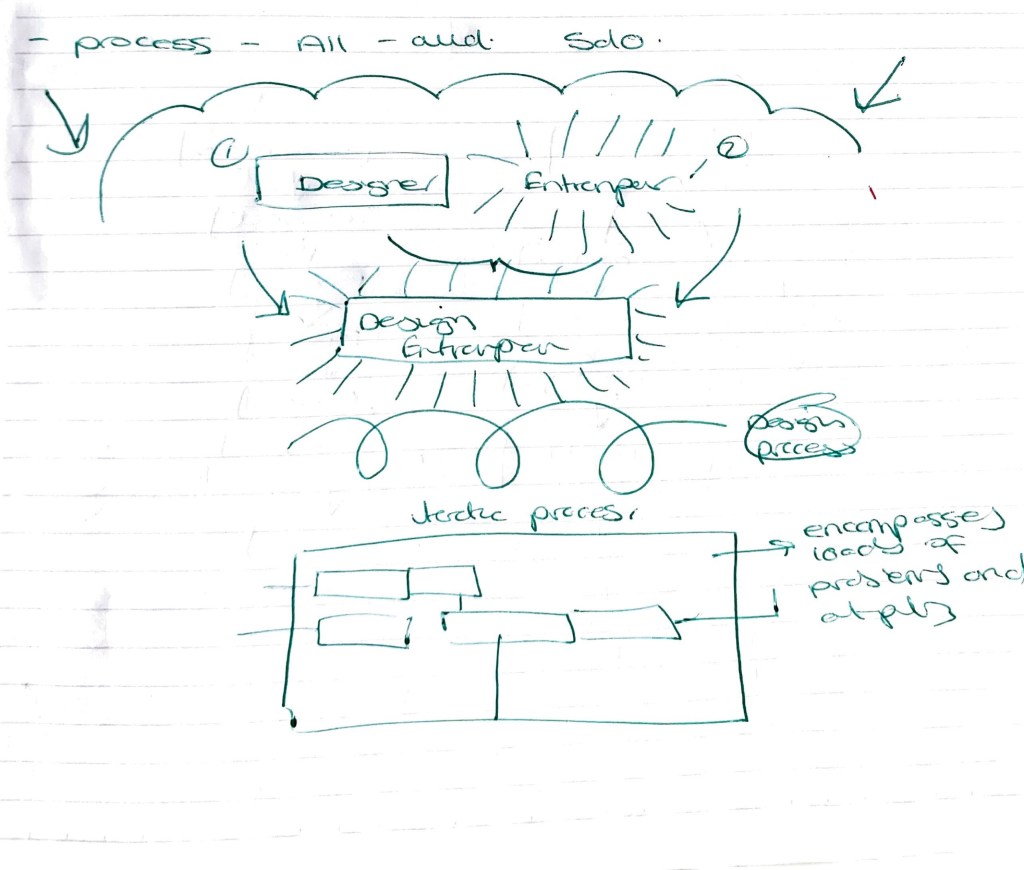
Visual response to how I think a design entrepreneur operates:
This looks at how a designer could start their journey and take a route as an entrepreneur. This also look at how the ‘design process’ is part of this journey and ongoing development.
– Designer (designer, certain amount of responsibilities)
– Design entrepreneur (many ideas, outputs and responsibilities)
– Design entrepreneur continued development (expanding on business, clients, staff)
– Continued iterative design process which feeds and runs the creative side.
– At a point of establishment – within that box there is multiple things that happen, some which work together, some solo but all under one ‘roof’ of the design entrepreneur
Thoughts on what I think a design entrepreneur is:
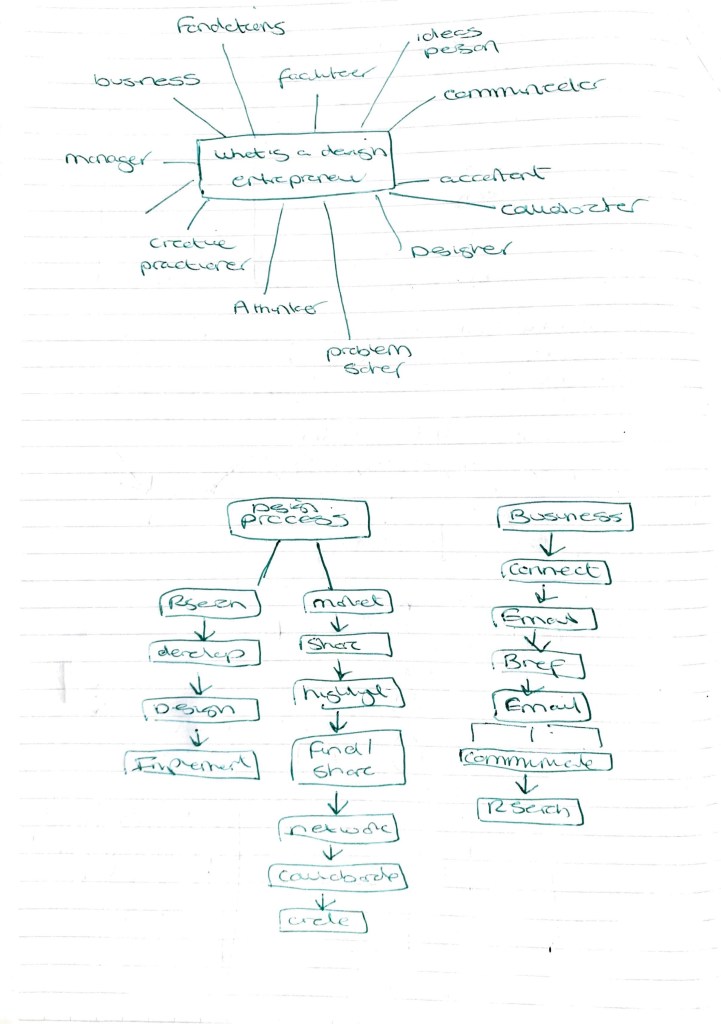
What is a design entrepreneur?
A manager?
Foundations?
An Accountant?
A Designer?
A Collaborator?
A Problem Solver
A Thinker?
A Business?
For me they sit under all of these and more! One thing I think we sometime forget is how much work goes into creating and developing a practice. If you’re starting out as a ‘freelancer’ solo you have to do all the above! You’re the one running the show. Everything is done by you! You have multiple roles. Until potentially you can start hiring people and allowing these jobs to go to other people.
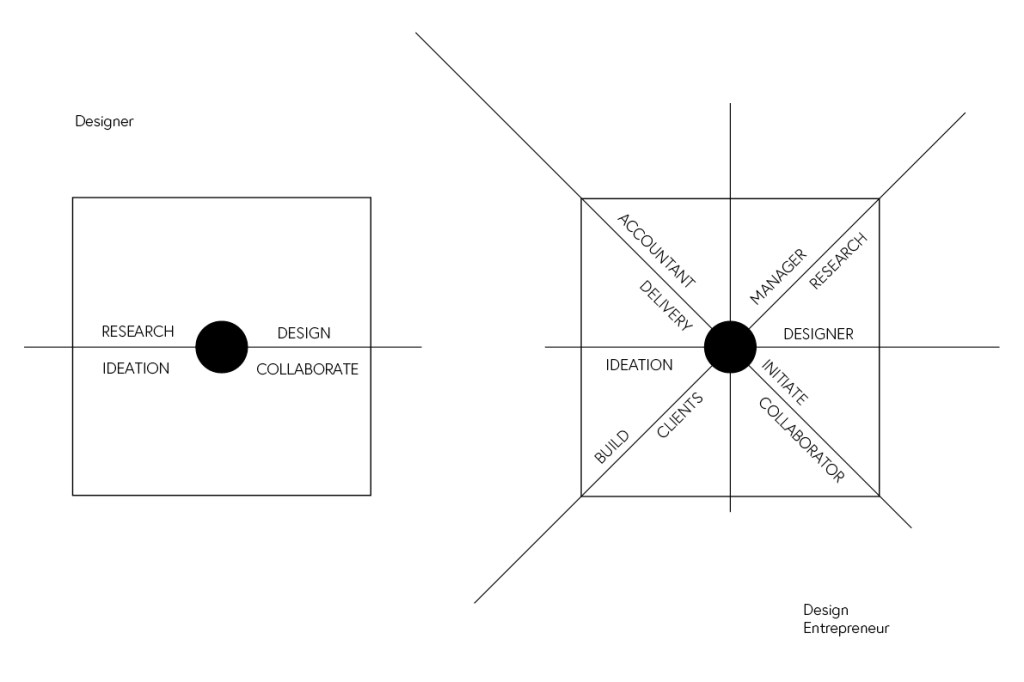
Designer VS Design Entrepreneur responsibilities (overview not fully explored)
If you’re designer in house or within an agency your responsibilities will be less than if you’re say a freelancer pursuing an entrepreneurship route. At the start you will have to take on allot of the work yourself , everything will fall onto you, this isn’t a negative point but a point in showing the work required and things that need to be considered (roughly)
When do you become a Design Entrepreneur?
Is a Design Entrepreneur a Freelance Designer or someone who has started a Design Agency or are they part of a large founding partnership (of a product, app or site)?
For me I’m exploring how designers (Graphic Designers and Creative Practitioners) build and develop practices themselves which build and grow into large practices (teams)
Initial thoughts on diagram – I want to show what I think makes up a design entrepreneur from my point of view and the process which helps support that. This comes from my influences and how I have developed my business but also how I want to take the next steps in developing. I wanted to approach this in relation to my developing practice but also on reflection of others.
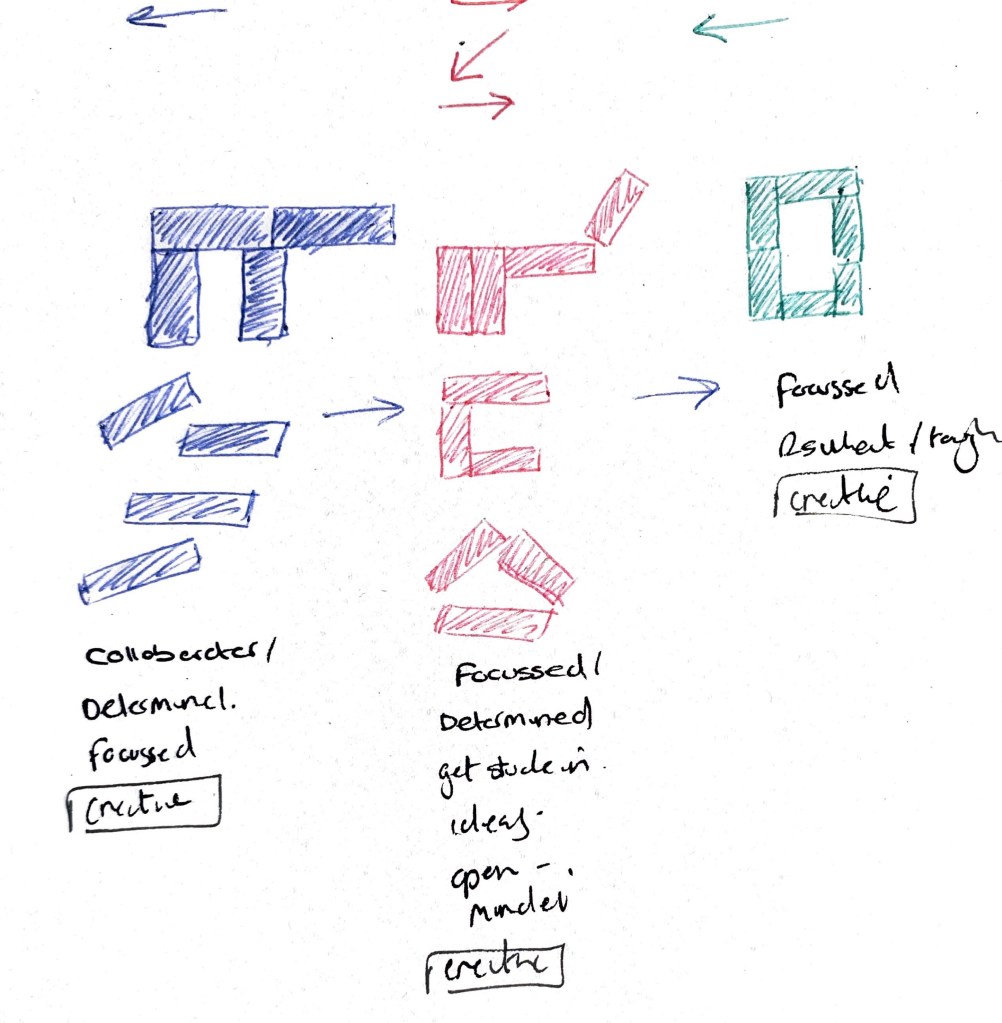
These sketches below come from the idea that Design Entrepreneurs work with a series of moving blocks, some collaborate together, some join forces, there is solo times, there is times of reflection but all the time building blocks are being constructed to make for a more developed way of working.
I also started looking at how this could be applied to a circular design – with the circle referring to the constant evolution and revolving of a designer (new ways, new influences, inspiration, ideas)
What I want to explore next is does this need data? Does it need words?
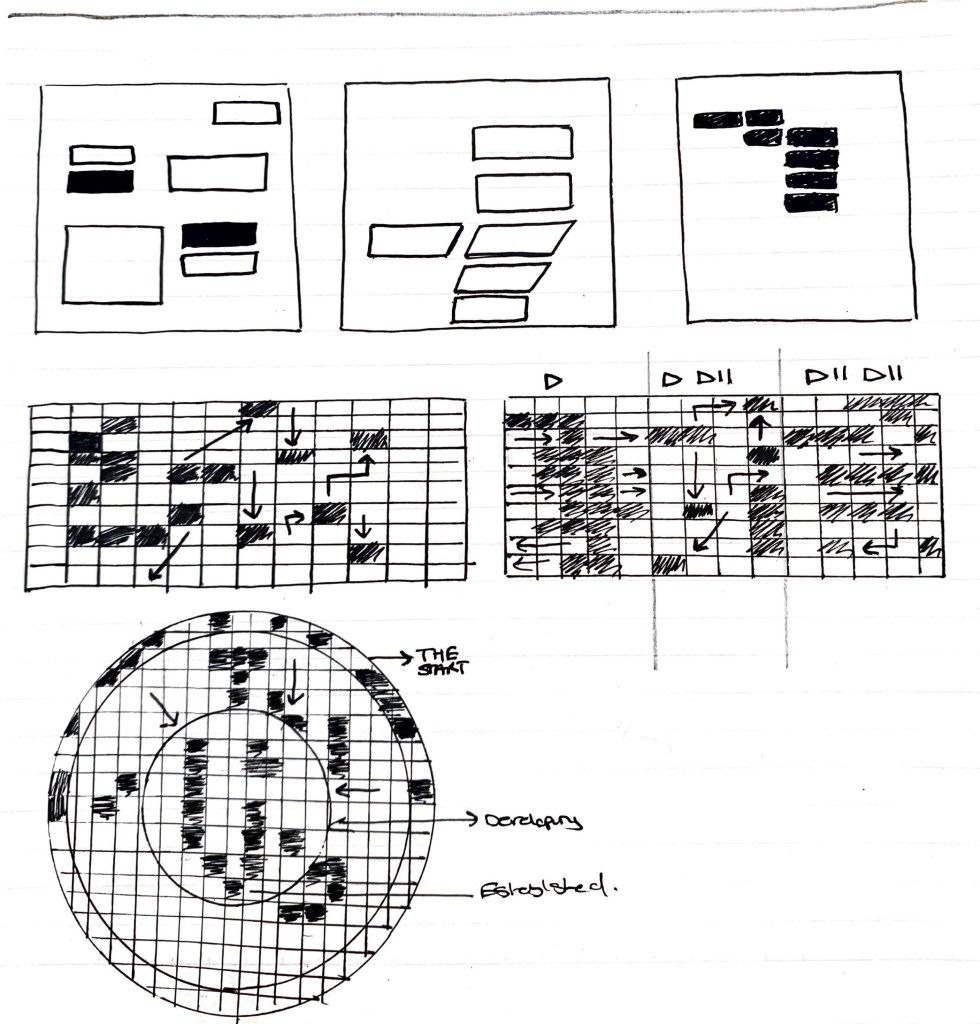
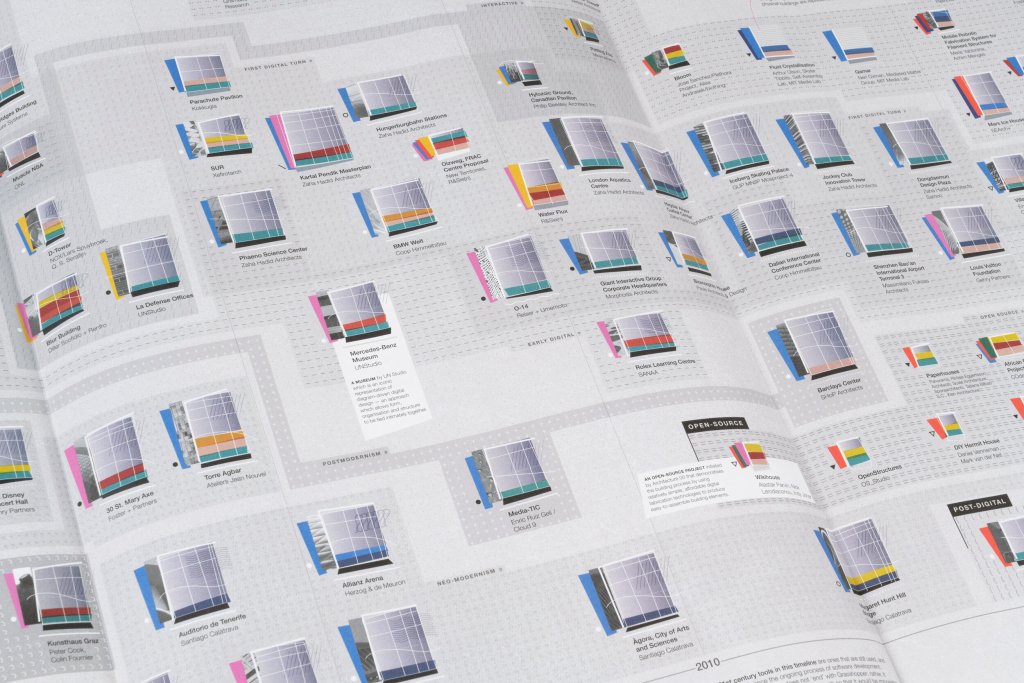
Influenced by the work of Girogi Alupi

Further development of Diagram
Thinking now how the diagram is going to communicate the process. Do the blocks need to have information attached to them? Can the block pull out of this diagram and build other areas? To show the development of a Design Entrepreneurs stages?
Could a typographic element come into play in extracting the blocks? A system?
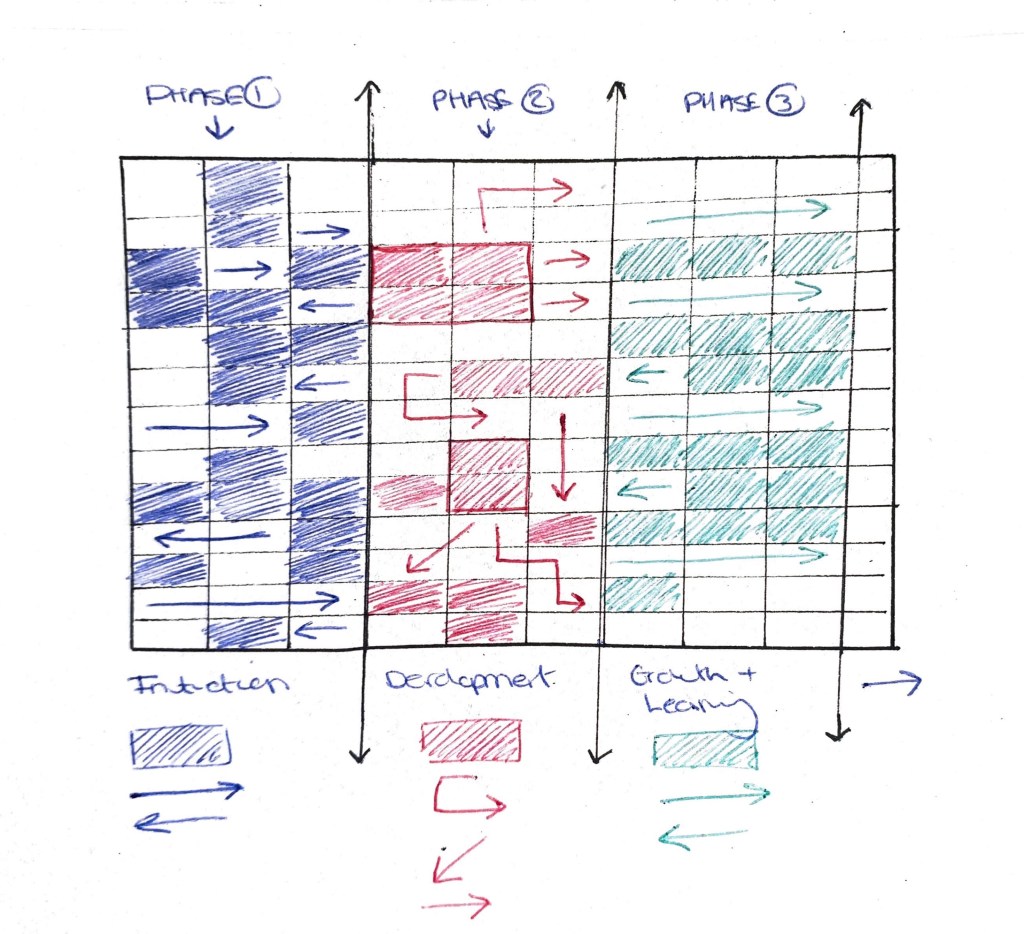
Developed Diagram
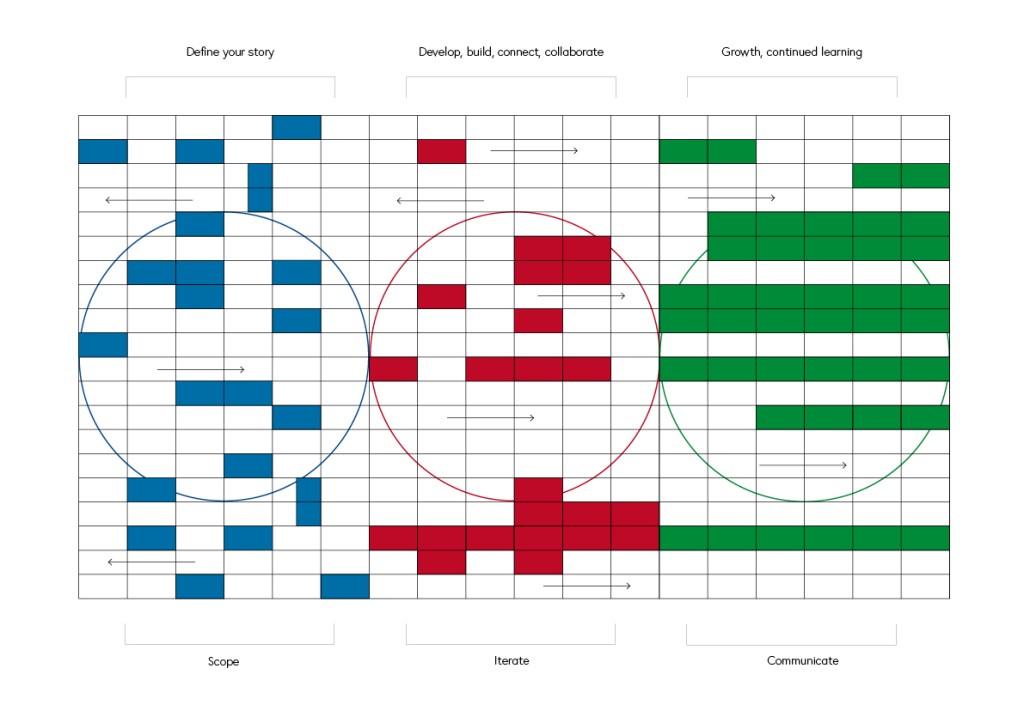
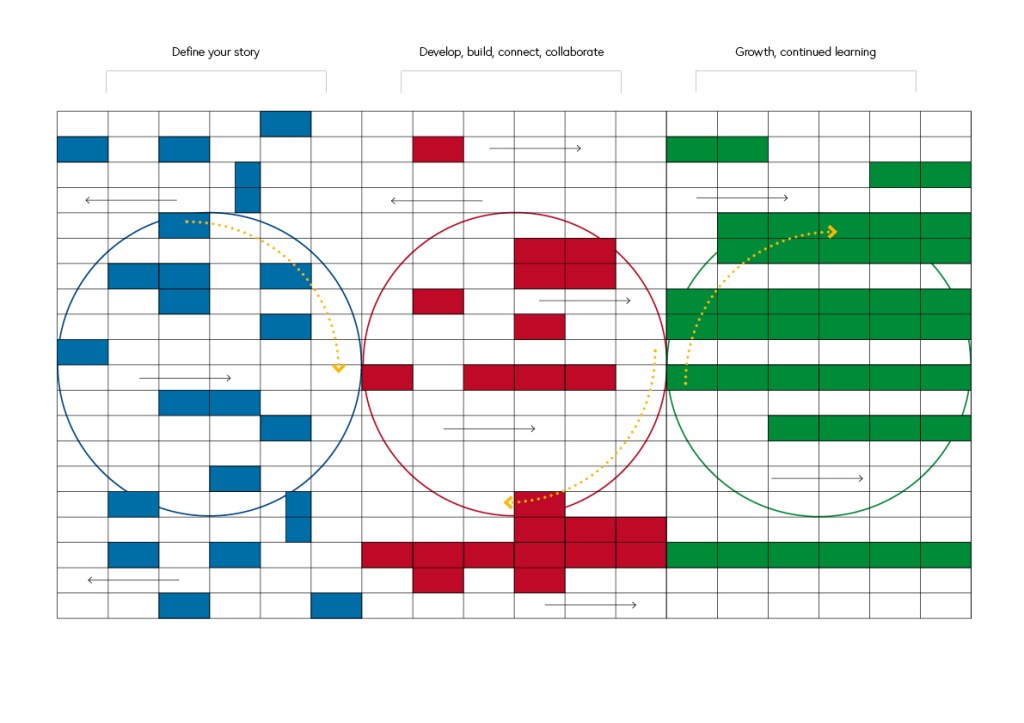
What is this showing. I wanted to integrate both process and what an entrepreneur is visually. This infographic explores the design process but also the amount of responsibilities entrepreneurs have to undertake. At first there is a scattered focus, with many ideas of the table, some being formed into realistic ideas and future plans but loose.
Second stage looks at how a number of these ideas are being formed into plans (business and models) with a path starting to be carved out (linear blocks connecting) Moving into stage 3 tangible paths are in place, working well (but still allot of hats on with many responsibilities) Breaks and gaps represent continued learning and growth and even mistakes still taking place.
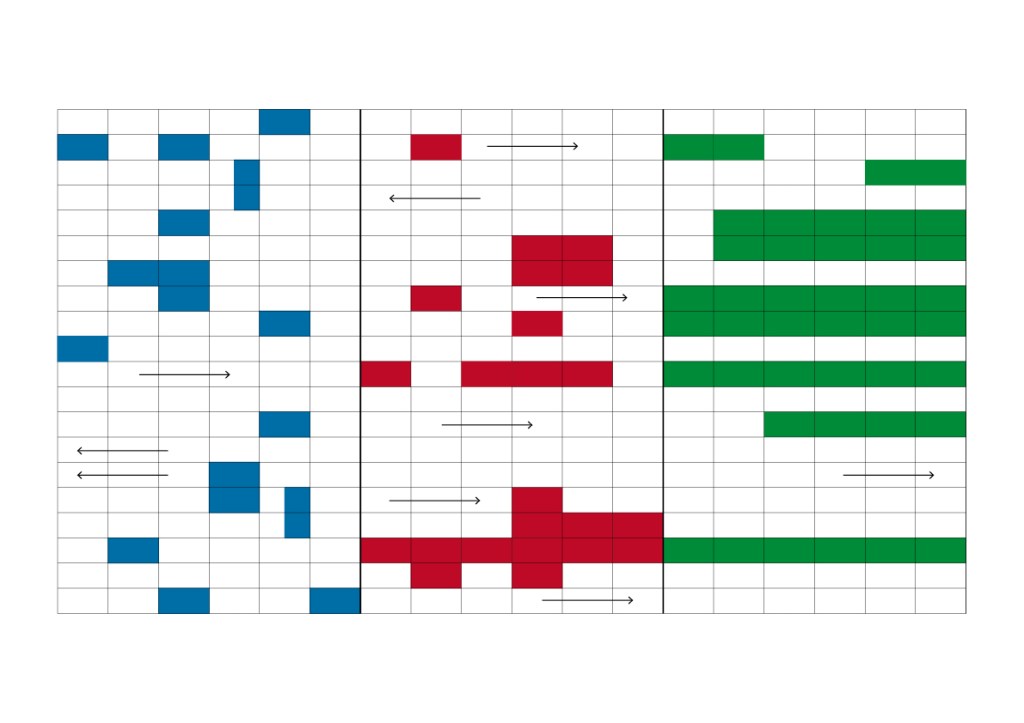
Development with the addition of a a circular graphic to show the continual development, research and ideas entrepreneurs do. This also keeps the process ‘live’ and switched on. It can be at times hard to switch off when you’re an entrepreneur.
What could be improved? I think the blocks could be taken further? Maybe each stage is a different gradient to show the development through. Does it need it need the arrows?
Research
Deezen Day – Discussion on how to be an entrepreneur
“Every single person is already a brand – because your brand is a string of your experiences from the past, and what you’re doing right now,”
Dara Huang
When thinking about an individual as an entrepreneur this quote above I think summarises where it would come from. Your experiences, encounters with people and events, your thoughts and feelings all play a huge part in how you develop as an individual. You may encounter something new which sparks new areas of research and helps build and develop your interest further and deeper. We as individuals should clock into what makes us tick, what is it that we love about ‘design’ for example. What drives us? This will help us see and develop a path forward – which could end up being a solo task in building and developing a practice (potentially evolving into an agency)
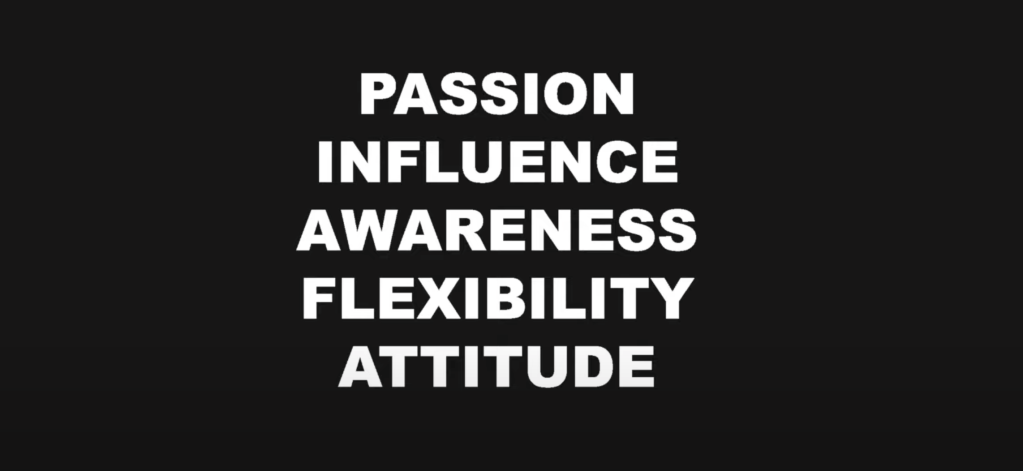
“If you’re not 100% passionate about it, then don’t do it” – Dara Huang
All these steps we take and have to climb are what makes us who we are. From my perspective I have taken an ‘unconventional route’ within my career but on reflection I think this is positive. I’ve tried, explored things I have been interested in and if they haven’t worked out or I feel they don’t fit with my way of working I cut ties and move on. It’s been an ever evolving journey for me. I have run my own practice for the past 6 years but I’ve realised it’s become stale? My entrepreneur spirit has been lost?
I do also have questions around why Entrepreneur ship isn’t taught or at least more prominent within design education? Why aren’t we discussing about other routes and options into the creative industry? There is not only one route – Agency. There is a multitude of amazing experiences which can be explored.
So how can designers better understand and explore entrepreneurship and apply to be successful. We don’t all need to be entrepreneur’s but in a sense I feel within the design processes that element is embedded within project work. Coming up with ideas, solving them, managing and delivering.
“Making mistakes everyday”
Samantha Hornsby – getting into business

“too scared to quit our jobs. it was down to financial reasons and for Mae, it was fear of the unknown”
How can we better educate this? So that more designers (who clearly want to) explore starting a business and what comes with it? Being your own boss, in charge of design and output?
“If you recognise your own positive and negative traits” – A huge part is understanding who you are and how you work – we don’t all work in the same ways. Some work better within teams, some solo. This is part I think is one of the main challenges, it’s one of those questions / evaluations which is difficult. Be honest.
Weekly Reflections
Output from this week – Really enjoyed taking a step back and working in a digital format this week. I think the graphic I’ve designed could be taken allot further if time was on my side. It could be developed further into a series of graphics? One thing It would benefit from would be sound and movement. The circles could turn and the blocks could build and shift. However saying this it’s highlighted a few important factors when considering to take something on solo (a business) You need to be well prepared and really understand what it is you love to do – this is a process I’ve been going through in the first year of my masters so can see how relevant it is.
 James Shaw