
Industry / Peer Communication
Design Development
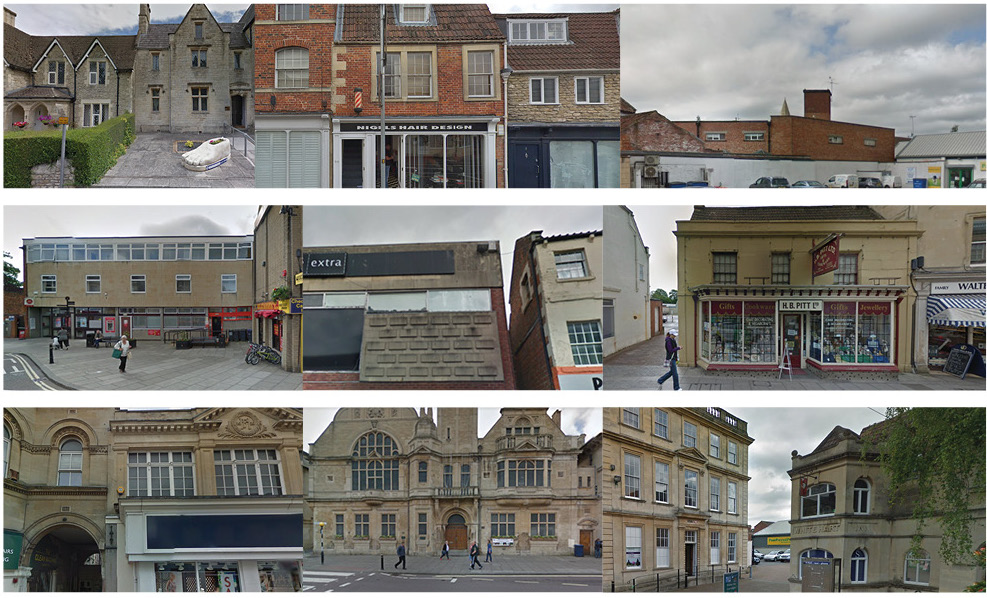
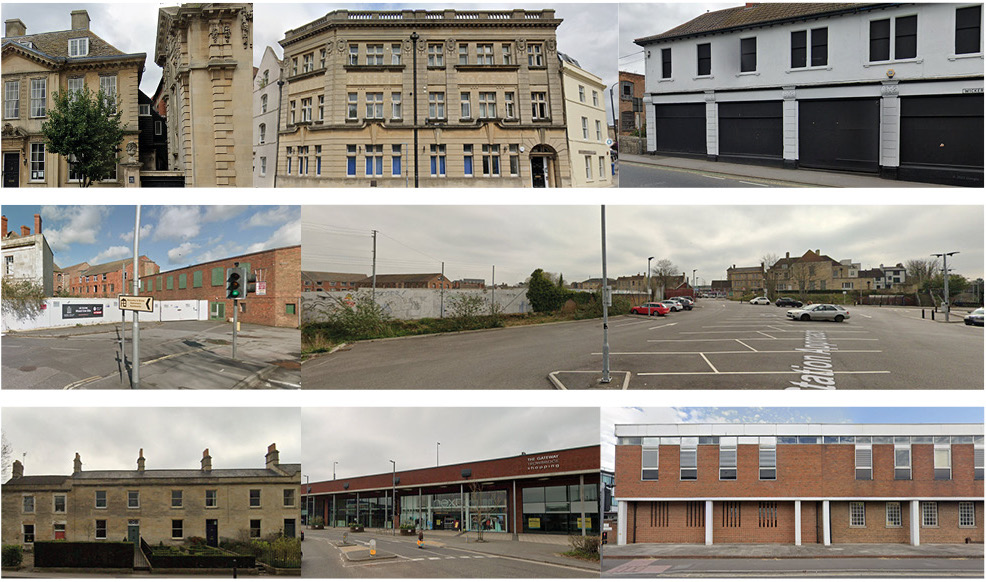
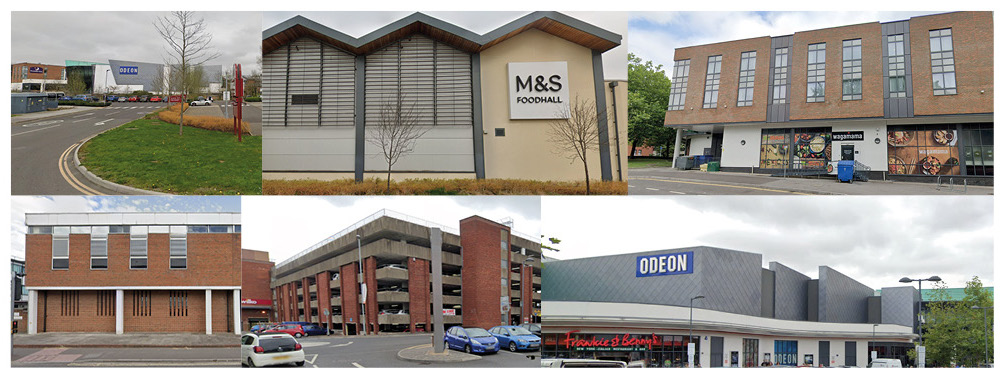
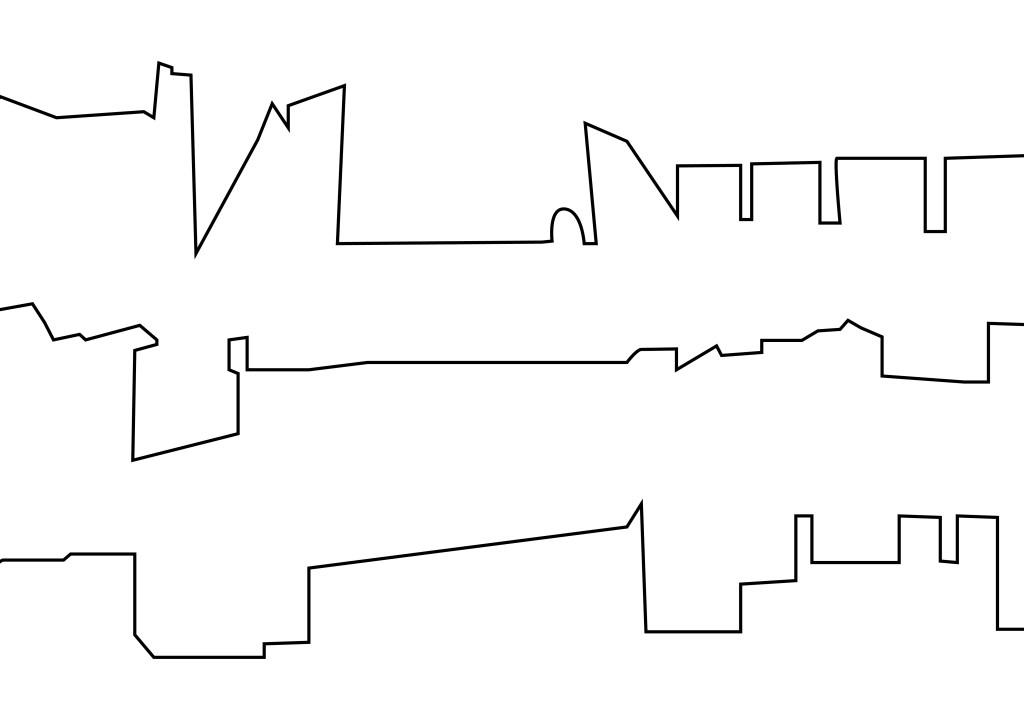
Digitally capturing the town from street view (Google Maps) This is going to lead into structural exploration with shape, mark making and typography. How can these snapshots inform a design response? Could this lead on to a task for those within the town to complete?
Would a member of the community respond in a different way with a different material? Would they ignore the images and respond individually.

Research Question Feedback and responses:
Need to respond to a few questions which ben has promoted / have come from my question:
What do I mean by identity? (considerations, In this case I assume you mean how the identity of a place is shaped between people and their relation to the built environment. Also, in terms of identity – what stories rise to the top and which stories remain hidden? Most cities have multiple identities that belong to multiple different communities. Does one narrative dominate above all others and what problems might that point too?)
When I mention Identity I’m talking about how the built environment and the people’s narratives who inhabit that environment are presented (from all different views) One of the prompts which sparked this question was a previous project I was looking at, which explored a certain set of structures within the town, the people of the town had different views on these) However since then there has been a very dominant story overshadowing the town (a negative one) How can we use the beauty of these structures and the narratives to give a better light to the town, not to eradicate the obvious issue but to start conversations of what could be achieved.
Your aim – ‘town’s physical components’ – are we talking about the built environment in general or particular points of infrastructure?
This is where I have been debating to focus on the mills which I have previously explored (as key parts of the towns landscape) or should I focus on the overall infrastructure? Does this become to broad however? I’m leaning more towards specific buildings and what I can explore within these and the attached narratives. But still what for? To showcase these buildings or draw a narrative out to promote these specific buildings? Elevate the town’s appearance?
“Modifying its infrastructure” – The phrasing of the question makes me think you’re going to physically change the infrastructure of the city! I’m assuming you’re not doing this.
I’ve been thinking of how to word the use of the physical elements of the town which will inform and catapult the output? Reference it’s infrastructure? Exploring its infrastructure? Examining it’s infrastructure? Investigating it’s infrastructure
Question thoughts:
How can Trowbridge towns identity be shaped and communicated by examining its infrastructure and community narratives.
How can Trowbridge towns identity be shaped and communicated by examining the mill buildings and their narratives?
How can the identity of Trowbridge town be shaped and communicated by examining the buildings and their narratives which make up the towns landscape?
How can the identity of Trowbridge town centre be shaped and communicated by examining the physical structure of the buildings and their narratives which make up the town centres appearance?
Can an identity be formed and communicated by examining the buildings and their narratives which stand within town of Trowbridge?
Do the buildings within the town centre of Trowbridge help us understand the identity of the town
The question seems to be about the built environment – so I think I’d bring this in a bit stronger
Do I need to refer to physical buildings or should I be looking here at the mills? Focus just on a certain type of building? Or is this too narrow? Or just buildings within the town centre rather than the whole town?
that infrastructure affects identity and not the other way around. I’d maybe think about this as a two-way relationship.
Agree with this point and maybe I need to look at how the current identity of the town is effecting it’s infrastructure / appearance?
Peer to peer with Celine
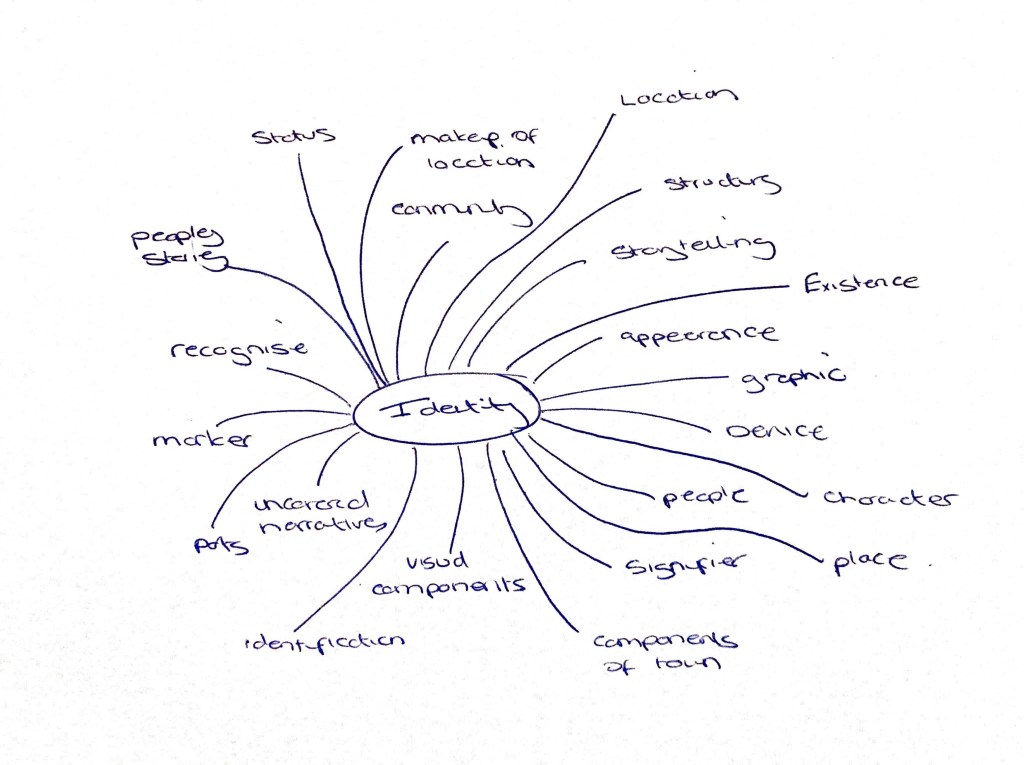
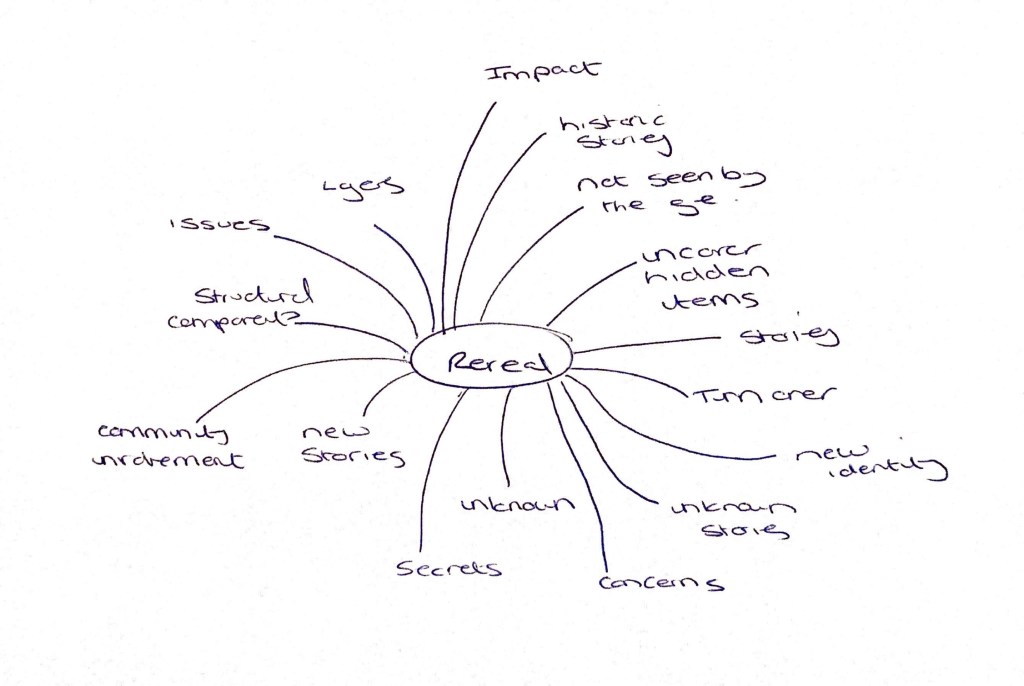
Need to explore out of the question and think about the words I’m using for example
Reveal
Identity
Narrative
Instead of focussing on the whole ‘town’ as this is to extensive, why not explore certain spaces within that town, these could be areas I’m aware of or areas I’m not aware of. Leading to new discoveries? For example I could look at a ‘mill’ ‘town pond’ and ‘town hall’
Each of these can be explored in the same way or I can take a different approach for each. How do I want to treat that space? Could I treat them as individual case studies?
Chosen areas to base my case studies on:
Home Mill (Central Trowbridge)
Town Hall (Town Centre)
Civic Centre (town park)
I will use these as places to study, respond to and question in my discovery of how these spaces create identity (both individually and as a whole)

Panel Review Feedback
Overall feedback was positive for the current state of the project. A few key areas were brought up which have moved the project further on and even sparked a few design ideas to start exploring.
One of the things which stood out to me the most was the feedback on ‘documenting’ – Claire Mouton shared an amazing document which documented ‘objects’ in detail and within a structured almost mathematical way – Like in ‘paper to cloth’ I started to document visits I could start to expand on this and document everything about these places (texture, size, colour, people, time of day, use, history, location, interaction, happenings) Once I have started to document this how can I use this information to reveal and present? – From this I want to do a little more research into archiving, documenting and recording – how can I best do this? Is there a way I can initiate design through this process?
Is it words people say in that space?
Is it audio captured at that place (narrative or background noise)
Is it drawings / sketches captured?
Is it objects collected at that space?
Is it rubbings taken from that space?
Is it the change of appearance over a period of time (day and night for example) – this may reveal a change of use / give off a different identity.
Photography – is documenting it from different angles and from different peoples view give us an insight?
Another point which was raised was the use of identity (what exactly is it about this I want to know and explore? where has this come from? why am I personally interested in this? – Respond
& Finally I mentioned conversations with the building – how can this be explored? Does this reveal a perspective?
Collection of information:
Could the collection of information become the foundations of communication pieces? Stories around the town?
Words documented into formats?
Research
Design, when everybody designs: An introduction to Design for social innovation.
“The identity of an area is built from the personal and collective histories of its inhabitants” – Page 126, making things happen
“Storytelling especially video storytelling, can contribute to the rebuilding of relationship between people and the space they live in, and thus rebuilding the idea of place” – Page 126, making things happen
” We can take the simulation and prototyping of possible solutions as the opposite pole of a line going from reality as it actually appears, to pictured reality that we reproduce and invent with your creativity and imagination” – Page 128, making things happen
“A place is a space endowed with sense, it is a space that is meaningful for someone”
Page 189, making things local and open
Response: Locations (towns, cities, villages) are filled with a community which most likely has communities with communities. People are born in these places, people pass away in these places, leaving lasting memories stringing through the communities, becoming a comfort place for individuals (not just their own home or front room but the location that house sits within) Places individuals have been with their loved ones or friends, capturing memories within that location. That location becomes part of their life even if they end up leaving. We reflect back on past locations, refer to monuments, places of significance to trigger our mind of memories.
When exploring a location the people living within that surrounding need to be consulted and spoken to. What does the location mean to them? Does it hold any significance? Do they enjoy living there. Is there something they wish the town provided more? Does the location feel like home or just a location? Is the location a comfortable place or a place or unease? Does the physical structure of the town become daunting? Or does it give motivation to get out and share.
“For a place to exist there must be a group of people who talk about it and act in it”
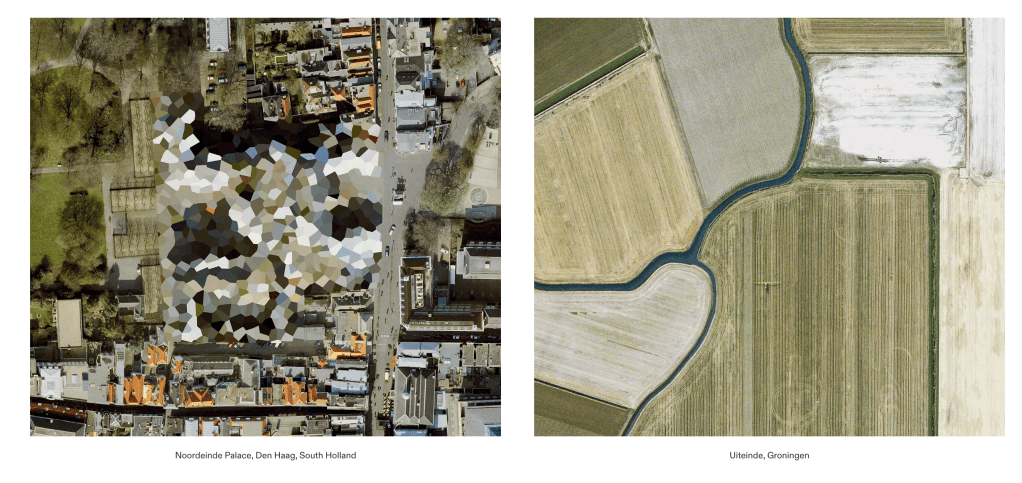
Taking Existing landscapes which change throughout seasons of the seasons of the years and covering them up. Do the cover ups replicate the colours of the objects / location underneath? I find it adds an element of mystery / secrecy. Does it entice people to go to these locations and find out what’s there and capture the ‘real thing’
These cover ups from space almost act as signifiers / identities for these places when viewed in this format. Can they place more to these locations then just cover ups?
Reason I have pulled this out and am exploring it is I’m fascinated in the hidden nature of the project of significant places. Does removing these then change the scope and look of the town (how people look at it) Does it stop people going to these locations? Or does it do the opposite and bring people to them.
It always raises questions over space and identity – What if we adapt / change / reveal places and bring attention to them? What does that do to their identity. Does it heighten their importance ? Does it remove their known location? Does it given them a new purpose and conversation for individuals.
What if we did this in real life to buildings? We covered them up with their uncovered identity? Would people get confused, ignore? or take photos like it was the place there.
Ongoing / documented research journal

Weekly Reflection
 James Shaw