Design Development
What idea from Week 10 am I going to look at: 5. Proposal of re wilding / wilding within new housing developments.
Feedback from peers:
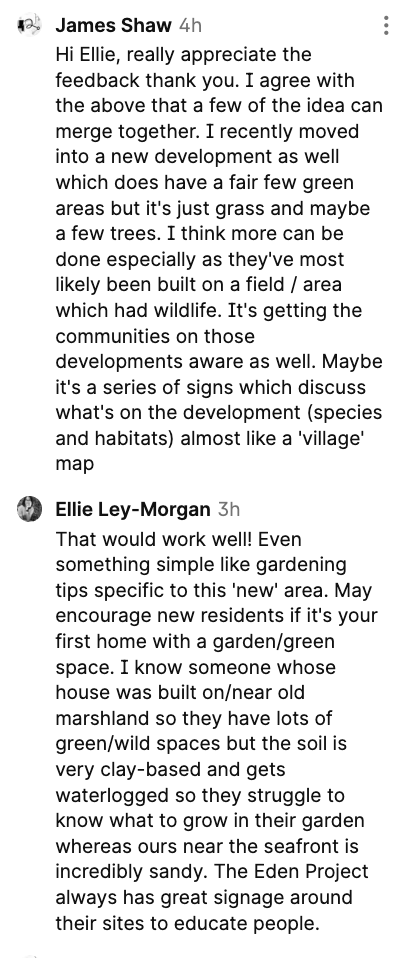
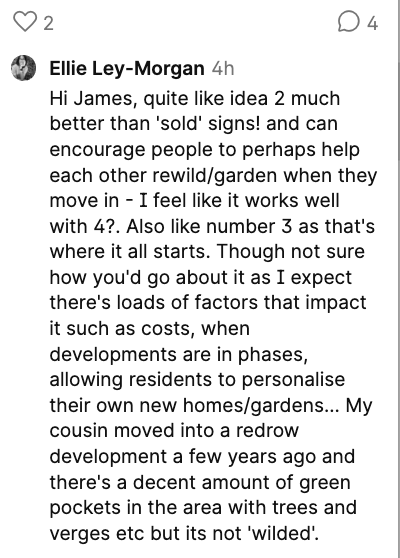
Feedback from ideas wall on chosen idea and development
Ellie Made some great comments on how I could further develop my idea and get a targeted audience involved. An idea of encouragement and collaboration. Ellie also highlighted concerns around working with developers / council which I was concerned about. It’s allowed to think more about how this could be a initiative which works with the communities (maybe a committee on the development)
From Ellies comments I also want to explore how other developments are like. Are many of the developments empty of green space? or are there others which have more wilded and green areas.
How to guides on the developments habitats and soil condition. This can be provided. With then a report coming back from the community on what’s worked and what’s been spotted (wildlife watch)
Feedback from peers:
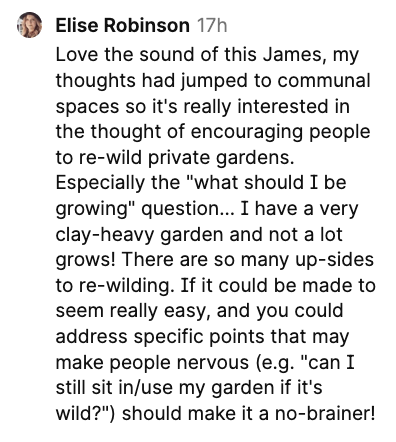
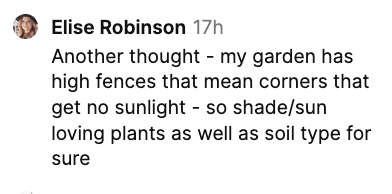
Elise comments on how to get across the ease of wilding and to consider different land types. Also considering how the user (target audience) will interact with in. People will want to know why and how. + what benefits does this idea bring? The name, wording and visuals will be key here.
Outline for creative idea:
New housing developments are popping up all across the country and with the government outlining a plan to ramp up building something needs to be done to stop areas of wildlife being compromised and destroyed. Can an initiative be deployed (starting locally) to help raise awareness of the need? This initiative would work in collaboration with new communities to establish wild areas across residents gardens.
How? Need to connect with the customer. A system which guides the new home owners around their development (of what already exists and what they can do to help) A seed pack tp start their own wild area within their home)
Where has this come from:
From first hand experience within the development I live in this idea aims to introduce wild areas to new housing developments, making sure the community is at the heart of the project. The development I live on will eventually have a green space which will also include a play park, at the entrance to the development there is also a well established service pond and surrounding green areas. However internally on the development there isn’t much else (a few trees and grass areas)
The development is lined with a few tree lined areas, I’m lucky to have my house back onto one but over the short period of living here unfortunately the trees have been hacked and chopped back, in which they call annual clearing.
Target Audience and outreach: (responses below)
Target Audience: Housing Development Communities (families, young couples aged 25-45)
72% of 30-34-year-olds expressed the desire to live in a new build, compared with just 19% of those aged over 66 from Strutt & Parker
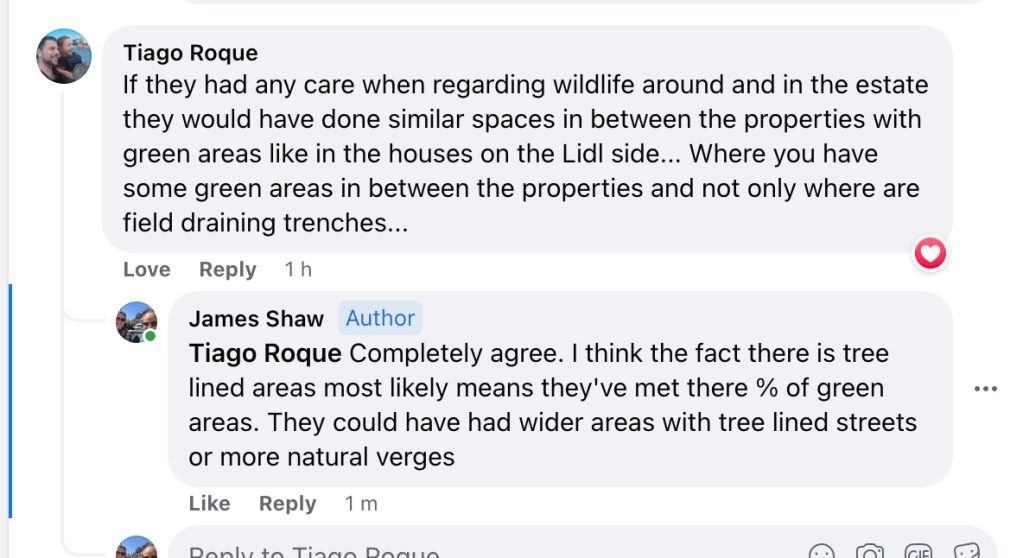
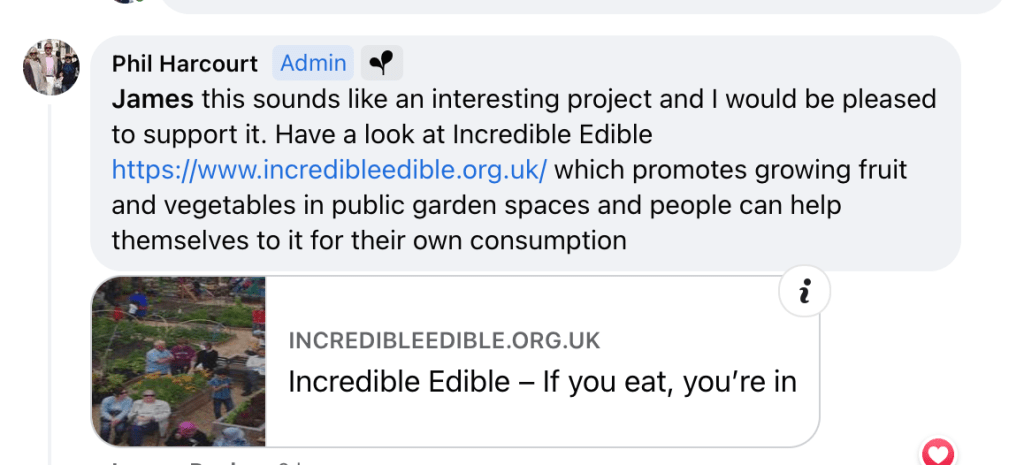
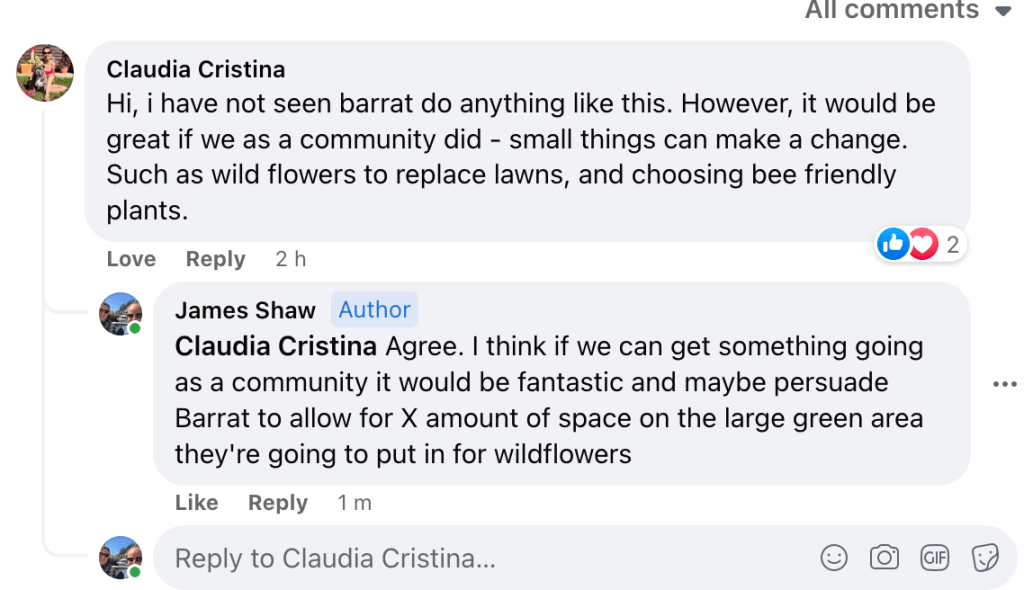
I reached out to my immediate community to get their feedback on the idea of introducing these packs to the new home pack. I also wanted to get their initial thoughts on what our property developer (Barrat Homes) have done to support wilding / biodiversity within the development:
Feedback so far has been positive and many commenting on the lack of support from the property developer. One comment mentions the building of a community which is where I see this initiative forming to have impact.
Swot Analysis
Competitor Analysis
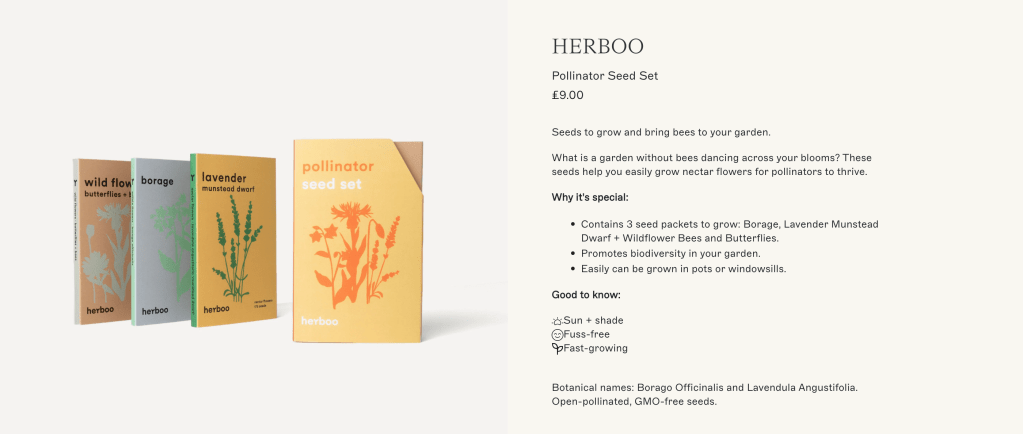
Herboo
Herboo currently offer seed sets for your home and encourage & promote biodiversity within your home. They’re a simple brand which is offering similar to what I am within my ‘new home seed packs’ However they don’t offer the support directly to new housing developments, or any place to document the progress of their customers.
What they don’t offer which I am outlining:
– Community support and collaboration
– Direct support to those on housing developments
– Documenting the progress of communities
Potential Threats:
– People can continue to buy these over and over – new home seed packs won’t be as readily available as it’s more of a journey document.
– Large choice of varieties
– Already established customer base
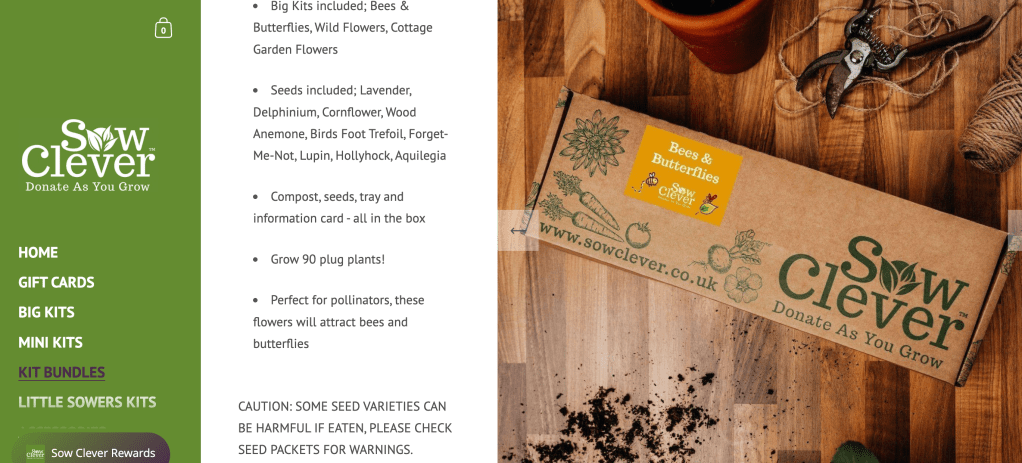
Sow Clever
Grow your own kit business which has a variety of options to choose from. Postbox delivery. A more traditional brand aimed more at gifts rather than a movement. Variety of target audiences
Threats:
– They have a donation option to support a cause
– Multiple options available
– The ability to share and send to friends and family (reaching a wider audience and connecting)
What they don’t offer:
– Support of housing developments and their communities
– Community collaboration (wider outreach)
– Ways of documenting the growth / sharing of the wildflowers
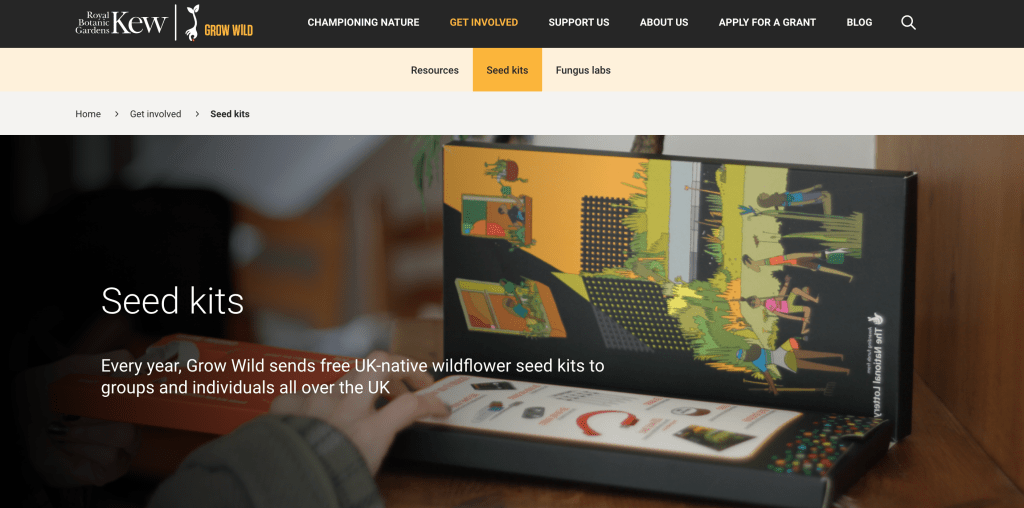
Seeds Kits – Kew Gardens
There mission is to bring people together to enjoy native wildflowers and plants. Works as a seed kit programme where you sign up at a certain time of year to request your seed pack. Here the design feels along the lines of what i’ve been thinking in terms of pack with seeds and instructions / illustrations. Is there a way my brand can differentiate. Could my brands pack fold out and be used within the planting. OR fold out and be the ‘I’m wilded sign’
Threats:
– Communities (such as though that form in smaller towns could apply for this kit)
– The element of collaboration / community is there
– Could be adopted by a property developer
– Sam ethos
What they’re not doing:
– The building of a community at the location
– Capturing the growth and it’s impact
Trowbridge Eco
Trowbridge eco are a community led initiative to support the biodiversity within the town. They have started a number of programmes which support the re wilding of unused areas (one of these being on a housing development. However this was within the public area not supporting the individual homes. I’m looking at Trowbridge Eco as more of a potential collaborator / partner rather than a threat. This could be a great opportunity for my project to reach out to them and have them take on a housing development within Trowbridge (for example)
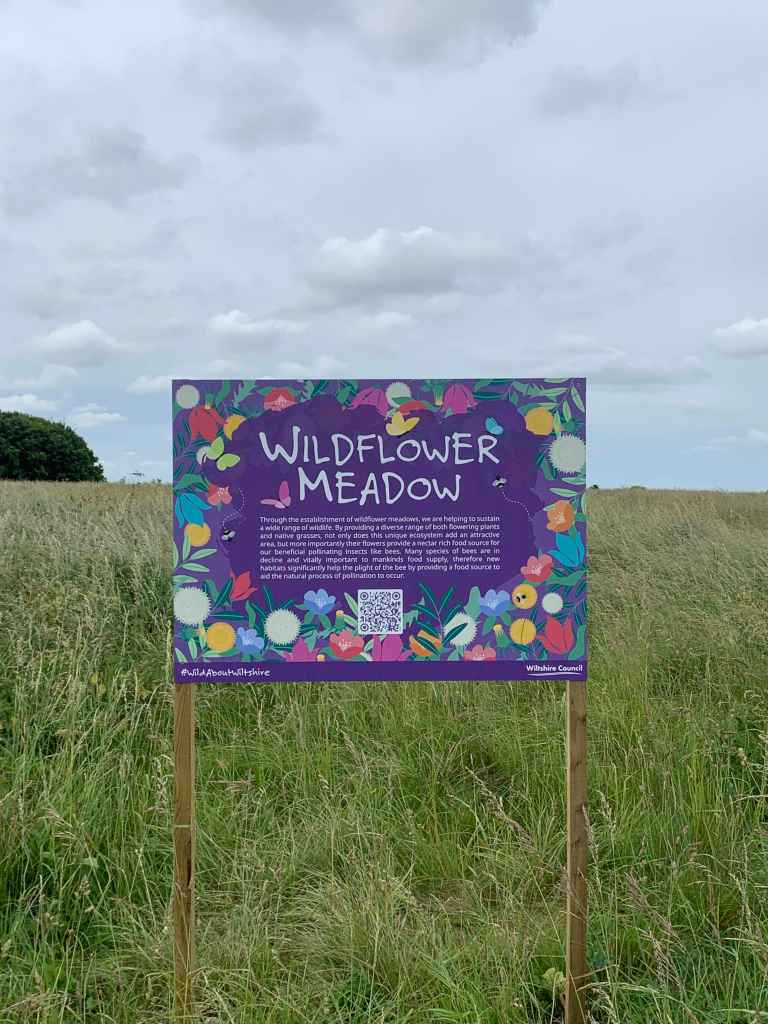
#wildaboutwiltshire
Their statement: “improves biodiversity and encourages bees and other pollinators to thrive. This new scheme encourages areas to be left for rewilding and other areas chosen to promote wildflower growth”
Threat here is they’re doing this within communal areas already however not within housing developments. Could this project be a collaborator and support the communal areas of the project? Especially as it’s supported by the council?
Opportunity – work with Wiltshire Council to allow growth on public spaces within property developments.
Sign is a good way to notify what is happening within the area. Could a similar approach be adopted with homes on a development (sign outside homes) or even a sticker in the window?
Wildlife trusts is calling for a redesign of all new housing developments, to one where wildlife and nature take priority within a ‘green rewilding’ of our ‘living landscape’.
Thoughts on how this might work / what is the product / service:
1. Brand identity for the initiative
2. A series of ‘ I’m being wilded’ wooden signs which go into gardens when people buy their homes /move in. Allows the community to see what’s going on. This could spread to communal areas as well.
3. A proposal document that goes to housing developers to encourage them to implement these within their urban designs.
4. ‘Starter pack’ is given to new home owners to wild their gardens (to ambitious)
5. How to wild your garden (front or back) guide which comes in the welcome pack of new homes (pack of seeds come with it.
Research routes:
Who is the target audience:
Those buying within new housing developments? (families, individuals, couples)
Housing developers? for example Barrat Homes
Those which are environmentally aware
Those who already live on a housing development?
Feedback from Frauke 1-1
Distribute through the community not through the developer – get to the point quicker. – How can I initiate this? Look at reaching out the community first online community page. Create a set of dummy runs of the idea and get feedback from the target audience. Develop from there?
Could it be a zine feel – to keep it more accessible keep it lo-fi and non digital for now. The digital element can come later (this could be incorporated through social media)
Community mobilisation – Community mobilisation is an attempt to bring both human and non-human resources together to undertake developmental activities in order to achieve sustainable development.[1]
Direction to move forward with: ‘Starter pack’ is given to new home owners to wild their gardens (to ambitious)
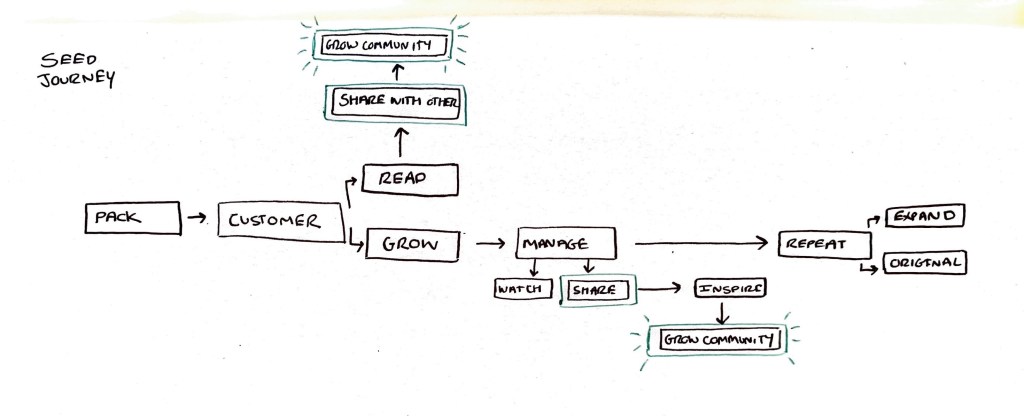
The ‘Seed’ Journey
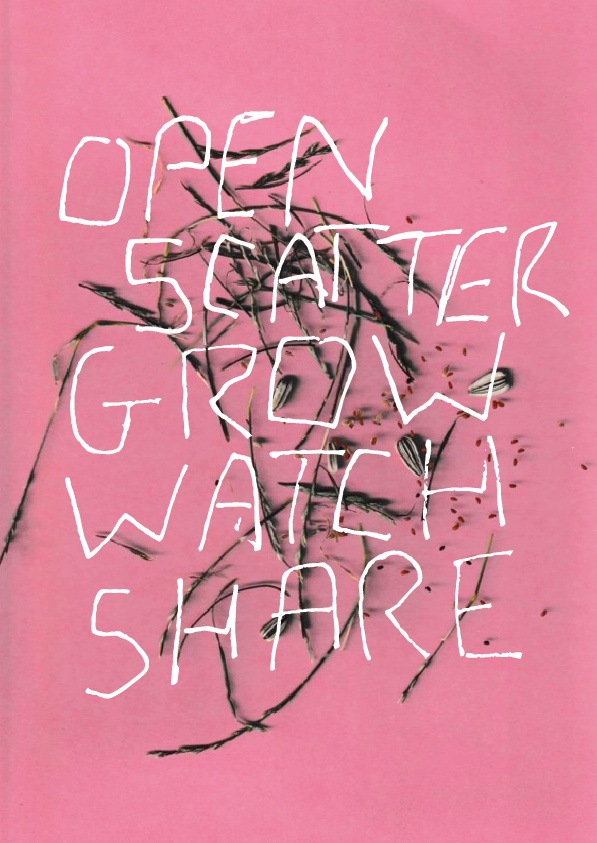
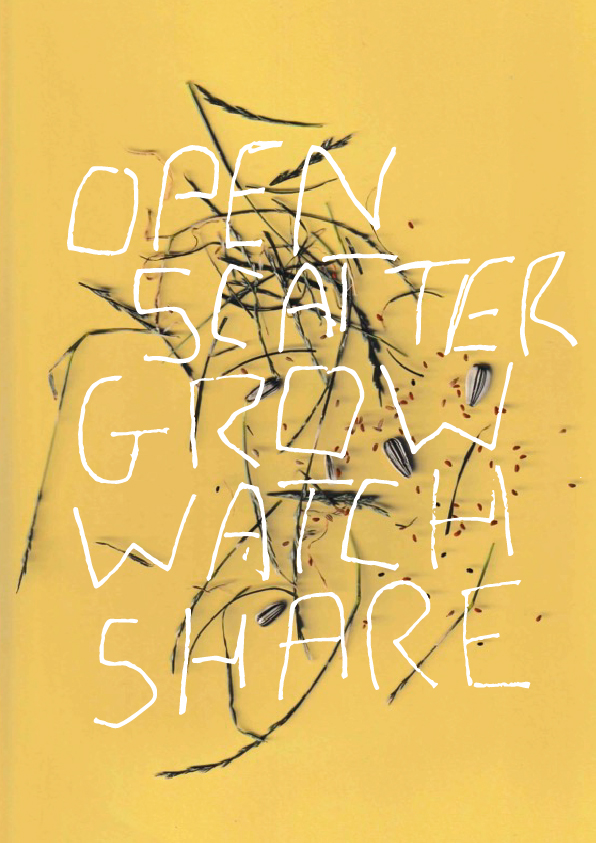
Initial Development Scans – How the visual of the pack look? Represent the current materials (grass) which is in most gardens? But also introduce seeds into the design?
These are very delicate… could they be more bold and colourful? Typography should be introduced but here I think it needs to be calm and give a feeling of anyone can do it. A strong and bold typographic response could be to much here?
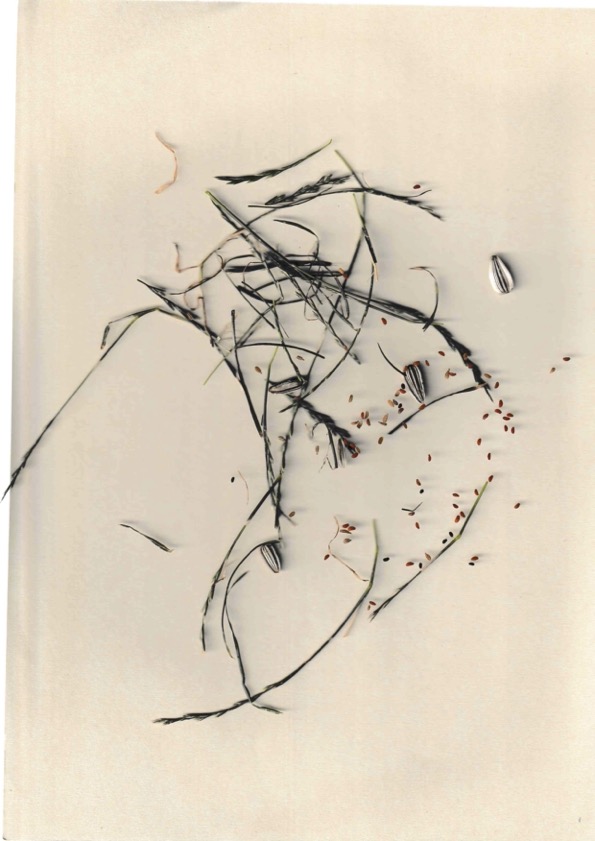
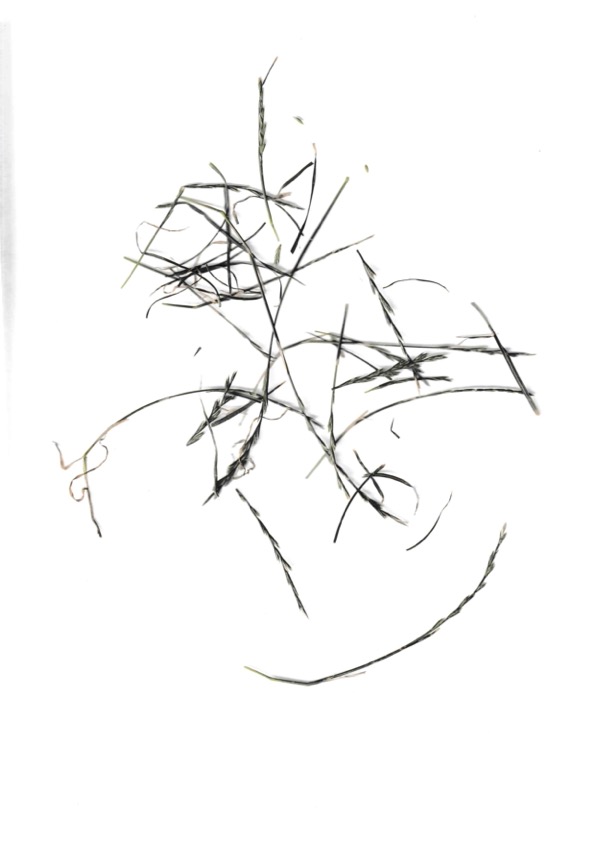
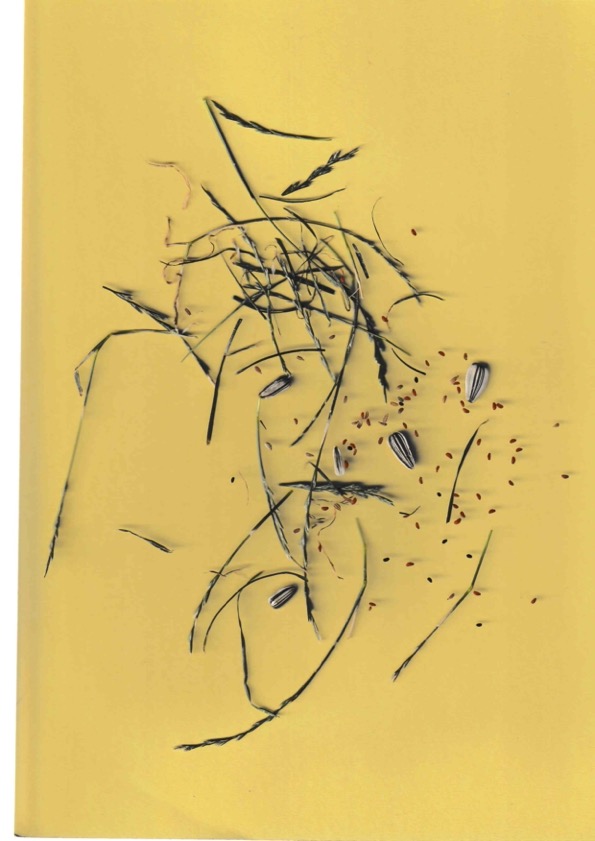
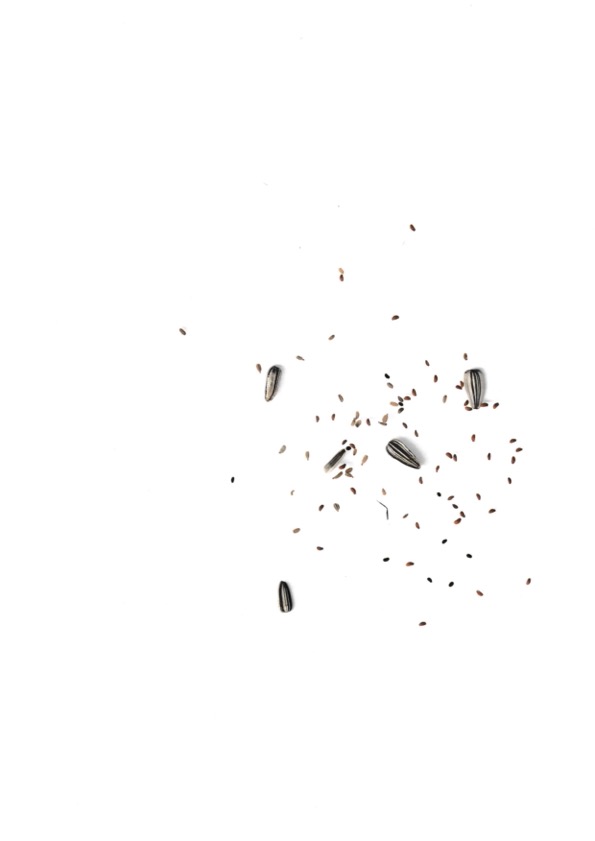
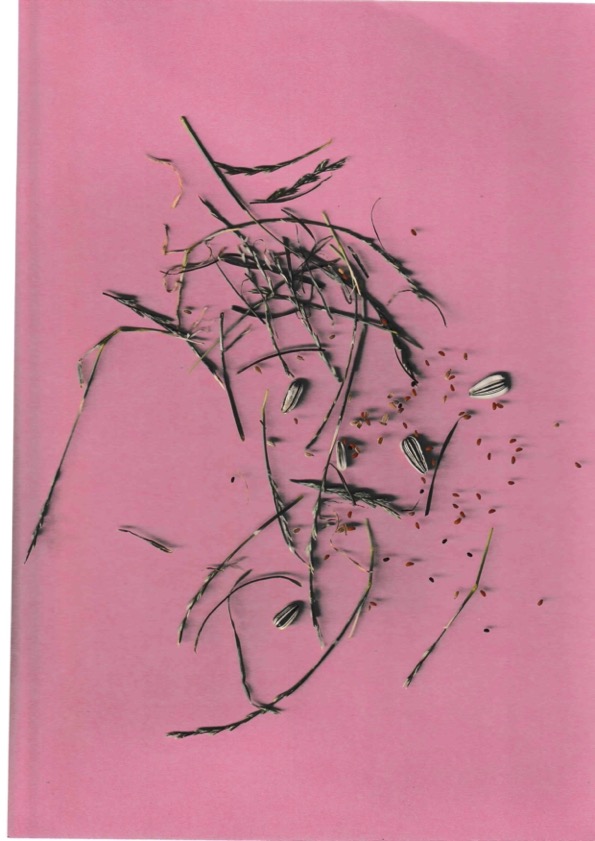
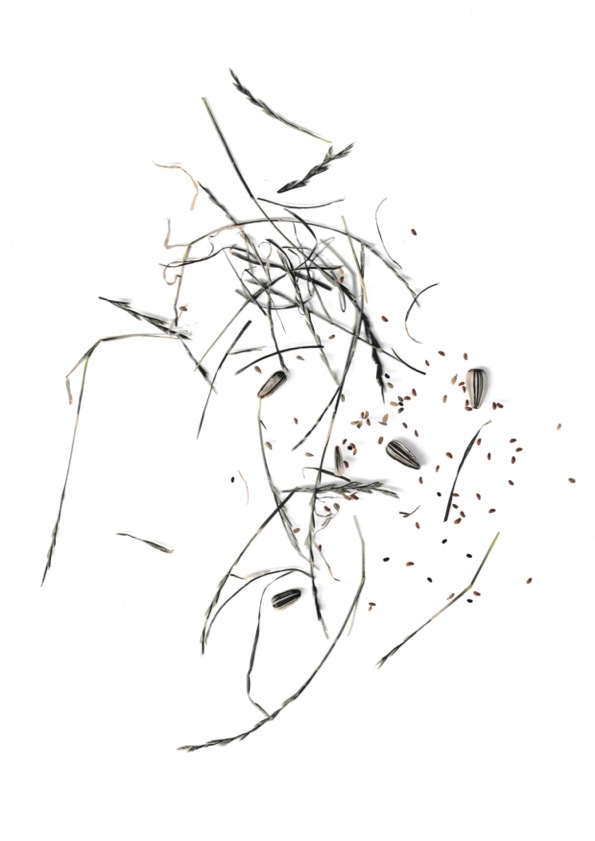
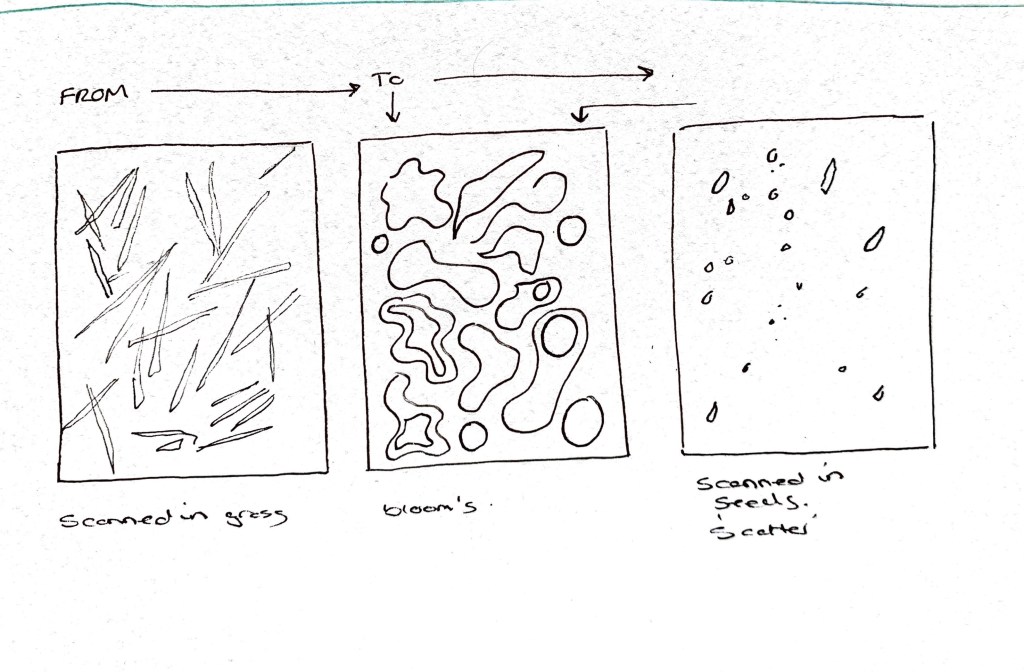
Could the seed packs be two sided and show a journey of before and after? Could they go from being subtle to bold, colourful. Using simple shapes?
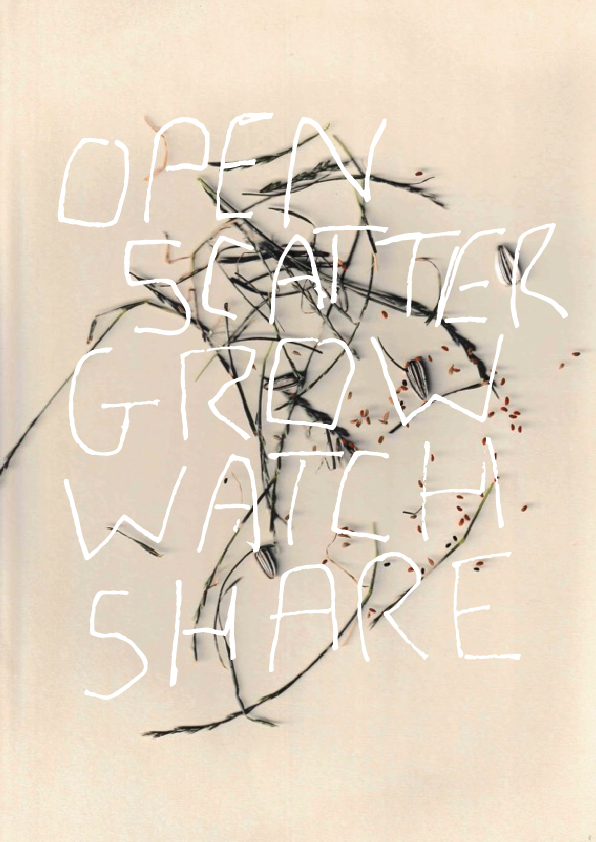
Does the naive style of writing here work? It feels personal and internal? Gives you that feeling that you can be part of the process. Could the wording be stronger? maybe even simpler?
Feedback from crit: 11/08/2022
Can it eventually be expanded to communal areas and work with councils
Think about not just wildflowers. Could I look at flowers / plants native to the area to make it more specific to the area.
Can the packs / seed pack decompose so they’re environmentally friendly
Rosie mentioned about extending the packs to the key rings you receive when you move into a new house – this could be a pressed wildflower.
Feedback on the design – Could the designs include pressed wildflowers (or each pack have a flower which is in the pack pressed onto the design)
Sketch / instructions was well received for it’s simplicity – access for all
Draft of business outline / stages so far and initial findings.
Research
How we could develop homes for both people and wildlife alike.
“developments have often missed opportunities to make neighbourhoods more natural, and damaged what was already there”
Wildlife Trust
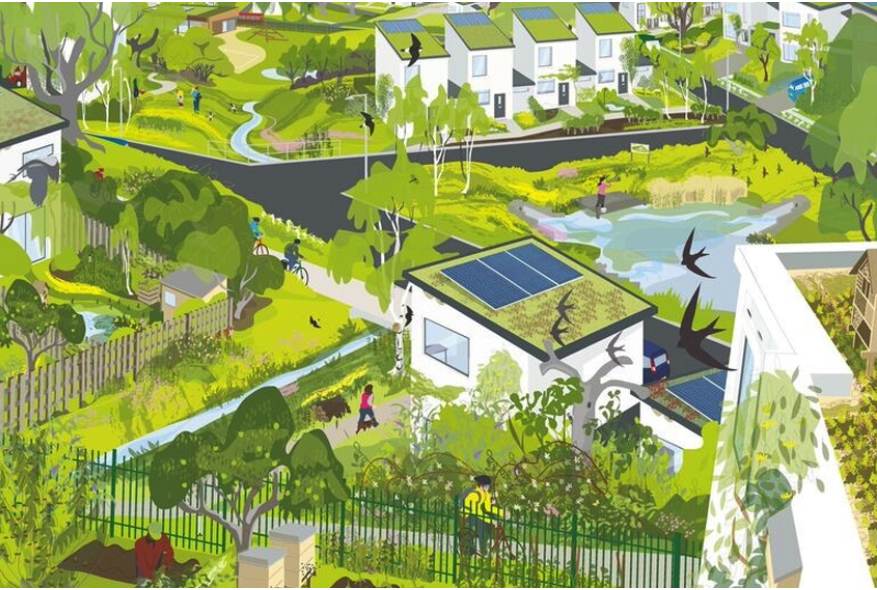
The Wildlife trusts report into housing development raises the questions on how we can make these areas better for both us and wildlife. Introducing more landscaped areas, wildflowers and green spaces to allow wildlife to flourish. How can design here play a part? If you were moving into this said development below will you be notified of what’s been done / what you can do? Can a simple graphic system play a part in a housing development site to increase awareness and drive for better management of these areas?
Could this be simple signs on gardens / areas to say I’m wilded please be patient. Or areas which discuss what’s been planted / what this area will attract and do? Educate those on what’s there. Could each household be given a starter wild pack to get started in their own homes. Even if it’s in a pot.
It’s great to see discussion around this taking place and if anything this supports my idea rather than threatens it. As this looks at the urban and construction design of a physical development. Where as I want to interact with the customer (the person buying the house)
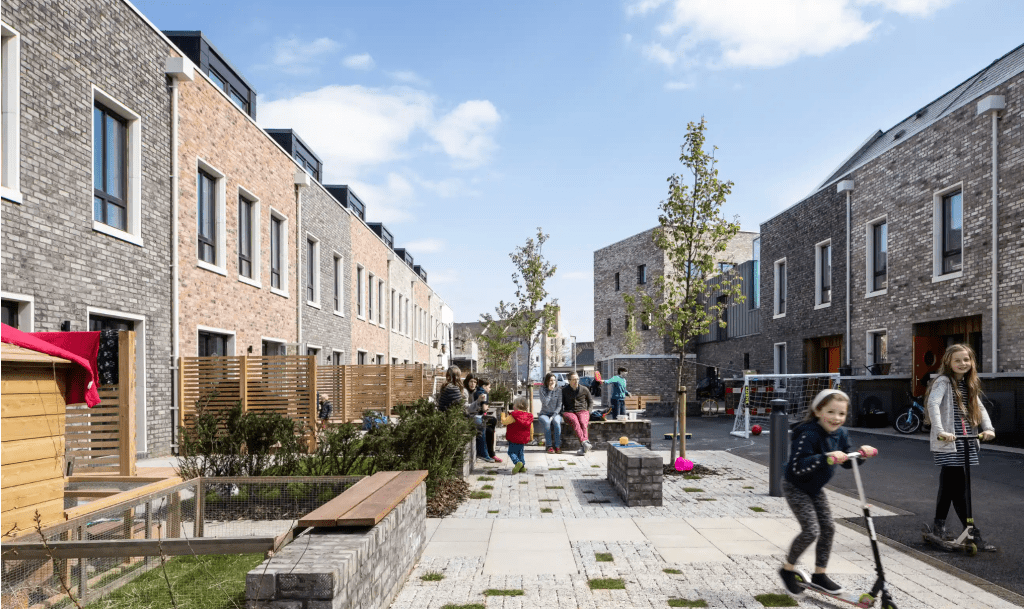
A development with a difference. A development which focusses on the people and not the profit. Shared spaces and zones allow the community to know get to know each other and come together to look after the space. Even better there is no cares allowed. It’s a car free lane. (this space is utilised for social space, safe space to play and meet)
A large shared enclosed garden also features in the development, where residents grow vegetables and look after resident chickens. Why can’t more developments be like this? Is this way of building not recommended more? It doesn’t need to always be on this scale. Even a communal garden / zone within a development would be a great starting point. An area people can learn, understand, share and even grow.
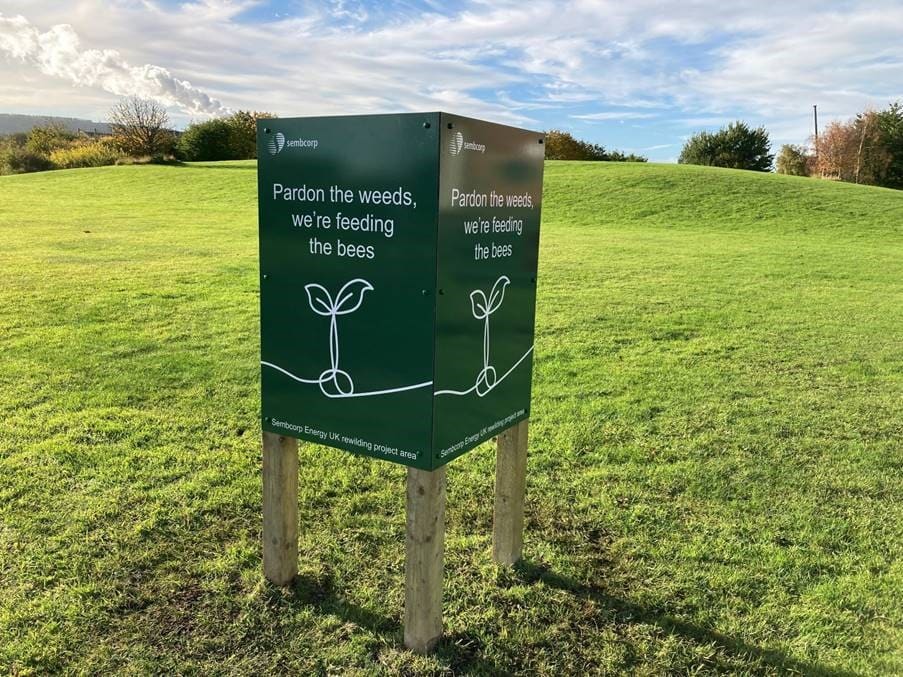
Re-wilding signs – already existing
“it raises important questions about the history and future of housing in Britain, and what we want from our cities”
The NHBC discuss the ongoing developments and what they’re doing with developers to support wildlife.
Wildlife in the UK is undergoing rapid change, with 58% of species having declined in abundance since 1970, and 15% of species at risk of extinction from Great Britain. Such changes can have far-reaching ecological impacts and represent a loss of our shared natural heritage. – NHBC report (Barrat Homes)
Living amongst nature has proven benefits for people’s physical and mental wellbeing and is a key factor in the creation of healthy, happy communities. We believe that installing wildlife-friendly elements and contributing to biodiversity should be central components of new housing development.
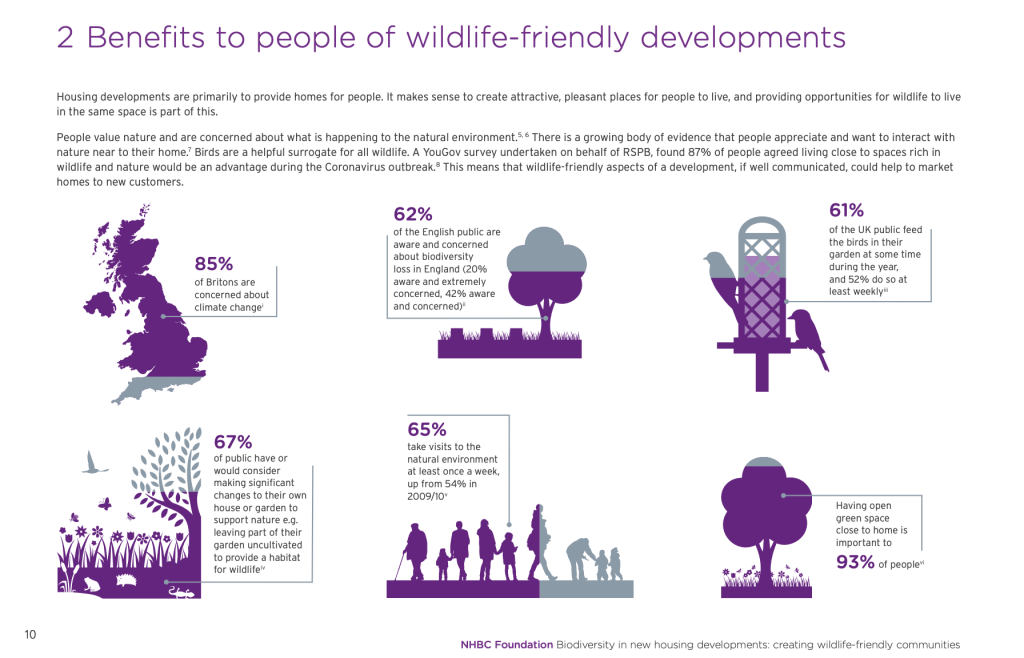
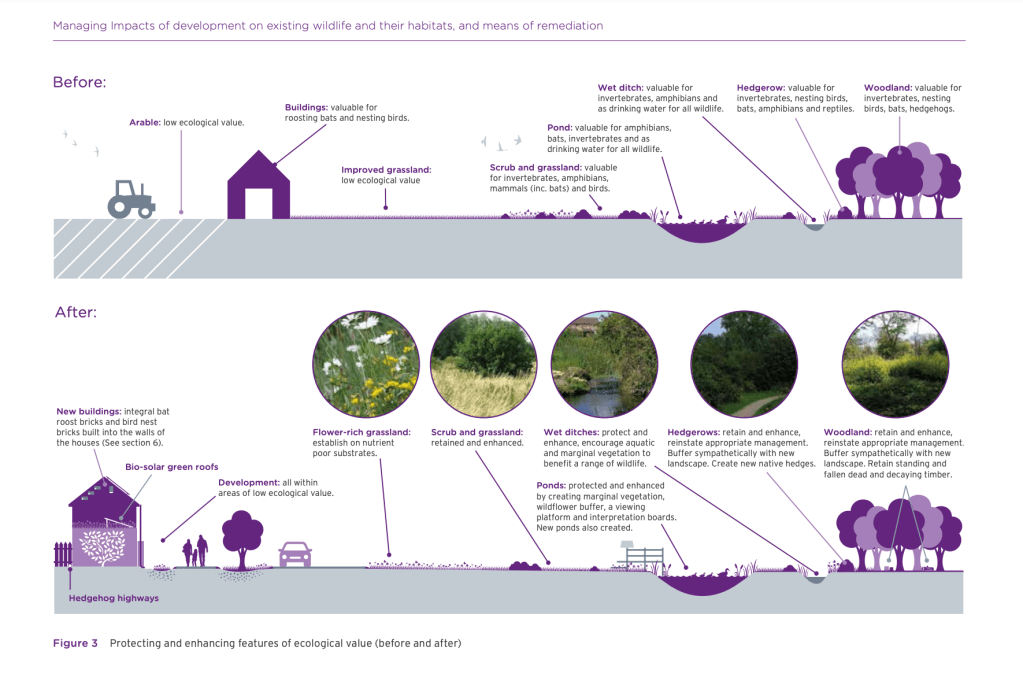
What’s worrying here is from someone who lives on a development minimal of the below have been implemented. Is this due to a lack of engagement with the community? Are they relying on individuals to wild their own gardens to support the wildlife? Or are they using the existing ‘green’ areas to say they have met their target. I think allot more can be done locally and Graphic Design can be a driving force in supporting this.
The graphics below I find really interesting and engaging, especially in seeing how a development starts and aims to be completed and all its features. If this was more readily available potentially more people would do things themselves.
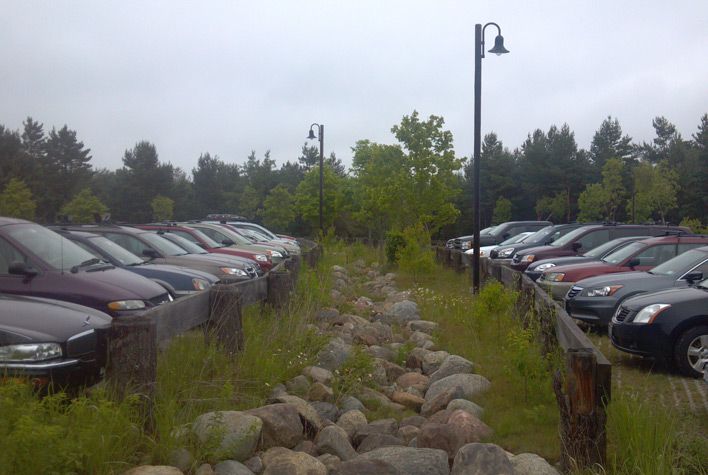
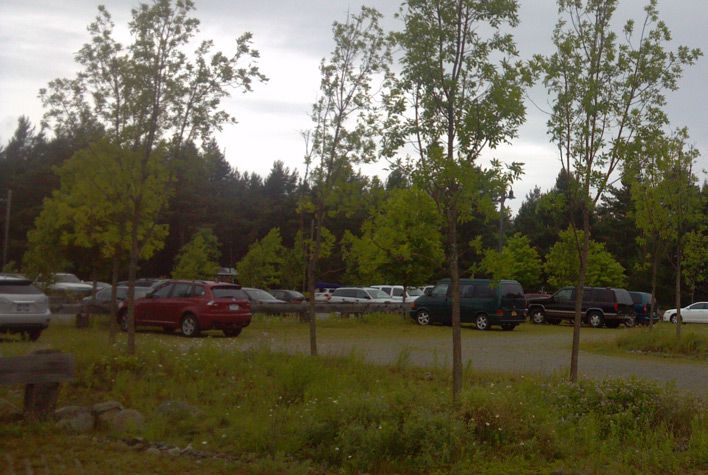
Wild Car Parking
Looking at areas that can be adapted to support wildlife. This car park has been designed to allow nature to flourish. Not laying solid materials so that plant life can grow. They also have a number of other benefits including heating of the area, surface water run off (absorbs it) and the ability for plant life to grow.
Weekly Reflections
 James Shaw