
Industry / Peer Communication
Design Development
First Stages of capturing.
The first thing I want to do with each of the selected spaces is to analyse them both visually and from an emotional aspect. This will allow me to start collecting information about these places – Potentially leading to design steps.
below are the first analysations of the spaces from an external POV in word form.
I’m looking at ways of documenting this information – at the moment I’m capturing it all on a non published site. This will also be supported by a file system (excel) to collect and document information.
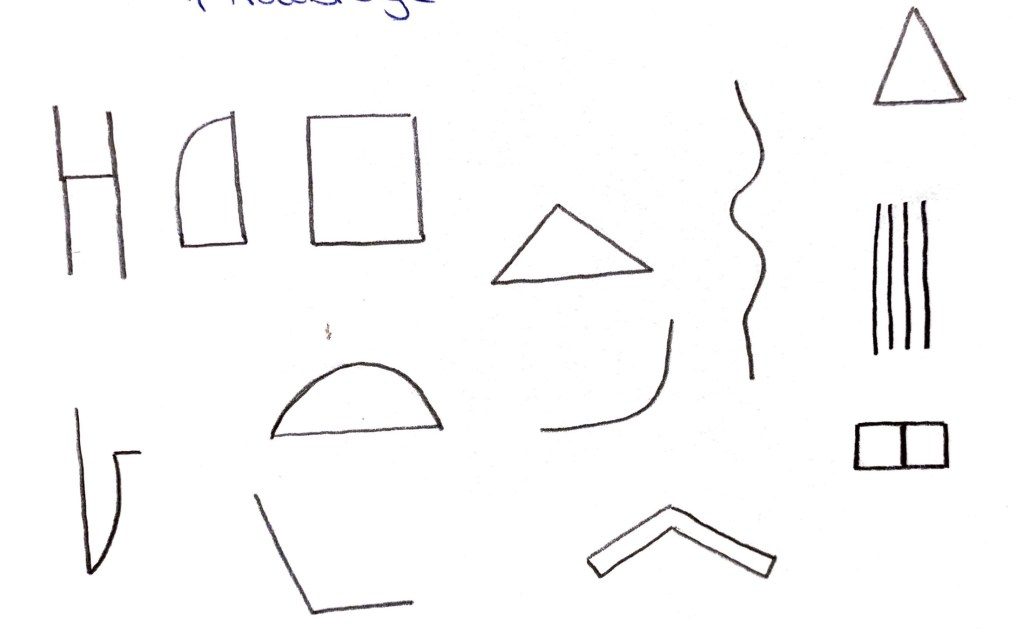
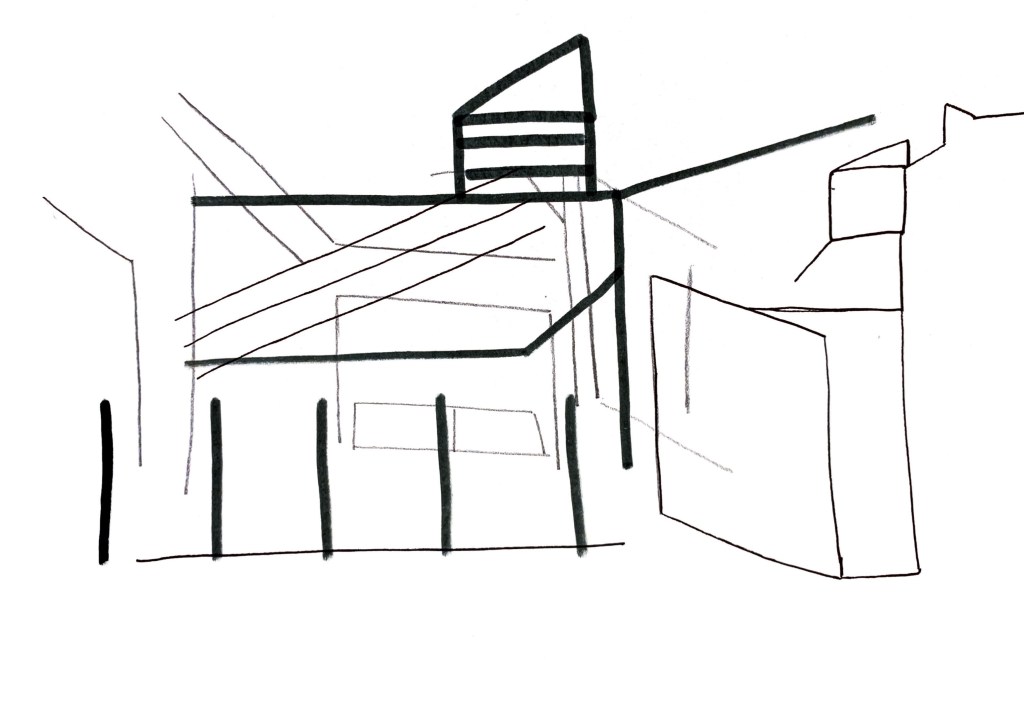
Immediate external shape observation
These quick iconography observations were taken from both the Town Hall and Civic Centre in Trowbridge. Observing the external structure and capturing the shapes.
Why? The construction could reveal a feeling / identity through its simplistic parts? If you look on the left which is the Town Hall, the shapes are more fluid and historic whereas on the right the Civic Centre is more modern, straight lined and geometric.
From this observation however you get different feelings from the types of shapes. The Town Hall on the left are more organic, free form, moving (representative of the buildings original purpose) The Civic Centre’s are more sharp edged, serious and current. These are my observations but I find it interesting that from this simple comparison we can start to uncover feeling and identity in a simple form?
What happens if they collide? What if they become 1? Does this give us more of an insight into their identity.
Do they start to form a typography response? Can these ‘foundations’ form a typeface?
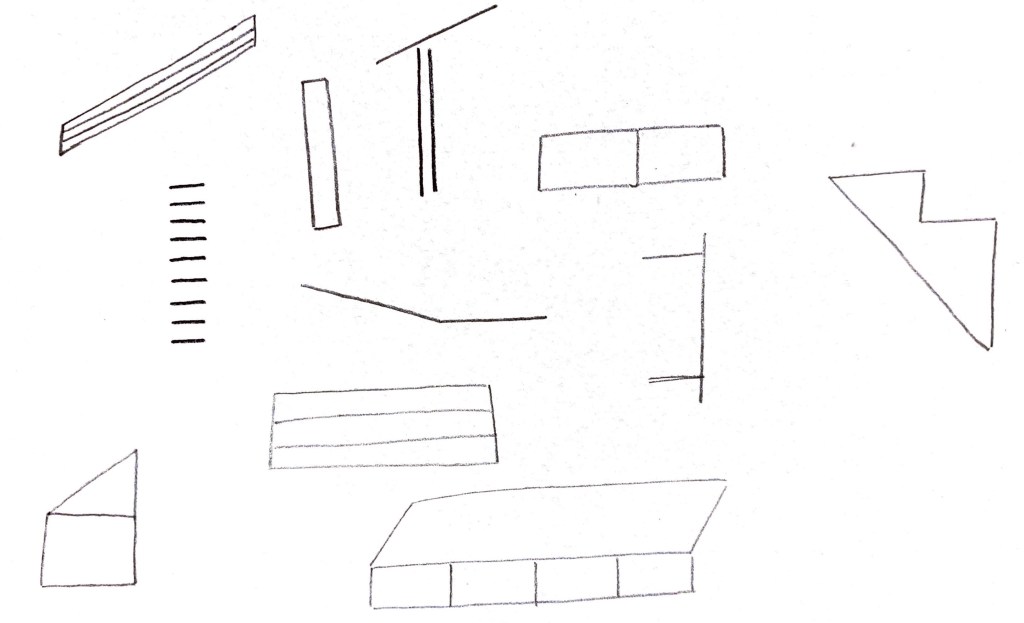
External layered observations of structure (Comparison)
Below I started to observe and layer the instant observation as more of a drawing – More formed shapes and observations. Again on the left is the Town Hall and on the right The Civic Centre. You get a similar feeling from these drawings but also new areas have been uncovered?
On the left it reveals elegance, attention to detail? A more historic past from its ornate shapes, whereas on the right it looks towards the future? New way of thinking, a more creative and dynamic future?
What do I do from these?
Look into why certain shapes may be used within urban / architectural design and is there reasons to why? What if these were layered onto images of the spaces?
What if I showed these to the community and asked for a response? Would this give me insight into how the community looks at these spaces?
Explore vernacular typography and vernacular architecture from within and on these spaces?
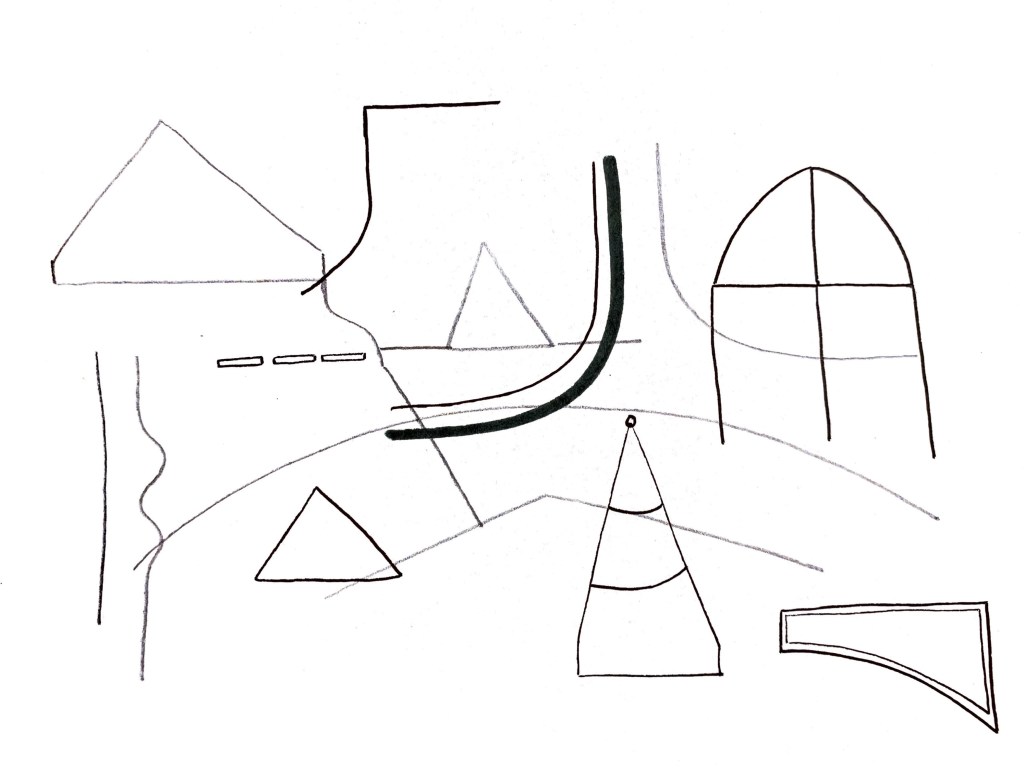
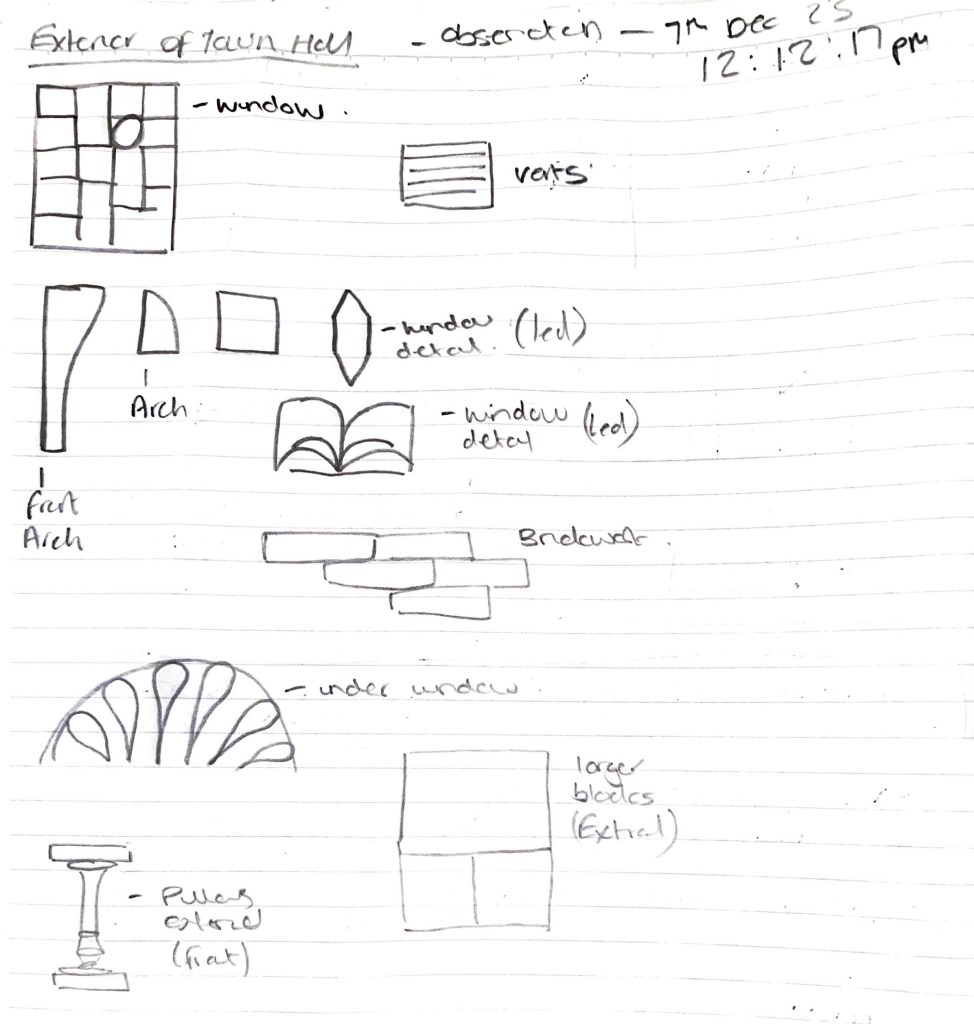
Following on from this I wanted to place myself in a location and observe over a period of time not just the external features of the space but the happenings at certain times. Below is observed shapes from my view point within the coffee #1 across the road from the Town Hall.
These look at the main structure (bricks) also to details such as the windows, window leading, architectural features on the brickwork and external elements on the brickwork such as vents, similar to above this started to unlock the identity of this space through these shapes.
Can these observations be explore within a typographic way?
Could they form letters?
What if I started to use elements of these to form letterforms / type around the space?
Movement observations
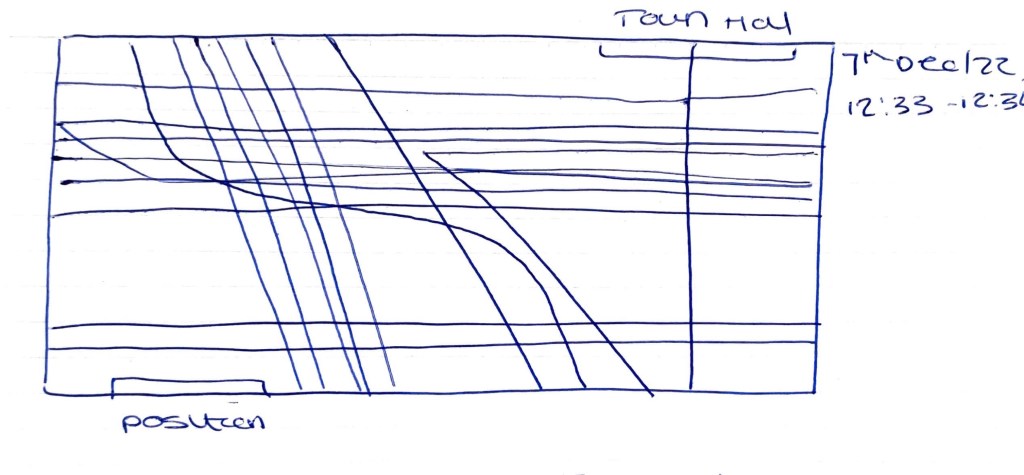
While observing certain elements of this space I also started to document how people were moving past this space in a very data led way.
These were all documented from the same position but at different times.
The first one shows the direction people were walking in past the town hall
Second one also shows the direction people were moving in but adds the direction, movement and way they were travelling (with many not entering the town hall but moving around it)
Third one shows the placement of people when observed, again many are away from the main entrance to the town hall but all pass it.
Fourth one is again the the path people have taken but using a more continuous line approach to their track.
From these can we start to get a sense that the town hall is a major part of the town that the public have to navigate around / past to get to other areas of the town? Is its scale making these movements happen?
Again can these observations play a part in a typographic response?

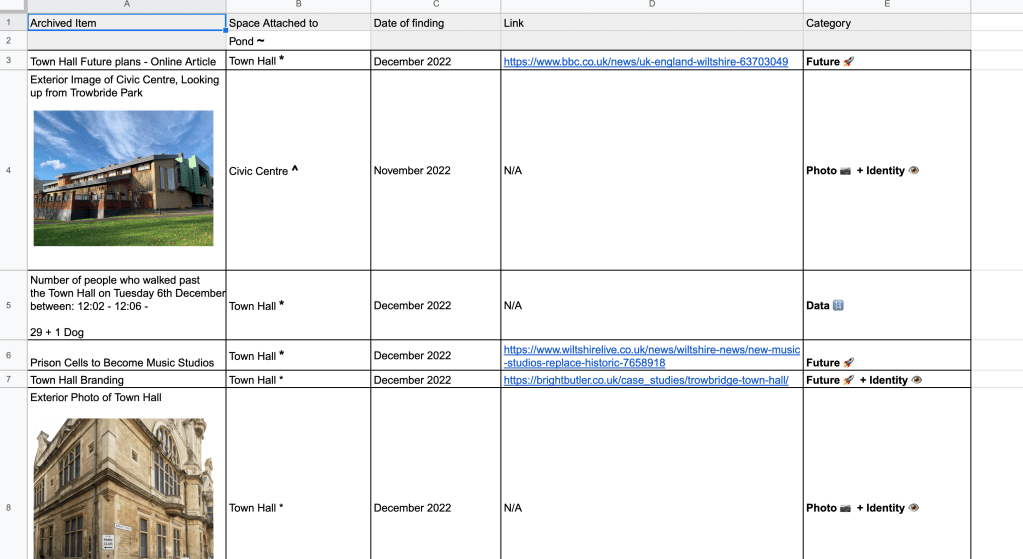
Documentation of my findings. While I’m gathering all of this information I have been thinking about how to keep findings in a document. At the moment I am keeping track of findings (pictures, references, identity) within an Excel sheet which is categorised with all findings from the specific spaces (Town Hall, Civic Centre, Town Pond, Home Mills)
This also starts to build up a archive of items to work from and explore (potentially an open source for others to contribute to?)
What if this became an interactive archive were the community could contribute to the ongoing reveal of the town’s identity.
Could this form part of an outcome? A journal / library for the spaces?
By revealing identities of spaces can we create a tool which allows people to engage with their community?


Research.
Silvertown Typographic Response / Branding
Using a ‘space’ within a ‘place’ to develop an identity. A historic structure within the London neighbourhood informed the typographic identity of the place. Looking at what already exists and using it to inform the identity.
“Building a brand out of place” – DNCO
What stood out here was the connection directly to the town and the community. The brand came from the place and the people who lived within it. The old mill has been standing in the town while people go about their lives, everyone will have a different opinion on it, some may not have a response to it, some may be connected to it through family, some may know it’s historic past, some may know about it’s future, some may put their thoughts forward on it’s future.
How can I look at spaces within a town to uncover and reveal its identity? This example was a more obvious find with it being used on the old mill building already. So is there elements of spaces which can be dissected visually and verbally to unveil the identity? Is it people speaking about these spaces which will lead to their discovery…

The Voice of a city By Shauna Wilkinson
Shaun Wilkinson of Ginger Root talks about the voice of a city and about how vernacular typography and architecture play an important part of this voice. Shauna says “visual elements that are alive with the community that creates them.” This connected with me and how I’ve just documented the spaces within the place of Trowbridge, Wiltshire. I’ve extracted visual elements in the form of simple sketches from these spaces, they’re there and live within that space – what clues do they gives us about that space and wider place they sit within.
“examples within a place function within their site of locality as well as how history and society also interact with that place.”
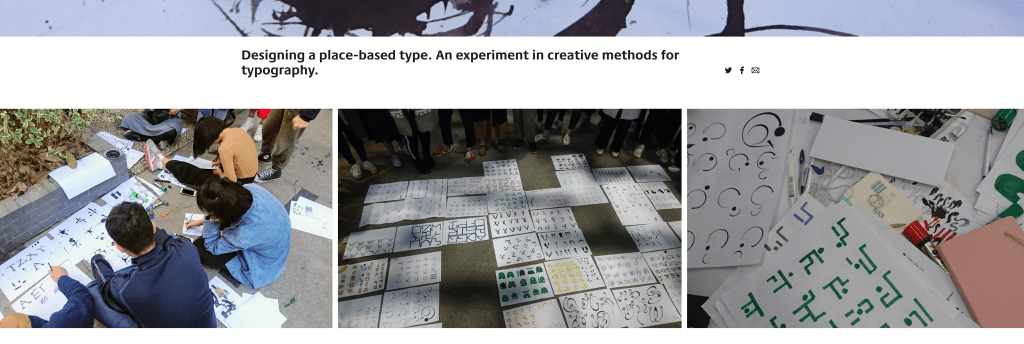
This project looks at how a place can look at the objects and elements within it such as fences, roads, textures to help inform and build a typographic response.
The responses which would have been completed by a range of individuals has led to unique outcomes which give us clues into the place they have observed.
What’s exciting here and relevant to my project is the observation of mundane elements within the place, these informing the design decisions made. If we place all these observations together we may start to get an idea of the identity of the place they have come from. We may also start to see patterns or repeating trends?
How can not only me but the community contribute to further reveal the identity of Trowbridge, Wiltshire through observing spaces. Can the observations I have taken start to form type and or other design elements.
Ongoing / documented research journal

Weekly Reflection
 James Shaw