
Design Development
Discuss about why I am looking at these 3 places?
Why the town hall? (the media, central to the town, branding of the hall not the town)
Civic Hall – Out of the way
Mill – A statement within the town (many of them, historical, forgotten, rich, creative, heart of town but hidden)
Pond – Central place for gathering, community, past memories from community, moaned about allot, run down, no action being taken (nature being left)
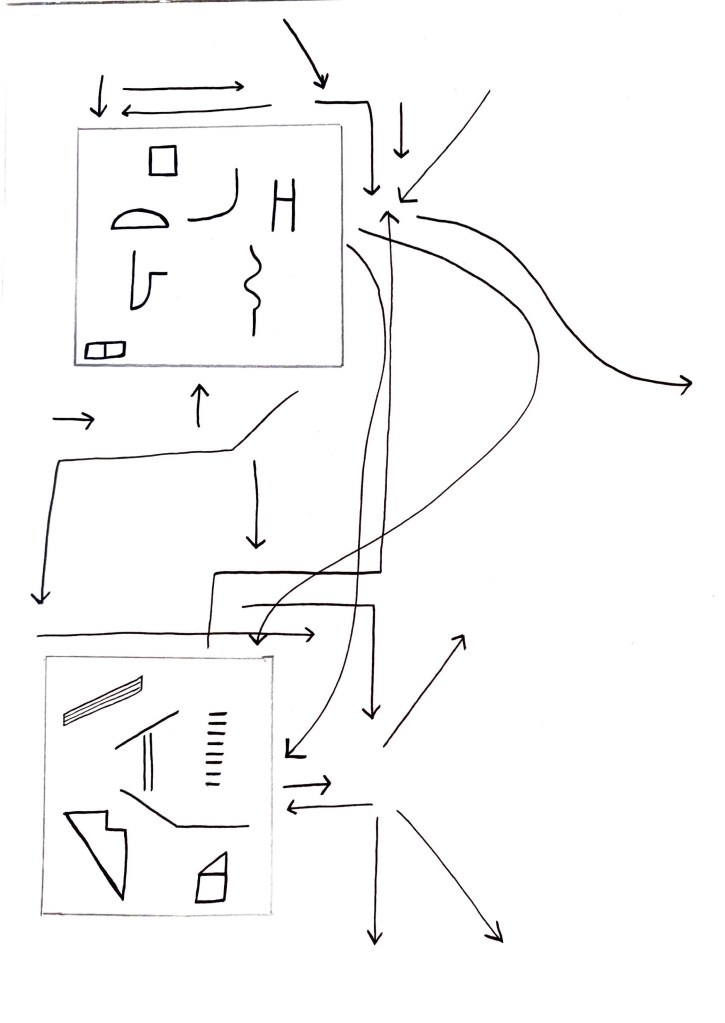
Journeys from place to place (Town Hall to Civic Centre)
Each place identified by external symbols which have been extracted from the look of the structures. Direction is based on public walkways and spaces available to access these places. Not all directions, routes, start and end points shown (sample only)
How does this start to reveal Identity? Or does it not? Is there a way I can get others to draw upon images and give me their feelings?
Also can I come up with a list of names / language for each of these spaces (how I see them?) My own vocabulary for them.
Words / vocabulary for the spaces
Town hall:
Central, Imposing
Civic Centre:
Angular, Slant, Pitch, Carbuncle (unpleasant to look at), Modular
Trowbridge Park Pond:
Lost, Desolate, Isolated, Misplaced
Home Mill:
Creative, Production, Movement
Develop further my methodology of researching these spaces? (diagram and plan)
Buy newspaper from the town and re-arrange text?
Observation and deconstruction of these spaces? Are they made up of blocks? what if these blocks were re imagined? shared… – reference Bernard Tschumi (architecture, deconstruction of form, placement)
What if I take the photos of the spaces, the surroundings, my observations and mix them up? What happens then. Use craft methods to put these back together, layer, deconstruct, disrupt their usual visual appearance? Manipulate them. What is then created and could be further developed. (typeface, images, signs, objects) reference OMA
Visual’s from OMA –
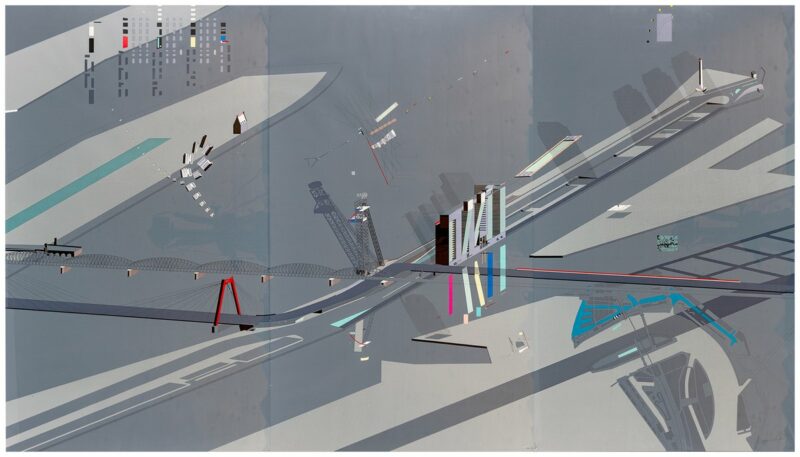
Does this throw up a discussion around creating new identities by doing this? I’m removing what people see them as and re imagining them? this in turn revealing new identities – new ways of seeing? Can this allow others to reveal their own thoughts on these spaces…
Observations expanded and connected
Looking at how the forms observed can be connected with other forms. Does this start to form visual narratives of the spaces? (externally) OR does it even start to form typographic responses from them observations?
What happens when these are placed alongside photos and words of the spaces? Does it cause friction? Is there a relationship which starts to build between the different visual forms?
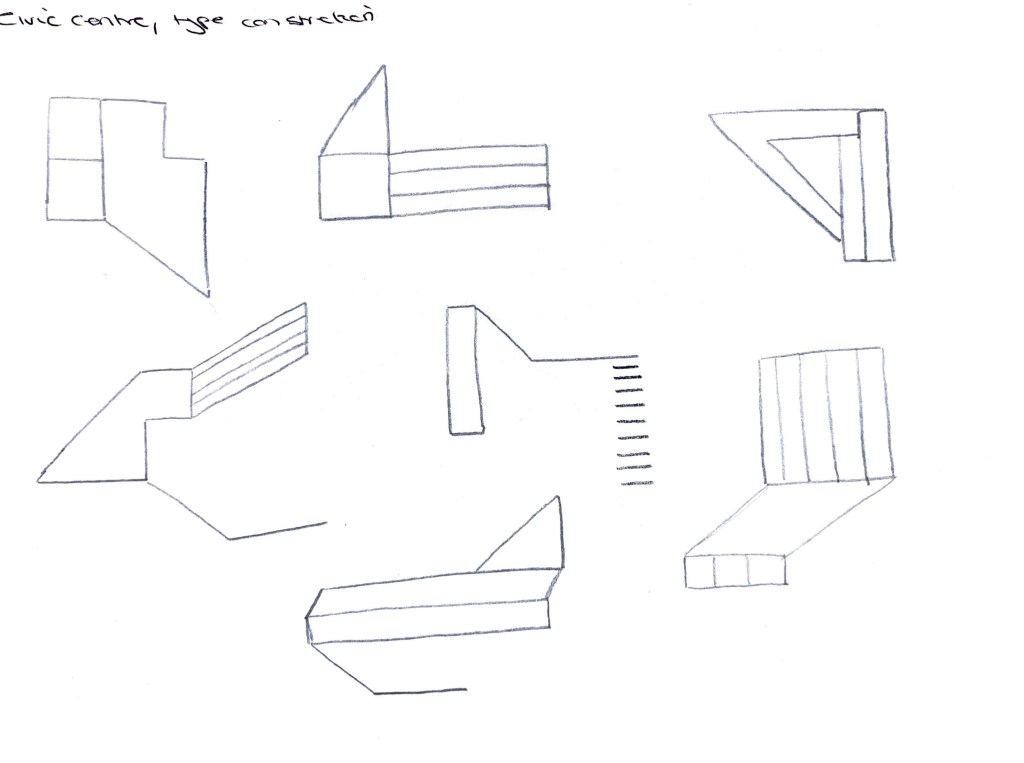
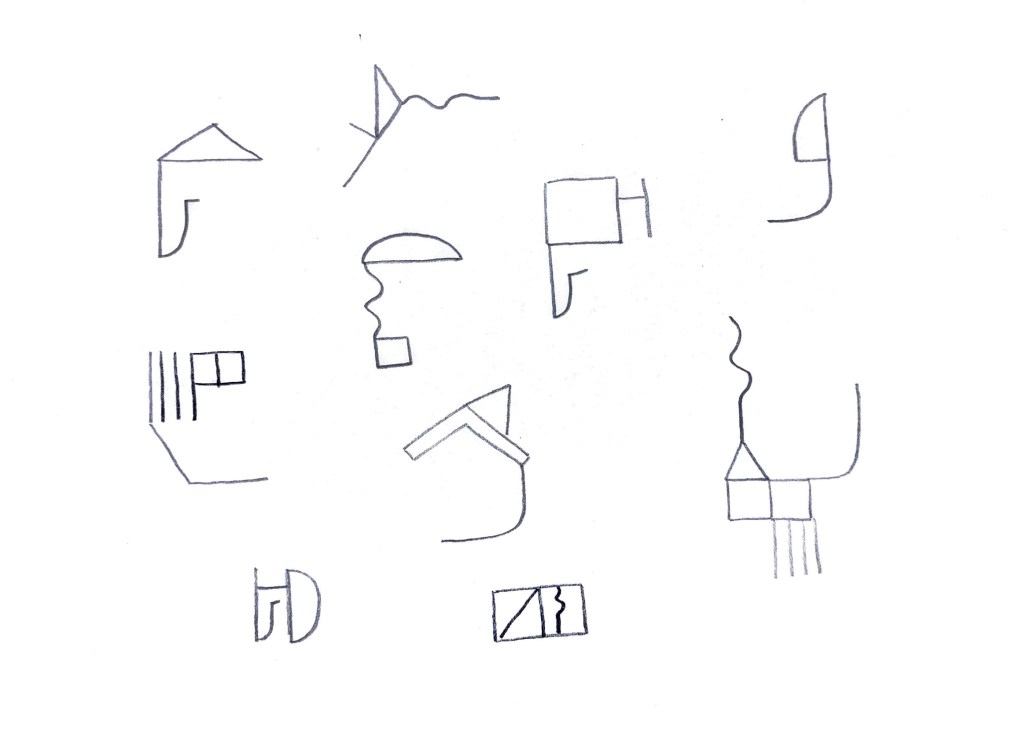
(Above) Are examples of observations connected together. These observations are from the same buildings. They start to form their own identity, even start to look like structures. Can these be placed next to the original image or overlaid to build further narrative?
These have been observed with pencil and paper, and the reason for this was to respond directly and instantly to the buildings. They seem abstract at this stage.
What if I start to explore how the drawings can be directly related to the buildings?
Artist Sam Van Strien took a series of rubbings from buildings are presented them in their raw format (black and white) Sam discusses the process ‘A rubbing, in contrast to traditional architectural illustrations or photography, makes the surface of architecture visible and highlights the scale of the body as a measure of our built environment, revealing how architecture can be experienced both visually and by the body.’
Placing in then for the public to see and experience. These rubbings not only connect directly to the building but it also captures the stories past, present and future. If those who know this building they may start to draw narratives and emotions out. Sharing thoughts and memories. Those who don’t may start to create new narratives and share their feelings. Do they visualise the type of building from the rubbing? Do they create narratives from the surface presented?
Sam goes onto talk about the exhibition these featured in ‘ This exhibition inspired me to incorporate the process of rubbings into my practice as a strategy to reveal my tactile and visual experiences of architecture’
Same refers to the rubbings as visual experiences of architecture. Do we as viewers have an experience when viewing these rubbings? Is the exhibition the experience or is the rubbings Sam wants us to experience?
‘The removal of the rubbing from the site makes it both an image and an index of my contact with architecture’ – This resonates with areas of work I’m documenting at the moment. I’m capturing elements (drawings, data, photos) and placing them into a visual index for myself to refer to a build upon. This also allows me to reflect back on these observations. Could this index / catalogue I’m collecting be part of what’s shown to an audience? Could it be the basis of the experience?
Through this, my work aims to question and open up forms in which we can experience architecture, whether through mediated visual representations or our experiences walking in a city.
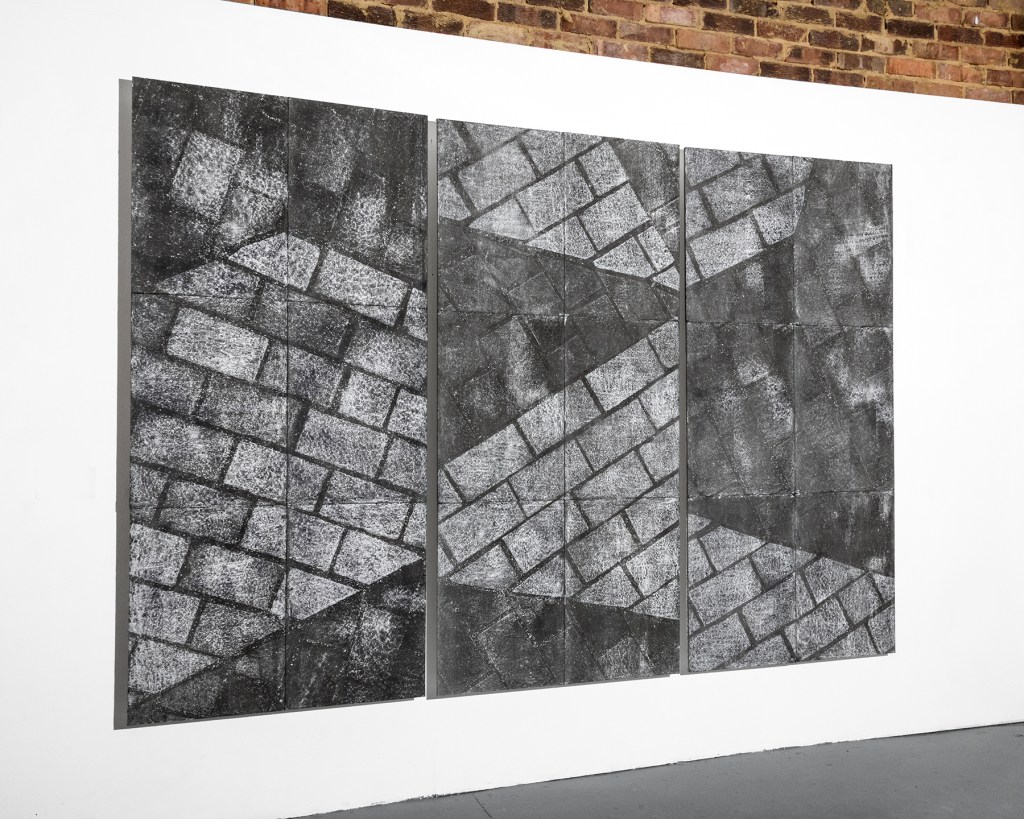
From one of Sams rubbings (above) I get a feeling this is a well constructed building in good condition, its been used many times, it has many purposes? Sams way of presenting them also is interesting, they look to be to scale, not shrunken down, giving the in person experience a more dramatic nature?
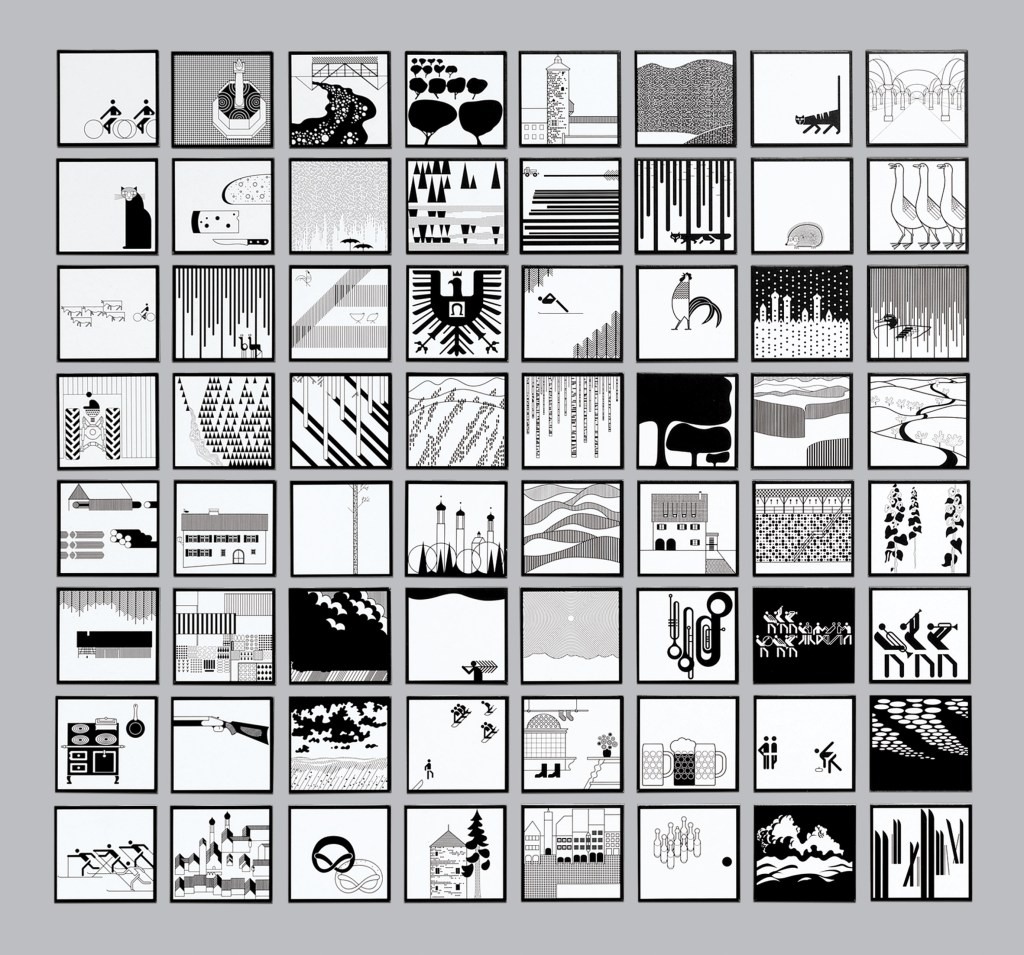
“Using abstract iconography to illustrate aspects of town life – ranging from forests and animals, to churches and pretzels – Aicher created a design language where icons could be combined and rearranged to depict a range of narratives”
Within his work Otl Aicher created a system of icons which were drawn from the town itself. These icons could be combined and rearranged to create new narratives. These more direct icons represent town life, areas and what you can do. Directed to both residents and visitors? Visitors could use a series of these icons to find out what they may want to do. Residents could arrange them on what they like to do in the town or from memories created there. (building narrative)
This work is more direct and more accessible for many to be part of? It’s less abstract than Sam Van Strien work however the icons aren’t directly capturing elements within the town, there digitally created? Does this remove an element of identity / emotion? What if rubbings were added here as other parts of the narrative?
Sam Swinston – Following the breath
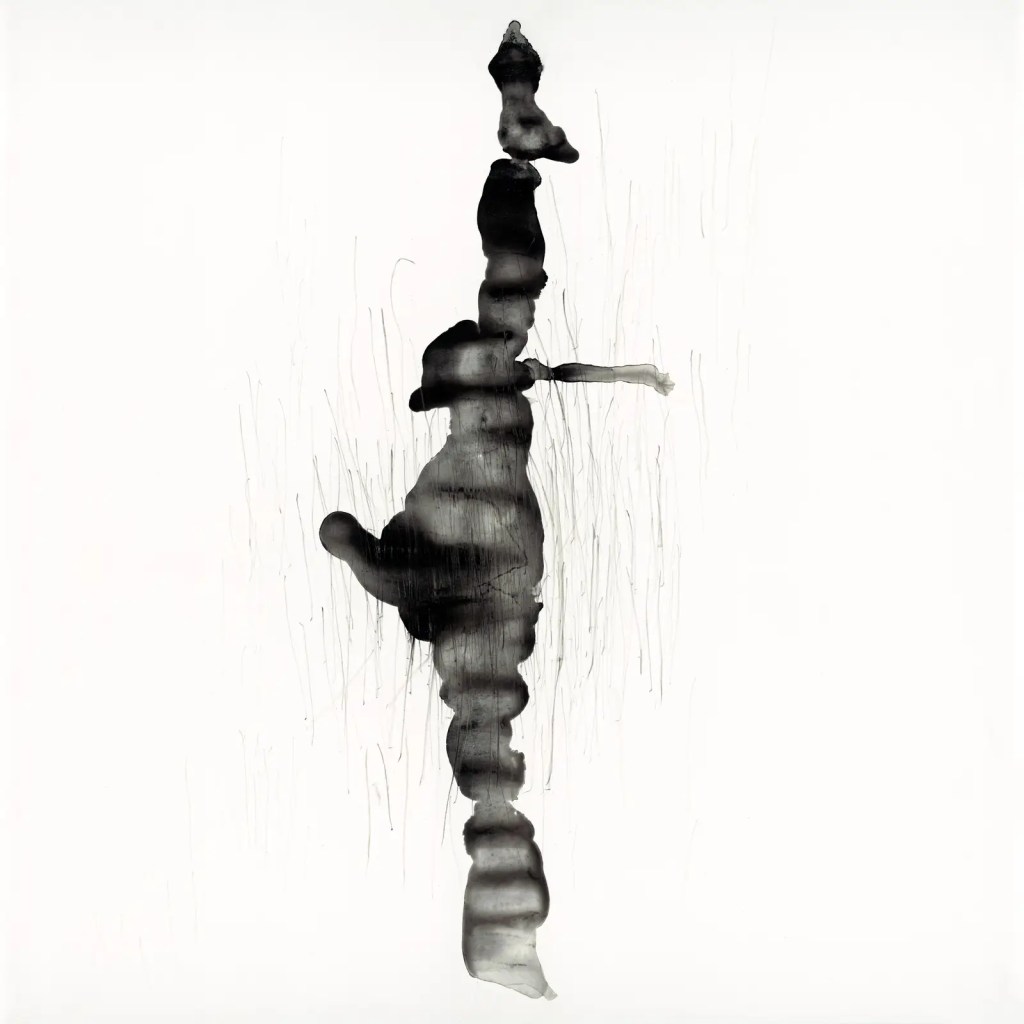
‘Winston collected specimens from each of these examples and transformed them into a range of inks, with which he drew images that reify the synergy between environment, breath and creativity‘
A different angle but I wanted to explore the work of Sam Winston in relation to collecting within a location and presenting it.
Sara Similar – Rubbing old street signs to create something new
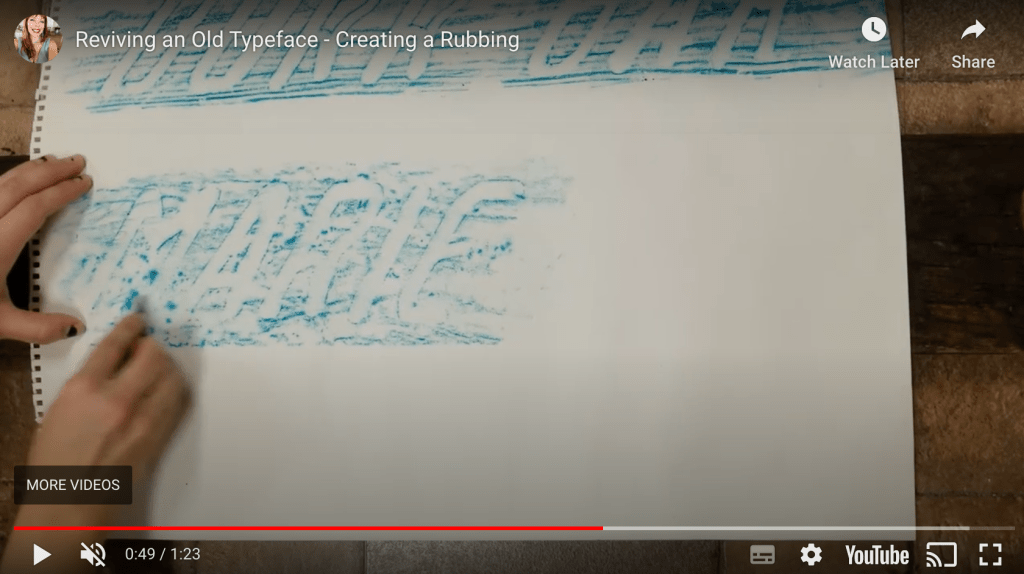
Designer, Sara Similar undertakes the process of rubbing to uncover old street signs which were replaced with more modern signs. The process immediately re presents the typeface in a new way not only through the process but by how it looks. Sara discusses briefly how she wants to re construct the found signs and create the missing letters. Would Sara take inspiration from the surroundings of where these signs once sat? Would placing them back in the area cause a juxtaposition between the new and old?
Not only is Sara documenting the typeface but she’s capturing the surface and material the type is sat on (wood) this capturing the stories of that surface. Does this give us an idea of the origination of when these signs and typeface?
Should we look at both the typeface and surface as two different things? Or as there displayed together should they be treated as one?
Desired Landscapes – A magazine reading into cities
“There will always be someone, eager to add to our preconceptions of a city by showing their most unique and personal findings” Natasha Pappa, Desired Landscapes.
Each individual within a city, town or village will have different views on the place they experience. whether this is home, the place they live within or place they visit. We all see things differently. When Natasha says ‘showing their most unique and personal findings’ this really relates to how I’m looking at these current spaces. I’m finding and reflecting on these spaces from my own findings and discovery. Not everyone is going to document findings in the same way. Some may write them down, some may sketch, some may photograph, some may memorise, some may record audio, some may share through conversation in the moment, some may keep it to themselves. Each way also interpreted differently. I find this a unique way in revealing the layers of spaces. Do specific buildings have multiple identities based on who’s looking and talking about them? Is it difficult to place a single identity on a building when everyone may see something unique? Is it an open book which can be explored by all?
How can I explore this idea of allowing participation and not restricting and forcing people into see what i see? How can I let this spark their own thoughts and conversations.
Grande Motte, Irena Visa – Photography & Words (Simone Gray) Wandering.
Explores the use of photography which have been accompanied with words describing the viewers experience. For example ‘Stark, mechanistic, images of buildings, pure and mysterious. Erotic somehow’
This simple narrative exploration again opens up to interpretation and how the viewer will see the buildings. The same building I may describe as sharp, clinical and clam from my visions (this is my thoughts from immediate viewing)
“A city’s images can be found anywhere now, in diverse perspectives and even styles to choose from. But, text for me, remains the utmost personal tale of an experience” – Natasha Pappa, Desired Landscapes
Natasha talks about how words are the most significant in talking about ones experience, which I agree with to a degree but also think other mediums such as sketches / photography can also be powerful when we talk about individuals experience. A series of sketches from an observation can tell us allot about that viewing or experience however if this is accompanied with words (written or not) this allows for us to become more immersed within that experience. It allows us to place ourselves there and start to imagine our own experiences there. We place ourselves in situations and think about what they may be like, the consequences, how we may feel, how we may deal with this.
Tutorial with Dan -Thursday 2nd Feb 2023
Within our tutorial today we spoke about the current state of my project and started to discuss a few of the unanswered questions which are lying over my project these being:
What do I think about the places I have picked? How are they all connected to one another?
What type of audience am I aiming at? (Artists, Designers, Local Community)
If a participatory element is there how will this be planned and intergrated?
Dan also mentioned exploring the term contestation to see if this would reveal and support the development of my concept. ‘ the act of arguing or disagreeing about something ‘ – I want to explore this and see if this has an impact on the questions outlined above.
Towards the end we also started to discuss outcomes and how this may look (speculative at this stage)
I have recently been exploring the book ‘Desired Landscapes’ which is a small a6 magazine which contains multiple outputs observing within a city – Could this approach be looked at in terms of output. We also had an honest conversation around Typography. Typography has been evident throughout the project so far (and also in the project which initiated this one)
Is the outcome focussed around a typeface (typefaces) which have been created from drawing upon the observing of these spaces? These typefaces can still provide and experience and potentially share an identity? (could be used around the town)
Action Points:
– Research Contestation
– Look back ‘In Loving Memory Of’ but Craig Oldham – project which took similar design actions when creating that project? How did Craig go about interviewing and documenting.
– Reflect back on Mill project (where did the type originate from and how did I start this)
– Reflect on current sketches and reference design projects /designers who are creating / working with type from observation / location.
– Ethical considerations when involving public
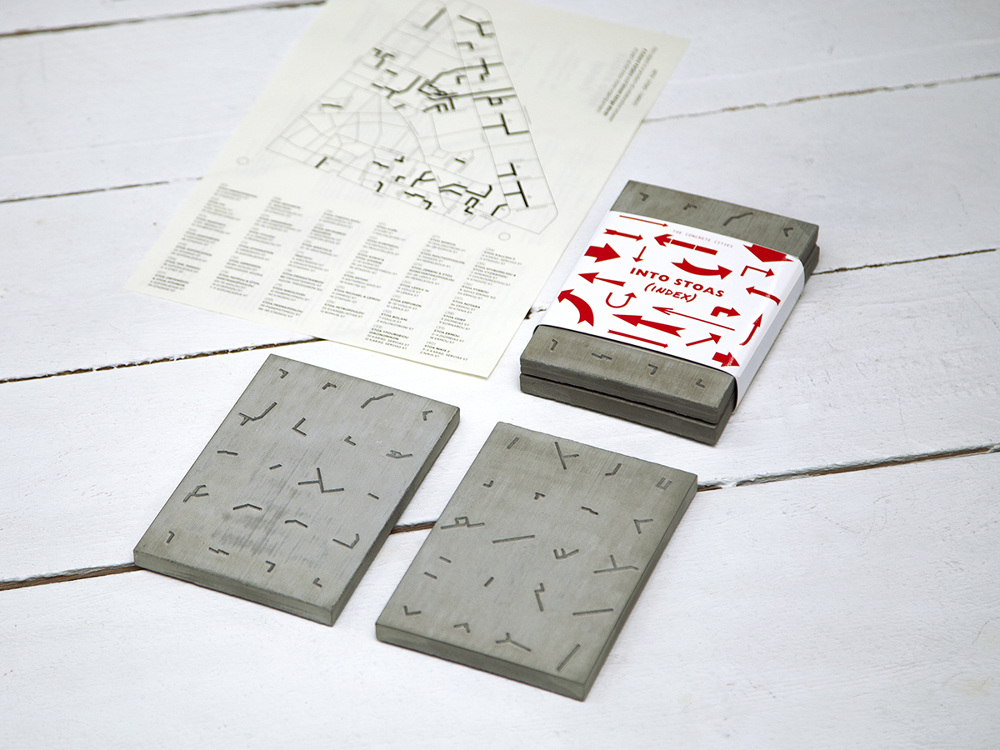
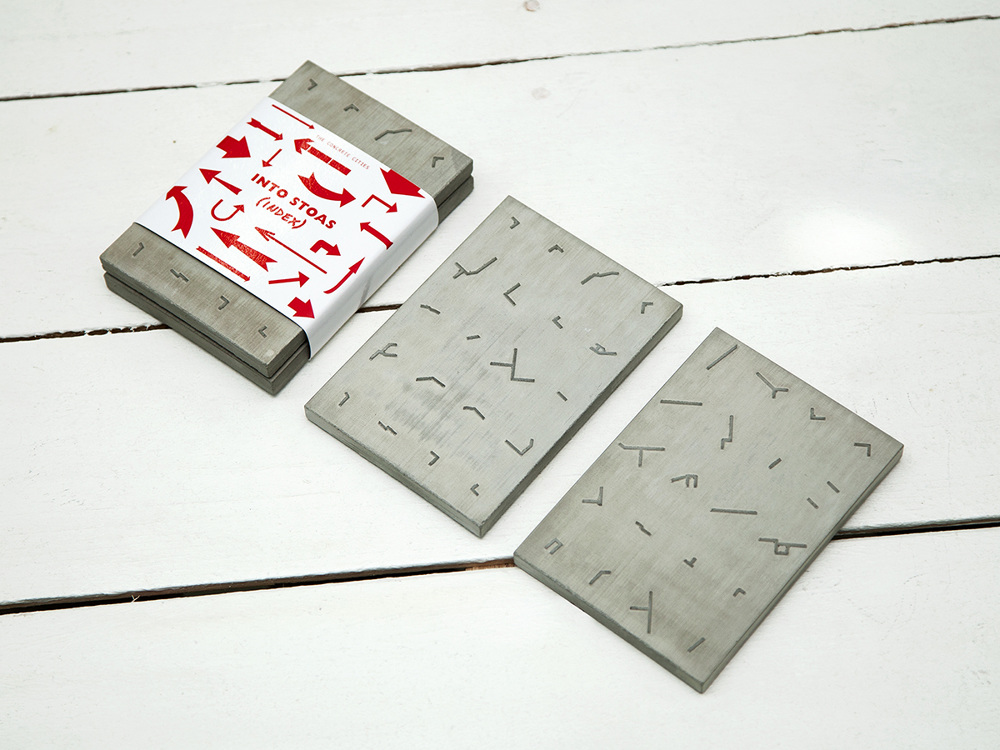
Physical and visual design exploring the Stoas within a city (Stoa is a covered walkway which is commonly seen within public spaces) They’ve extracted an element and presented it visually in itss simplest form. It’s been presented in a way which allows other users to interact with it, find and navigate the stoas. The part I find interesting here is the extraction of the visual form and how it’s been presented back as an opportunity to get involved. You could also see this as a tool to allow others to explore and share their experience. They supply a paper map alongside these forms which encourages you to share memories, make notes, and use as you go.
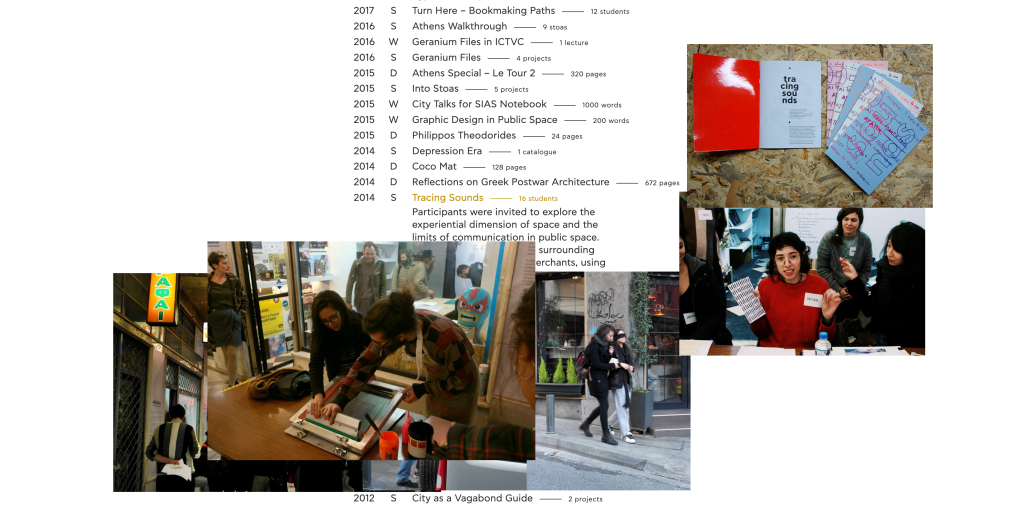
Tracing Sounds – Participants were invited to explore the experiential dimension of space and the limits of communication in public space.
This project asked participants to go out and about and then respond to their walks from what they heard only. They were able to respond in any form they wish, allowing everyones experiences to be shown (each different)
This took place in relation to a place. And within that moment they were walking around many things were heard and done, meaning everything documented was from that time. Are identities within places moving and not static? Or do identities stay static but grow as experiences happen and others are within that space?
Place. (Tim Cresswell)
“Space becomes a place when it is used and lived. Experience is at the heart of what place means” (Page 2, Place, Tim Cresswell)
At what point does a space become a place to us individually? Is it when we visit that space and have an experience there, such as gained knowledge or participated in something. Some spaces may hold emotional memories which are held onto and individuals may go back to relive or heighten that memory again. Do spaces which are used by others become a place for those that haven’t been there?
How can something within a space have an impact on someone which then makes it a place?
Some places we visit you get a feeling (happiness, scared, mind blow) depending on what it is you’re visiting. We then remember these and share with others. When we share these do this allow others to build narratives, feelings and stories about how that place operates and looks? Can you not visit a place and still be able to immerse yourself within that place? (it this through audio, narrative, visual?)
Ongoing / documented research journal

Weekly Reflection
 James Shaw